New report warns of spectre of post-election violence in 2027
Electoral Vulnerability Index 2026–2027, released by the Kofi Annan Foundation rates Kenya at an overall 84.1 per cent chance that the country could experience some form of election-related violence.

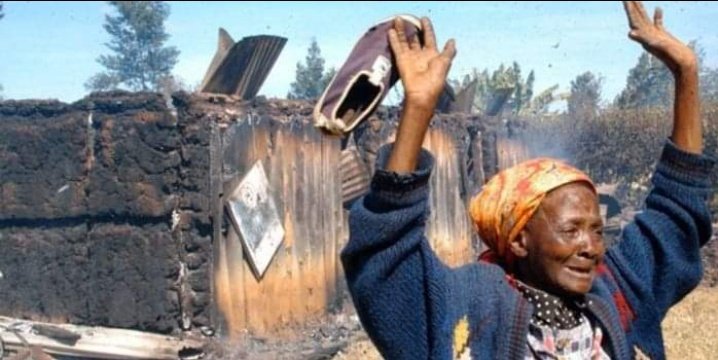
Kenya has been ranked the second-most vulnerable democracy to election-related violence ahead of the 2027 General Election, with a new report warning that growing political tensions, weak public confidence in electoral institutions, economic grievances and shifting political alliances could heighten the risk of unrest.
The Electoral Vulnerability Index 2026–2027, released by the Kofi Annan Foundation, places Kenya behind only Nigeria among the world’s top 10 democracies considered to be at the highest risk of electoral violence during the upcoming election cycle.
The report assigns Kenya a risk index score of 43.9 and projects an 81.6 per cent likelihood of electoral violence during the 2027 polls. It further estimates a 6.2 per cent probability of severe violence and a 75.4 per cent likelihood of moderate violence, resulting in an overall 84.1 per cent chance that the country could experience some form of election-related violence.
The findings come as political activity intensifies across the country, with parties already positioning themselves for the 2027 General Election through coalition negotiations, grassroots mobilisation and by-elections.
According to the report, the country’s electoral environment is being shaped by several interconnected risk factors, including declining public trust in the Independent Electoral and Boundaries Commission (IEBC), unresolved concerns over electoral technology procurement, ethnic and local patronage competition, worsening economic hardships, youth mobilisation and the conduct of security agencies during protests.
The Foundation warns that the preparedness of the IEBC will be one of the most decisive factors in determining whether the country conducts peaceful elections.
It identifies the appointment of commissioners, voter registration, procurement and testing of electoral technology, transparency in results transmission, staffing, dispute resolution mechanisms and public communication as critical areas requiring urgent attention.
“Kenya’s recent electoral history shows that technology can build confidence when it works transparently, but it can also become a focal point of suspicion if procurement, testing or transmission is unclear,” the report states.
It adds that security agencies must also adjust their planning to emerging political realities.
“Security planning should take account of both traditional hotspots and new forms of mobilisation. Urban protests, youth activism and digital campaigns may reshape risk geography. Election-related violence may occur not only in historically sensitive counties but also in urban centres where cost-of-living grievances and police-community tensions are high.”
The report identifies the political transition following the death of ODM leader Raila Odinga as another major factor likely to influence the country’s political stability.
According to the Foundation, Odinga’s passing has created uncertainty within the opposition, with succession battles, the reconfiguration of the Orange Democratic Movement (ODM) and broader Azimio-affiliated political networks expected to reshape coalition politics ahead of the elections.
The report says the emergence of new national leaders and shifting alliances built around economic grievances could significantly alter Kenya’s political landscape.
“County-level contests may be especially contentious because devolution has made governors and local assemblies important sources of patronage, service delivery and political identity,” the report notes.
“Odinga’s death has a double effect on risk. It may weaken a familiar opposition command structure and reduce the predictability of mobilisation, but it may also open space for new alliances, generational leadership claims and less disciplined local bargaining. This makes elite coalition-building before 2027 a critical early-warning arena.”
The Foundation further observes that Kenya’s history of coalition politics presents both opportunities and risks.
While political agreements among elites have previously helped reduce ethnic tensions, it warns that failed negotiations or exclusion from power-sharing arrangements could fuel fresh grievances among communities.
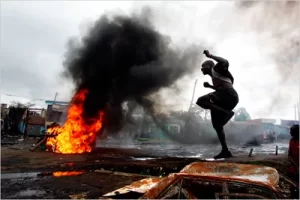
“Kenyan elections often produce elite pacts that reduce or redirect ethnic polarization, but failed negotiations can leave communities feeling excluded,” the report says.
“The transition of opposition leadership after Raila makes this phase particularly sensitive because inherited political loyalties, youth mobilisation and county-level patronage networks may not move in a single direction.”
It recommends close monitoring of political rhetoric during coalition negotiations, arguing that language used by political leaders before formal campaigns begin could serve as an early indicator of potential conflict.
“The language used by coalition leaders during alliance formation should therefore be monitored alongside formal campaign messaging,” the report adds.
Kenya’s ranking also revives memories of the 2007-2008 post-election violence, one of the country’s darkest chapters, which erupted after the disputed presidential election in which the then Electoral Commission declared former President Mwai Kibaki the winner over opposition leader Raila Odinga.
The violence claimed more than 1,000 lives, displaced hundreds of thousands of people and prompted international mediation led by former United Nations Secretary-General Kofi Annan, culminating in the formation of a Grand Coalition government.