NBA tightens GMO import controls as MPs push for more staff to boost oversight
In a directive dated June 29, 2026, the authority ordered that all imports and exports of approved GMO products must receive NBA clearance before they are released into or out of the Kenyan market.

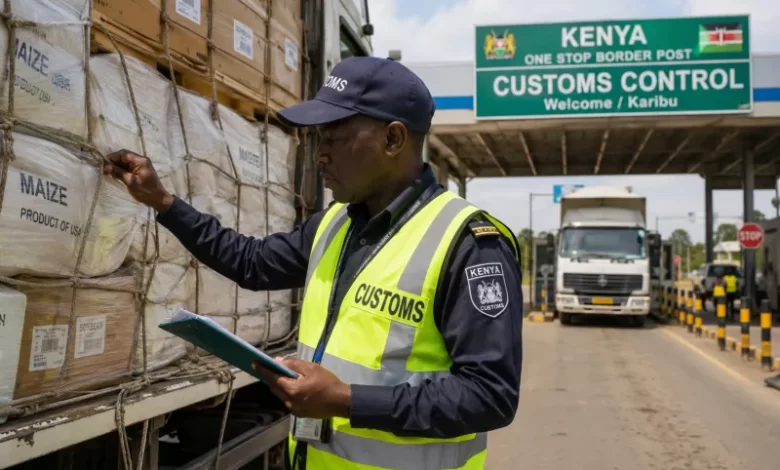
The National Biosafety Authority (NBA) has tightened oversight of genetically modified organisms (GMOs) by publishing a list of genetically modified plants, animals, microorganisms, veterinary vaccines and their derived products approved for commercial use, even as Members of Parliament called for the agency to be allowed to recruit more technical staff to strengthen regulation.
In a directive dated June 29, 2026, the authority ordered that all imports and exports of approved GMO products must receive NBA clearance before they are released into or out of the Kenyan market.
The directive targets all government agencies involved in customs, agriculture, health, standards and environmental regulation, requiring them to ensure GMO products are cleared by the Authority at Kenya’s ports of entry and exit.
Acting NBA Chief Executive Officer Ann Karimi said the move is intended to strengthen enforcement of the Biosafety Act and improve monitoring of genetically modified products entering the country.
“These products are traded globally between and among countries. The Authority has already profiled the relevant Harmonized System (HS) codes of these products, and we request the cooperation and assistance of your officers at various entry and exit points to ensure that these products are cleared by NBA before their release,” Karimi said.
HS codes are internationally recognised six-digit customs codes used to classify traded goods, enabling border agencies to identify approved GMO products during import and export procedures.
Karimi said NBA officers stationed at border posts will advise on appropriate enforcement measures where products fail to comply with the Biosafety Act.
Among the genetically modified crops approved for cultivation in Kenya is Bt cotton, which is also commercially grown in countries including South Africa, Sudan, Ethiopia, Eswatini, Nigeria and Malawi, as well as Argentina, Australia, Brazil, China, India, Mexico, Pakistan and the United States.
The authority noted that Bt cotton has also been approved for food, feed and processing in dozens of countries, including members of the European Union, Japan, South Korea, Canada, the United Kingdom and Singapore.
The Authority also confirmed that GM maize has been approved for cultivation in South Africa, Nigeria and Ethiopia.
The directive has been circulated to agencies including the Kenya Revenue Authority (KRA), Kenya Ports Authority (KPA), Kenya Plant Health Inspectorate Service (KEPHIS), Kenya Bureau of Standards (KEBS), National Environment Management Authority (NEMA), Directorate of Veterinary Services, Kenya Wildlife Service (KWS), Department of Public Health, Pest Control Products Board and the Kenya Industrial Property Institute (KIPI).
The publication of the approved GMO list comes amid renewed calls by Members of the National Assembly’s Agriculture and Livestock Committee for the government to exempt the NBA from the ongoing public sector recruitment freeze.
The legislators said the Authority is operating with a critical shortage of technical personnel, limiting its ability to inspect imports, monitor GMO activities and safeguard public health and the environment.
Led by Committee Vice Chairperson Brighton Yegon (Konoin), alongside Yusuf Farah Mohamed (Wajir West) and David Kiplagat (Soy), the MPs urged the Authority to seek a waiver to recruit additional staff.
“The safety of Kenyans is important when it comes to issues of GMOs, and it comes first. Therefore, a circular can be reviewed once you reach out to the government and explain your case,” Kiplagat said.
Appearing before the committee, Acting CEO Nehemiah Ngetich revealed that the NBA currently has only 56 employees against an approved establishment of 106, leaving it overstretched as it seeks to regulate GMO activities across 24 border entry points.
“We want to assure Kenyans that the Authority is up to the task of regulating GMOs and that Kenyans are safe since there is a legal and regulatory framework in place to ensure their safety,” Ngetich said.
He said the Authority has already deployed officers to major border points including Mombasa, Busia, Namanga, Malaba, Lunga Lunga and Taveta, with plans to expand operations to Moyale, Isebania, Mandera and Lwakhakha during the next financial year.
Acting Director of Technical Services Josphat Muchiri said the authority has intensified inspections at supermarkets and border points to prevent unregulated GMO products from entering the Kenyan market.
“The authority is also working with county governments across the country by training biosafety champions to ensure Kenyans understand issues of biosafety,” Muchiri said.
The authority also showcased reforms aimed at improving efficiency, including automation of customer services through the eCitizen and KenTrade platforms and a service-level agreement with KRA to speed up cargo clearance.
The latest developments come as debate over GMOs remains deeply polarised in Kenya. While the government argues that biotechnology is essential for improving food security, increasing crop yields and building resilience against climate change, critics—including civil society organisations, farmers’ groups and consumer rights advocates—continue to raise concerns over food safety, environmental impacts and seed ownership by multinational corporations.
Although Kenya lifted a decade-long ban on the importation and cultivation of GM crops, implementation has faced repeated delays following court challenges seeking greater public participation and scientific scrutiny, making effective regulation by the NBA increasingly critical.