Nakuru residents blame Menengai Oil emissions for health crisis, roof corrosion
Nakuru County Assembly orders independent environmental audit after residents accuse Menengai Oil Refineries Limited of polluting Githima Estate with smoke, dust and harmful emissions. According to the report, prolonged exposure could increase the risk of respiratory illnesses including asthma, bronchitis and recurrent respiratory infections, as well as skin irritation and eye and throat infections.

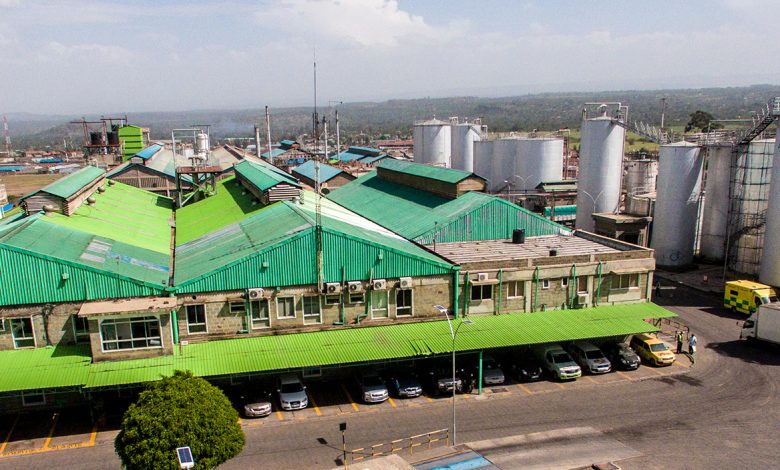
For years, families living in Githima Estate in Nakuru West say they have watched their homes slowly deteriorate while worrying about an invisible threat they believe is making them sick.

Iron-sheet roofs that should last decades are rusting far sooner than expected. Clothes left outside to dry are often covered with fine soot-like particles. Persistent coughs, breathing difficulties and recurring respiratory illnesses have become common complaints, particularly among children and the elderly.

Now, those concerns have received official backing after the Nakuru County Assembly concluded that residents’ complaints warrant urgent investigation, placing one of the region’s largest manufacturers under heightened environmental scrutiny.
According to official company records, the listed directors include Jaswant Singh Rai, Onkar Singh Rai, Menengai Group Limited, Amirita Rai, Tejveer Singh Rai, Manvinder Rai and Arshad Shamsu Din Habib.
A report by the Nakuru County Assembly’s Committee on Energy, Environment and Natural Resources has recommended that the National Environment Management Authority (NEMA) commission an independent environmental audit of Menengai Oil Refineries Limited to establish whether emissions from the factory are contributing to pollution affecting nearby communities.
The recommendations follow a petition filed by the Githima Welfare Association, representing 97 households, which accused the factory of exposing residents to air pollution that has allegedly damaged property, endangered public health and degraded the surrounding environment.
After months of hearings, inspections and deliberations, the committee found the petition to be meritorious, concluding that there is sufficient cause for independent investigations and enhanced environmental monitoring around the industrial facility.
The committee painted a worrying picture of the relationship between heavy industry and residential housing in Githima Estate.
It observed that the Menengai industrial plant sits only a few metres from residential homes, with virtually no protective buffer zones such as green belts or emission-control barriers to shield residents from airborne pollutants.
“The industrial building is extremely close—barely a few metres from residential housing. Such proximity with no visible buffer zones exposes residents directly to airborne emissions, especially particulate matter (PM2.5 and PM10) and acidic gases,” the report states.

Lawmakers warned that the close proximity significantly increases residents’ exposure to harmful pollutants commonly associated with industrial manufacturing.
Among the pollution sources identified in the area are Menengai Industries, flour mills and other manufacturing plants operating within the industrial zone.

The committee said residents are likely being exposed to fine particulate matter, heavy metals and chemical gases capable of settling on rooftops, food, clothing and exposed skin.
According to the report, prolonged exposure could increase the risk of respiratory illnesses including asthma, bronchitis and recurrent respiratory infections, as well as skin irritation and eye and throat infections.

The report further noted that industrial pollution often disproportionately affects vulnerable communities that lack the financial capacity to shield themselves from environmental hazards or relocate to safer neighbourhoods.
Committee members observed that many families in Githima Estate are low-income earners who cannot easily replace corroded roofing sheets, seek specialised medical treatment or move away from the affected area.
Residents told lawmakers during public participation sessions that smoke emissions and unpleasant odours have become part of daily life, leaving many anxious about the long-term health consequences of living next to the factory.
They also complained that the rapid corrosion of iron-sheet roofs has become an expensive burden, forcing households to undertake frequent repairs and replacements.
The committee’s findings were informed by a fact-finding mission conducted in May 2025, during which members visited Githima Estate to assess the residents’ complaints firsthand.
During the inspection, lawmakers observed widespread corrosion on rooftops throughout the estate, particularly on houses located closest to the industrial complex.

According to the report, the visible pattern of corrosion appeared consistent with prolonged exposure to pollutants commonly associated with industrial emissions, including sulphur dioxide and nitrogen oxides.
The committee, however, stopped short of conclusively attributing the damage to emissions from Menengai Industries, instead recommending an independent scientific assessment to establish the source and extent of the pollution.
The petition comes at a time of growing concern over deteriorating air quality in Kenya’s rapidly expanding urban centres.
The committee cited national data indicating that air pollution contributes to approximately 18,000 premature deaths annually in Kenya, with industrial and urban areas accounting for a significant share of the health burden.
Lawmakers also expressed concern that Nakuru County lacks a permanent air-quality monitoring station, making it difficult for regulators to accurately assess pollution levels or monitor long-term public health impacts.
Without continuous monitoring, they noted, it remains challenging to determine whether industries are consistently complying with environmental standards.
The committee also conducted a separate inspection of Menengai Industries, where company officials defended their environmental management systems.
According to the report, the company informed lawmakers that environmental tests are routinely undertaken by accredited third-party laboratories and that emissions are monitored every week as part of its environmental compliance programme.
Factory officials also stated that stormwater drainage systems are fitted with interceptors designed to prevent contaminants from entering the environment.
They further maintained that wastewater discharged into public sewer systems is treated and meets required standards.
However, the committee noted that independent environmental assessment reports were not presented during the visit, making it impossible for lawmakers to verify the company’s claims independently.
The absence of independently verified data prompted the committee to recommend that NEMA commission a third-party environmental audit to determine whether emissions from the facility comply with standards set by the World Health Organization (WHO) and the United Nations Environment Programme (UNEP).
Lawmakers also recommended that the factory install automated air-quality monitoring equipment capable of generating real-time emissions data for submission to both NEMA and the Nakuru County Government.
To improve transparency and restore public confidence, the committee further proposed routine public disclosure of environmental monitoring reports, including emissions and wastewater quality test results.
The Assembly also called for a comprehensive technical inspection of the factory’s drainage and sewerage systems and urged environmental regulators to compel industries to adopt modern emission-control technologies where existing measures are found to be inadequate.
Recognising the concerns raised by affected residents, lawmakers further recommended that Menengai Industries revive and expand its corporate social responsibility programmes.
Among the proposals are community health initiatives, support for households affected by roof corrosion and enhanced employment opportunities for local youth.
The committee also urged the Nakuru County Government to review zoning regulations governing industrial development to ensure adequate buffer zones are maintained between factories and residential estates in future developments.
When contacted by The Informer Media Group through telephone calls, email, text messages and WhatsApp, Menengai Oil Refineries Limited had not responded by the time of publication.