‘Muzi Stawi’ affordable housing complex almost complete following Sh3.2 billion EIB financing
IHS Kenya Fund has closed on three investments for 664 units with an additional pipeline of more than 2,600 units

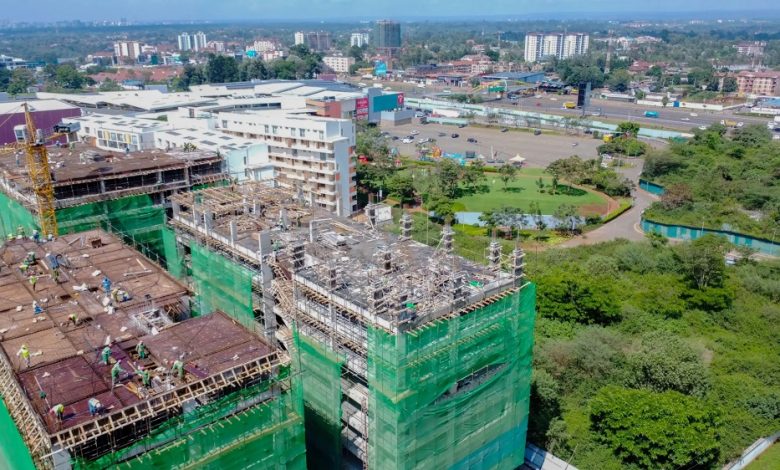
The European Investment Bank’s financial backing for IHS Group’s first green affordable housing fund in Kenya is yielding important results. The bank’s development arm, EIB Global, has committed Sh3.2 billion (€21.5 million) in equity financing to the IHS Kenya Green Housing Fund for the construction and acquisition of energy-efficient and affordable housing in Kenya.
IHS Kenya is working on three housing projects in the Tilisi, Garden City and Mashiara Park areas of Nairobi with a combined 664 units. There are 10 other projects in the pipeline consisting of over 2,600 units in the areas of Nairobi and Kiambu.
Construction of the “Muzi Stawi” complex in Nairobi’s Garden City Precinct area is almost 90 per cent complete. This was announced during the inaugural “IHS Kenya Affordable Housing Conference” in Nairobi. The project involves the construction of more than 200 apartments made up of both one-bedroom and two-bedroom units. Construction started in January 2024 and is due to be completed in October.
More than seven million of Kenya’s approximately 12 million households live in urban areas, with most residing in informal settlements, and many are unable to afford decent housing, according to the Kenya Population and Housing Census (KPHC).
“With housing costs rising, we are working with experts, planners and policymakers to improve living conditions, reduce energy costs and support climate-friendly urban growth,” said Head of the EIB Regional Hub for Eastern Africa Edward Claessen. “At EIB Global, we combine both financing with non-financial contribution in the form of technical assistance and advisory services to implement projects with local partners like IHS.”
The EIB supports affordable housing by offering flexible financing – including direct loans to social and affordable-housing providers – as well as more commonly by working with special purpose financial intermediaries such as equity funds. The goal is to improve social cohesion and the quality of life of vulnerable groups whose housing needs are not met by the market.
The IHS Kenya Green Housing Fund invests in the development and acquisition of green-certified, affordable properties in Kenya, with a focus on low- and moderate-income segments of the population. In the Muzi Stawi project, the planned units will be available for rent to the open market.
The Fund has also received the backing of other equity investors including from Kenya and elsewhere in Africa amounting to Sh12.5 billion (€83.4 million) in total commitments.
“Our investments reflect our ambition to redefine what affordable housing can be,” said IHS Kenya Managing Director Kioi Wambaa. “We are on track to deliver about 4,000 quality, affordable green homes by 2030. Projects we undertake are not just developments; they are a promise to the Kenyan market that affordability and excellence can go hand in hand. EIB Global’s investment with IHS Kenya aligns with our goals to address the critical need for affordable housing in Kenya. Garden City is an address that embodies modern living, and we are proud to make it accessible to more Kenyans.”
While significant attention has been paid to affordable housing in Kenya, only 2 per cent of officially constructed units are aimed at the lower-income segment, according a 2021 report by the Kenya Institute for Public Policy Research and Analysis.
The development of modern housing also advances climate action because, according to the United Nations Environmental Programme (UNEP), real estate is responsible for about 30 per cent of global greenhouse gas emissions (GHG).
The EIB, as the world’s top climate bank, aims to enhance energy efficiency in affordable housing and the green housing model of IHS promotes energy and water savings.