Kenya’s match-fixing crisis: How betting money could be fueling the fixers
Sources inside the lucrative betting industry who spoke to us on condition of anonymity intimated that the growth of betting creates a lucrative financial incentive for individuals or organised syndicates to manipulate sporting events. A 2024 analysis by the Kenya Institute for Public Policy Research and Analysis (KIPPRA) warned that the exponential growth of gambling had increased the risk of match-fixing because large amounts of money are wagered on sporting outcomes, creating opportunities for people with access to players, coaches and referees to exploit that information.

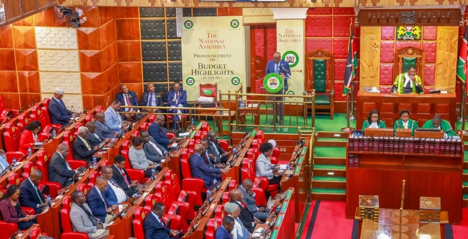
Kenya is tightening the legal noose around match-fixing and manipulation of sporting competitions after the National Assembly passed the Sports (Amendment) Bill, 2026, paving the way for tougher criminal and sporting sanctions against athletes, clubs, officials and other actors who compromise the integrity of sport.
Sponsored by Nominated Member of Parliament (MP) Irene Nyakerario Mayaka, the legislation seeks to close gaps in the existing legal framework by giving competition manipulation a clear statutory definition and creating stronger mechanisms for detecting, investigating and punishing offenders.
The legislature said when the Bill was introduced that it was intended to criminalise manipulation and strengthen institutions responsible for safeguarding sporting integrity.
The legislation comes at a time when sports betting has become deeply embedded in Kenya’s sporting ecosystem, raising questions about whether the rapid expansion of gambling markets is creating fresh opportunities for match-fixers to profit from manipulated results.
Sources inside the lucrative betting industry who spoke to us on condition of anonymity intimated that the growth of betting creates a lucrative financial incentive for individuals or organised syndicates to manipulate sporting events.
A 2024 analysis by the Kenya Institute for Public Policy Research and Analysis (KIPPRA) warned that the exponential growth of gambling had increased the risk of match-fixing because large amounts of money are wagered on sporting outcomes, creating opportunities for people with access to players, coaches and referees to exploit that information.
Gambling and Regulatory Authority (GRA) headed by Director General Peter Karimi who spoke to The Informer Media Group said this puts betting operators at the centre of the integrity debate—not necessarily as perpetrators, but as potential sources of critical intelligence.

Speaking anonymously to us for fear of reprisals at a time there is an ongoing delay in issuing new and renewal licenses for betting firms, our sources said that suspicious betting patterns can provide an early warning that a match or particular incident may have been manipulated.
International investigations guidance published by the United Nations Office on Drugs and Crime and the International Olympic Committee notes that betting entities can help identify competition manipulation by sharing information such as unusual betting patterns, customer accounts, betting histories and other relevant data with sporting bodies or law-enforcement agencies.
The new law therefore places the wider sports ecosystem under greater scrutiny.
Under the Bill, competition manipulation covers conduct intended to improperly influence a sporting outcome.
This includes offering, giving or receiving an undue advantage, conspiring to fix a competition, deliberately underperforming to produce a predetermined result and using confidential or insider information to facilitate betting.
The new legislation also gives Sports Kenya a more prominent investigative role.
The agency will be empowered to receive complaints and investigate suspected competition manipulation, including working with the Directorate of Criminal Investigations (DCI).
Investigations are expected to be completed within six months, creating a defined timeline for cases that could otherwise drag on for years.
The Sports Disputes Tribunal will also have expanded jurisdiction to hear appeals arising from Sports Kenya decisions relating to alleged competition manipulation.
For individuals convicted, the Bill provides for a fine of up to Sh1 million, imprisonment for a maximum of one year, or both.
The consequences can also move beyond the criminal courts. Clubs and sporting professionals found culpable may face forfeiture of matches, disqualification from competitions and, in serious cases, lifetime bans from regulated sporting events.
Money or other financial benefits obtained through manipulation may also be forfeited.
For Kenyan football, the reforms arrive after years of scandals, suspensions and international interventions.
In February 2020, FIFA sanctioned four players following investigations into manipulation of matches in the Kenyan Premier League. Ugandan player George Mandela received a lifetime ban because of what FIFA described as his central role in the conspiracy, while Kenyans Moses Chikati, Festus Okiring and Festo Omukoto were each banned from football-related activities for four years. The investigation covered several Kenyan Premier League matches played in 2019.

The scandal also demonstrated how match-fixing can extend beyond players. Five Kenyan referees were subsequently suspended in connection with the wider scandal.
In 2021, Zoo Kericho FC was found guilty of match manipulation by FIFA’s integrity structures and expelled from the Kenyan Premier League. The club’s case became another warning that fixing can penetrate entire institutions rather than remain the work of individual rogue players.
Then, in January 2023, FKF provisionally suspended 14 players and two coaches after receiving confidential reports alleging match-fixing in the national league.
Six of those suspended were players from Zoo Kericho, while the list also included a player from then-Premier League champions Tusker. FKF said the individuals would remain suspended pending investigations by its integrity department and FIFA.
The latest high-profile case emerged in March 2025 when FKF opened an investigation into Harambee Stars goalkeeper Patrick Matasi after videos circulated online appearing to show him discussing a deal to manipulate a football match. FKF said it was working with FIFA, CAF and other relevant authorities. Matasi denied knowledge of match-fixing, and the video had not been independently verified by the BBC.
The case underscored the increasingly important role of betting intelligence. A match does not necessarily need to be deliberately lost for fixers to make money. Manipulation can target corners, penalties, bookings, goals or other specific events that can generate betting opportunities.
This is where betting companies face a difficult integrity test.
The history of Kenyan football shows why the stakes are high. FIFA bans, club expulsions, player suspensions and recurring investigations have already damaged confidence in local competitions. The latest reforms offer an opportunity to change that trajectory.