Coffee under siege: six buyers control 85 per cent of NCE trade as factory thefts surge
Together, the six companies bought 903,073 kilogrammes, or about 85 per cent of the coffee traded during the sale. They include; Ibero Kenya, Kenyacof Limited, C. Dormans SEZ, Taylor Winch, Global Mark Foods and Sondhi Trading.

Kenya’s coffee industry is facing renewed scrutiny over the concentration of buying power at the Nairobi Coffee Exchange (NCE) as a surge in violent thefts at coffee factories raises fresh concerns about security and the protection of farmers’ valuable produce.
Six major coffee buyers accounted for about 85 per cent of the coffee traded during Sale 36 of the NCE, highlighting the extent to which a small number of players continue to dominate the country’s auction market.
The concentration comes at a time when coffee-growing regions are grappling with a wave of violent raids targeting cooperative factories, with criminals making away with tonnes of valuable parchment coffee after attacking, tying up and, in some cases, killing security guards.
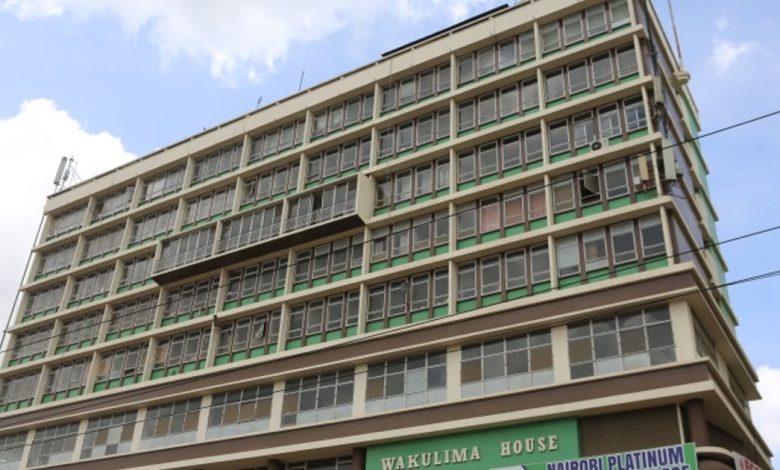
The Sale 36 auction at Wakulima House in Nairobi generated Sh946.98 million from 1,067,915 kilogrammes of clean coffee contained in 17,315 bags.
The overall average price was Sh44,410 per 50-kilogramme bag, translating to approximately Sh136 per kilogramme of cherry before deductions for processing, marketing and factory costs.
Ibero Kenya emerged as the largest buyer, purchasing 4,230 bags, equivalent to 24.48 per cent of the total volume offered, at a value of about Sh230 million. Kenyacof Limited followed with 4,009 bags, while C. Dormans SEZ purchased 3,451 bags.
Taylor Winch bought 1,195 bags, Global Mark Foods 901 bags and Sondhi Trading 841 bags.
Together, the six companies bought 903,073 kilogrammes, or about 85 per cent of the coffee traded during the sale.
The three largest buyers— Ibero Kenya, Kenyacof Limited and C. Dormans SEZ—alone accounted for about 68 per cent of the day’s traded volume.
The figures have renewed questions about the level of competition and market influence exercised by major buyers at the NCE, particularly their potential role in price discovery and the bargaining position of producers and cooperative societies.
The auction nevertheless recorded strong returns for premium coffee, with the highest price of Sh56,035 per 50-kilogramme bag paid for an AA-grade consignment from Tegu Coffee Factory, affiliated with Tekangu Farmers’ Cooperative Society in Nyeri County. The coffee was marketed by Alliance Berries Limited.
Grade AB recorded the largest volume, with 6,869 bags generating Sh403.5 million, followed by Grade C, whose 5,107 bags fetched Sh278.5 million. A total of 1,497 bags of AA coffee were sold for Sh94 million.
Among marketing agents, New Kenya Planters’ Cooperative Union (New KPCU) handled the largest volume, selling 4,949 bags weighing 305,083 kilogrammes at an average price of Sh44,258 per bag.
Alliance Berries was second, marketing 3,470 bags weighing 214,212 kilogrammes at an average of Sh46,328 per bag, while Kirinyaga Slopes Coffee Brokerage Company handled 2,947 bags at an average of Sh42,058.
Meru County Coffee Marketing Agency sold 1,194 bags at an average of Sh46,587, while KCCE Marketing Agency handled 1,096 bags at Sh46,846 per bag. Coffee Estates Bourgeoisie Brokers marketed 1,063 bags at an average of Sh45,034.
United Eastern Kenya Coffee Marketing Company recorded the highest average price among participating brokers, selling 41,856 kilogrammes at Sh46,847 per 50-kilogramme bag.
But while coffee prices and auction volumes remain a key focus for the industry, farmers and factory managers are increasingly worried about a more immediate threat of organised theft.
In Kiambu and Machakos counties, violent gangs have targeted coffee factories in a series of night raids.
In late July, thieves broke into Kiriko Coffee Factory and escaped with 45 bags of coffee. The incident followed similar raids at Eigania and Agido Bokonu factories, where seven and 40 bags respectively were stolen within a period of about three weeks.
In Kangundo, Machakos County, a gang attacked security guards at Unywani Coffee Factory, tying them up before stealing more than 70 bags of coffee and a water pump.
The most serious incident occurred at a coffee factory in Riakahara, Githunguri, Kiambu County, where about 15 armed men stormed the facility around midnight.
According to police, the attackers tied up one watchman using his socks before fatally attacking his colleague, 36-year-old Shadrach Ngetich. The guard suffered deep cuts to his head and left leg and died at the scene.
The gang then stole 23 bags of coffee from seven drying beds before fleeing. A second guard was later rescued and untied by members of the public after alerting authorities.
Police were informed at about 5:30am and officers visited the scene. Crime-scene investigators processed and photographed the area before Ngetich’s body was taken to Kigumo Level 4 Hospital mortuary pending a post-mortem examination.
Investigators are pursuing leads, including CCTV footage, but no arrests had been reported at the time of the latest update.
The attacks have left farmers counting losses and factory directors demanding stronger security, including deployment of armed police officers to vulnerable coffee-processing facilities.
The problem is not new.
Two years ago, coffee farmers in Meru called on Deputy President Kithure Kindiki to intervene over rising cases of coffee theft, warning that insecurity was threatening an industry already struggling with concerns over farmer earnings and marketing structures.
The latest incidents have therefore added another layer to the debate over Kenya’s coffee business—an industry where farmers remain vulnerable both to market concentration and theft of the crop before it reaches the auction.
While the strong performance of premium AA coffee demonstrates that quality can attract better prices, the dominance of a handful of buyers raises questions about how much influence producers exercise over the final value of their crop.