Judge nullifies 30 ODPP appointments amid DPP Ingonga threat claims
According to Barasa, when he sought an explanation for his exclusion, Director of Public Prosecutions Renson Ingonga sent him an electronic message asking, "You want war with me?"

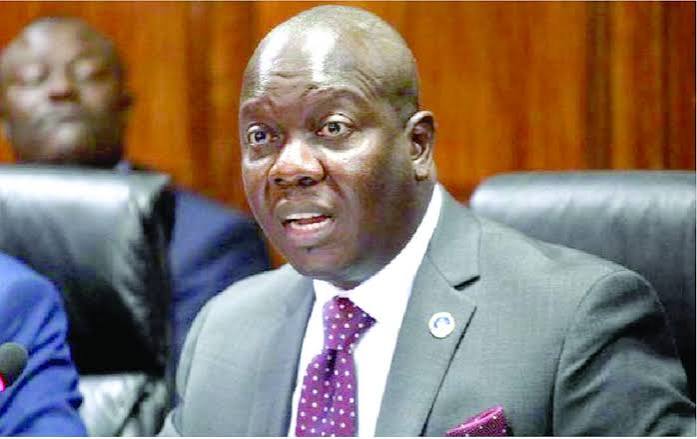
The Director of Public Prosecutions (DPP) Renson Ingonga has been thrust into the spotlight after the Employment and Labour Relations Court nullified the appointment of more than 30 senior prosecutors in a judgment that also aired allegations that he threatened a junior prosecutor who questioned a controversial promotion process.
In a landmark ruling, Justice Dr Jacob Gakeri declared the recruitment by the Office of the Director of Public Prosecutions (ODPP) unconstitutional, citing violations of the principles of transparency, fairness and accountability.
The court ordered the ODPP to restart the recruitment process for the positions of Senior Deputy Director of Public Prosecutions (SDDPP) and awarded Senior Assistant Director of Public Prosecutions (SADPP) Mark Nabuyumbu Barasa Sh1 million in damages for violation of his constitutional rights.
The case arose from a petition filed by Barasa, a career prosecutor who joined the public service in 2006 and rose to the rank of Senior Assistant Director of Public Prosecutions in 2021.
Barasa told the court that after the ODPP advertised vacancies for Deputy Director and Senior Deputy Director of Public Prosecutions in December 2025, he applied for promotion but was omitted from the shortlist published on January 26 despite meeting all the qualifications and having a clean disciplinary record.
He argued that officers’ junior to him, including some serving on secondment outside the ODPP, had been shortlisted while he was excluded without explanation.
According to Barasa, when he sought an explanation for his exclusion, Director of Public Prosecutions Renson Ingonga sent him an electronic message asking, “You want war with me?”
Barasa further claimed that Ingonga demanded that he drop the matter instead of pursuing questions about the recruitment process.
The following day, Barasa said, he was invited for an interview despite his name never having appeared on the published shortlist. He argued that the invitation was merely intended to sanitise an already flawed recruitment exercise and create the impression of fairness.
The court noted that the ODPP admitted Barasa was among 21 officers who had initially been excluded before later being invited for interviews following internal appeals. However, Justice Gakeri found that the prosecution office failed to explain why the officers had been left out in the first place or how the review process was conducted.
“There was no evidence placed before this court to show how the shortlist was arrived at and how the Petitioner and the other applicants missed the first selection but were lucky enough to be invited for interviews, but yet again, not qualify for the positions,” the judge ruled.
Justice Gakeri further held that the ODPP failed to produce the shortlisting criteria, interview score sheets or any documentary evidence demonstrating how successful candidates were identified.
“Puzzlingly, the ODPP had the opportunity to demonstrate that the process was constitutionally compliant but opted not to do so. Evidence of the shortlisting criteria and scoring would have effortlessly exonerated the Respondents from blame,” the judge observed.
The court concluded that the prosecution office had failed to prove that the recruitment was conducted on the basis of objective merit, fair competition and equal treatment.
“A panoramic view of the recruitment process reveals that the processes employed by the Respondents fell below the constitutional threshold and the resultant appointments cannot stand and are declared null and void,” Justice Gakeri ruled.
The judge ordered the ODPP to restart the recruitment process.
“The respondent shall re-advertise the positions and invite eligible candidates to express their interest and thereafter conduct a transparent, credible and auditable recruitment process.”
The court also found that the ODPP violated Barasa’s constitutional rights by failing to explain his initial exclusion from the shortlist and by refusing to provide recruitment records he had requested, rendering the process “unauditable” and undermining public confidence in appointments to senior prosecutorial offices.
Barasa also alleged that he had been victimised for making independent prosecutorial decisions in sensitive cases involving police officers, including a police trespass case and another involving the alleged torture of a British-Somali national.
He said he was later served with a notice to show cause before being transferred to the Prosecution Training Institute, effectively removing him from active prosecutorial work.
The ODPP denied the allegations, maintaining that the recruitment complied with the law and that Barasa’s transfer was a routine administrative deployment based on operational requirements.
However, the court found those explanations inadequate because the prosecution office failed to produce objective evidence showing how candidates were assessed or why those eventually appointed outperformed unsuccessful applicants.
Justice Gakeri consequently nullified the appointments, ordered a fresh recruitment exercise and awarded Barasa Sh1 million in damages.