JSC speaks after Murkomen criticism of ‘lenient bail terms’ issued in favour of protestors
According to Mokaya, parties aggrieved by bail, bond, or any other matter have an unfettered right to seek redress through appeals or reviews under the law

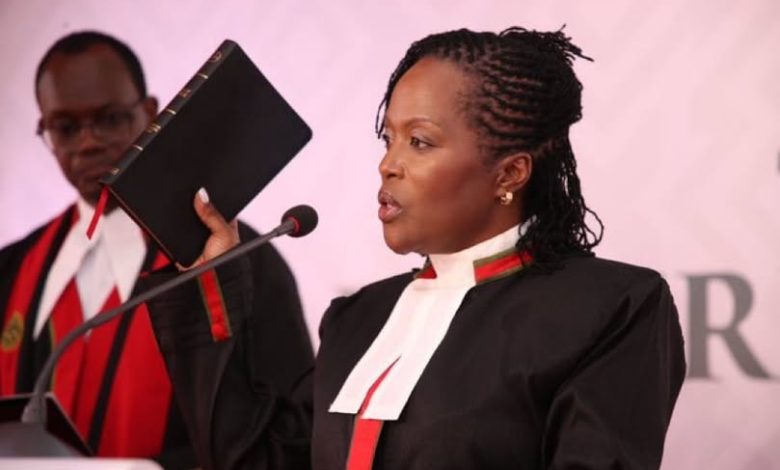
The Judicial Service Commission (JSC) has condemned rising trends of public vilification and personal attacks directed at Judicial Officers.
In her statement, JSC Secretary Wilfrida Mokaya has stated that the attacks undermine judicial independence.
Her highlight of the growing pattern of backlash is in response to bail and bond rulings recently issued by the Nanyuki and Kahawa Law Courts.
“The Commission expresses grave concern over the escalating trend of public vilification and unwarranted personal attacks directed at Judicial Officers in the discharge of their judicial functions. This pattern has recently been manifested in reaction to bail and bond decisions issued by the Nanyuki and Kahawa Law Courts. Such conduct misrepresents the Judiciary’s constitutional role, undermines judicial independence and corrodes public trust in the administration of justice — a cornerstone of our democratic society,” she said in the statement.
The statement came barely two days after Interior Cabinet Secretary Kipchumba Murkomen hit out at the courts for releasing suspects who destroyed property on what he termed as “lenient bail terms.”
He, among others, cited a case involving two suspects who stormed a hospital in Kitengela and disrupted a C-section operation while harassing staff on lenient bail terms of Sh50,000 each.
“In another reprehensible incident, marauding gangs stormed the operating theatre at the Kitengela Sub-County Hospital, interrupting an emergency caesarean section and terrorising patients and medical staff. Two suspects have been arrested and arraigned. The two were granted cash bail of Sh50,000. These lenient bail terms are unacceptable. It is in hospitals that we seek refuge at our most vulnerable moments, and to infringe on this privacy is an offence most foul,” he said during a press conference on Tuesday.
Without citing specific instances of criticism, which has also been witnessed on social media platforms, Mokaya explained that bail and bond decisions are not arbitrary but based on established legal frameworks, including the Constitution, the Criminal Procedure Code, and the Judiciary’s Bail and Bond Policy Guidelines.
“These decisions are informed by the Constitution, the Criminal Procedure Code, and the Judiciary’s Bail and Bond Policy Guidelines. These instruments provide a structured legal framework and articulated criteria to guide the exercise of judicial discretion, taking into account the specific facts and circumstances of each case,” she stated.
Netizens have been split over the terms of release of suspects accused of committing terrorism acts by destroying government property, including courts and police stations, with some terming them lenient while others said the charges and bail terms are meant to suppress dissent.
In one case, 111 youth who were arrested in Laikipia County during protests were released on a Sh50,000 cash bail each.
In Kahawa, 37 individuals who are facing terrorism-related charges were on Wednesday released on a cash bail of Sh50,000 or an alternative bond of Sh200,000 each.
At the Thika Law Courts, 50 protestors were released on a Sh100,000 cash bail or an alternative bond of Sh300,000 each.
According to Mokaya, parties aggrieved by bail, bond, or any other matter have an unfettered right to seek redress through appeals or reviews under the law.
She has assured judicial officers of their safety amid growing public criticism.
The JSC Secretary noted that the Judiciary Police Unit (JPU) remains on hand to provide any security arrangements necessary to ensure their safety and the secure functioning of court stations.
Further, Mokaya has called on the various stakeholders, including the public, civic leaders, and institutional stakeholders, to respect the dignity of judicial institutions.
“Engagement with the Judiciary must be grounded in civility, constructive dialogue, and an unyielding respect for the rule of law. This is imperative not only for the administration of justice but for the preservation of constitutional order in the Republic,” She urged.