Joint campaigns and zoning disputes shake ruling, opposition coalitions ahead of 2027 polls

As Kenya gears up for the 2027 general elections, both ruling and opposition coalitions are showing early signs of internal friction, particularly over the management of joint campaigns and the contentious issue of political “zoning.”
These disputes are emerging as the United Opposition seeks to build a formidable electoral front capable of challenging President William Ruto and his United Democratic Alliance (UDA) and a faction of the fragmented Orange Democratic Movement (ODM) led by interim leader and Siaya Senator Oburu Oginga supporting his bid and the broad-based government arrangement, while also managing competing ambitions within its ranks.
The source of tension stems primarily from disagreements over zoning, the practice of rotating leadership positions among regions to balance ethnic and political representation.
A faction of ODM, which has since disintegrated into UDA aligned Oburu and Homa Bay Governor Gladys Wanga led team and the Linda Wananchi wing led by Nairobi Senator and ODM Secretary General Edwin Sifuna, with members of the former pushing for structured zoning arrangements, particularly in Nyanza, but UDA leaders, including President Ruto, appear to favor what insiders describe as “friendly fire,” allowing open competition across all regions. Analysts suggest that UDA’s position is designed to maximize its electoral reach and prevent ODM from gaining disproportionate influence within opposition structures, signaling early strategic maneuvering ahead of the polls.
However, the Sifuna and MP Babu Owino led group which enjoys the backing of other ODM luminaries including Siaya Senator James Orengo has disassociated itself with supporting President Ruto.
And within the opposition, friction is also intensifying over joint campaign rallies. Principals in the alliance, including former Deputy President Rigathi Gachagua, Wiper Party leader Kalonzo Musyoka, former Interior Cabinet Secretary Fred Matiang’I who is also Jubilee Party presidential candidate, and Democratic Action Party (DAP-K) head Eugene Wamalwa, have been meeting across the country to consolidate support.
However, Jubilee Party leaders have raised concerns that the existing opposition platforms favor candidates from the Democracy for the Citizens Party (DCP), limiting visibility for other party aspirants.
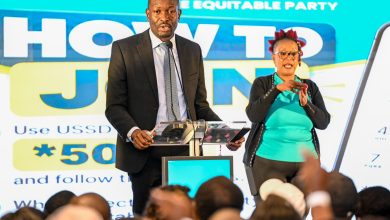
Speaking on March 4, 2026 Jubilee Party Deputy Leader Jeremiah Kioni explained that the coalition’s current rallies do not provide sufficient opportunity for Jubilee candidates to present their agendas to voters.
“We have understood that the rallies by the United Opposition do not help those who want to vie for other positions, especially those from the Jubilee Party, because we do not get time to tell voters our mandate and campaign for ourselves,” Kioni said.
He argued that the party needs parallel rallies to market its candidates while still supporting the broader opposition agenda.
Kioni’s remarks highlight a growing dilemma for opposition coalition on balancing unity against the need to allow individual parties and candidates to sell themselves to the electorate.
According to political analysts, by insisting that there would be no zoning, the alliances, both ruling and opposition will effectively open the door for competition among parties, but this has created friction over access to campaign platforms, rally airtime, and regional influence.
Kioni also claimed that he was denied the opportunity to address a rally in Ndaragwa constituency, a seat he represented for ten years, further illustrating the operational challenges of managing joint campaigns.
Political analysts note that these early disagreements could signal deeper divisions if not managed carefully.
“The United Opposition’s current approach risks alienating member parties if certain aspirants feel sidelined. The challenge will be to maintain cohesion while accommodating competing ambitions,” Justus Ochieng, a political commentator noted.
He added that the absence of a declared presidential candidate within the alliance adds another layer of uncertainty, as each principal seeks early support to position themselves as the eventual standard-bearer.
Meanwhile, Jubilee Party’s decision to hold parallel rallies may indicate a strategic recalibration, ensuring its candidates maintain visibility without undermining opposition unity.
Kioni emphasised that while Jubilee aspirants support the broader opposition agenda, they also need a platform to “sell our candidature so that the public can choose leaders they feel can represent them.”
The move could be interpreted as a subtle warning that the party will not fully subordinate its interests to coalition priorities if platforms remain inequitable.
The broader political context suggests that these disputes are not unique to the opposition.
UDA itself is grappling with internal tensions, as leaders debate whether open competition or negotiated zoning will best advance its electoral strategy.
With multiple parties vying for influence within coalitions, Kenya’s 2027 polls are shaping up to be a contest not only of candidates but of strategic alliances, messaging control, and regional dominance.