Israel-Iran war: Middle East on the brink as Europe enters the fray

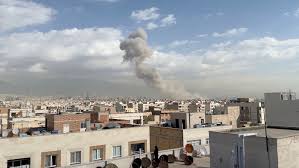
Israel and the United States have launched what Israeli officials describe as a preemptive military strike against Iran, marking a dramatic escalation after weeks of rising tensions and an increased U.S. military presence across the Middle East.
A person briefed on the operation told international media that the strike was conducted jointly with U.S. forces, although there was no immediate public confirmation from Washington.
Israeli authorities said the action was intended to neutralize what they described as imminent threats from Iran, including missile and drone attacks targeting Israeli territory.
In an official statement, Israel’s Defense Minister Israel Katz characterised the operation as a necessary preemptive move to safeguard the country’s civilian population.
He warned that retaliatory missile and drone strikes from Iran were expected in the immediate future. Shortly afterward, Israel declared a nationwide 48-hour state of emergency.
Air raid sirens sounded across Israel at approximately 8:15 a.m. local time, prompting residents to seek shelter in bomb shelters.
The Israeli military said it had issued a proactive public alert warning of the possibility of incoming missiles. Civil defense protocols were activated nationwide, and regional military forces were placed on high alert.
Israel’s Airports Authority announced the immediate closure of the country’s airspace to all civilian flights, urging the public not to travel to airports.
The measure reflects fears of rapid escalation and possible retaliatory strikes targeting critical infrastructure.
In Iran, state media reported rocket fire in parts of the capital, Tehran. State television aired footage showing plumes of smoke rising from areas of the city following reported blasts.
The full extent of the damage and potential casualties remains unclear, and Iranian authorities have not yet issued detailed assessments.
The strike comes amid ongoing but fragile diplomatic contacts between Washington and Tehran.
According to an Israeli defense official cited by media agencies, the operation had been planned for months, with the launch date determined weeks ago—even as the United States and Iran engaged in negotiations aimed at reducing tensions.
Regional repercussions were swift. The U.S. Embassy in Qatar ordered all personnel to shelter in place and advised American citizens in the country to do the same until further notice. Iraq’s transport ministry announced the closure of its national airspace, reflecting broader fears that the confrontation could spill beyond the immediate parties involved.
Tehran has signaled that it is preparing a forceful response. Iranian officials have not yet detailed their strategy, but rhetoric from state-linked sources has suggested retaliation could be “crushing.”
The prospect of direct exchanges between Israel and Iran has heightened concerns about a wider regional conflict involving allied militias and proxy forces.
Mehran Kamrava, director of the Iranian Studies Unit at the Arab Center for Research and Policy Studies and a professor at Georgetown University in Qatar, suggested the timing of the strike may be politically significant.
He said Israel “appears to have launched an attack designed to derail the negotiations,” underscoring the delicate balance between diplomacy and military action in the current crisis.
As both sides brace for possible further escalation, the region remains on edge, with global powers closely monitoring developments that could reshape Middle Eastern security dynamics.