How farmers are losing tea battle to KTDA cartels

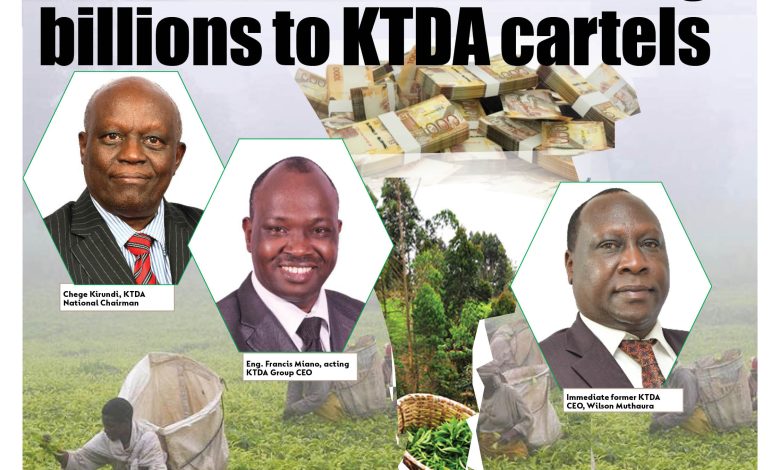
Kenya’s tea farmers are increasingly losing ground in what many describe as a battle against entrenched cartels within the Kenya Tea Development Agency (KTDA), following damning findings by a recent audit conducted by the Tea Board of Kenya (TBK).
The audit, released late last year and presented to Parliament, un
covered widespread governance failures and systemic violations across 71 tea factories managed by KTDA, which collectively serve about 700,000 smallholder farmers.
At the centre of the crisis is the misuse and mismanagement of farmers’ funds amounting to more than Sh26.06 billion. The audit revealed that factories incurred huge debts through loans taken without proper board approval, often backed by inflated collateral and diverted from their intended purposes. At least 78 factories were implicated, exposing farmers to financial risk while delivering little tangible benefit.
Among the most troubling findings were Sh10.36billion in inter-factory loans arranged by KTDA headquarters without supporting board minutes or clear repayment frameworks.
Many factories failed to meet repayment deadlines, prompting KTDA to scrap the programme last month and instead push factories toward borrowing from commercial banks. As of June 2025, factories west of the Great Rift Valley—mainly in Kericho, Bomet, Nyamira, Kisii and Nandi counties carried Sh21.61billion of the debt burden, compared to just Sh4.45billion owed by factories east of the Rift.
“Future farmer payments must be based on actual earnings and real cash, not borrowings propped up by overvalued stocks,” TBK said.
Further, the audit also flagged Sh12.8 billion in commodity loans meant to finance farmer bonuses in October 2024. These loans were secured using heavily overvalued tea stocks, particularly in western regions, but were allegedly diverted to cover daily operational expenses.
A further Sh2.59 billion in asset-backed loans saw factories exceed approved borrowing limits and pay inflated prices for machinery, with some factories paying significantly more than others for identical equipment.
Several factories, including Kebirigo, Ragati and Chinga, borrowed Sh300 million for capital projects such as withering-bay expansions, only for the funds to be spent on unrelated items. The situation has been worsened by Sh4.67 billion owed by the government to KTDA in unpaid fertilizer subsidy refunds, deepening the sector’s cash-flow crisis.
Farmers have also raised concerns over the stalled Sh950million Settet hydro power project, funded by factories in Kericho and Bomet, amid claims that resources were diverted to projects in other regions. While KTDA disputes the regulator’s findings, frustration is growing—especially among farmers west of the Rift—over perceived dominance by the Mt Kenya bloc, inequitable bonus payouts, and lack of transparency.
These governance failures come at a precarious time for the tea industry, already strained by bonus disparities, poor infrastructure, higher operating costs, and lower auction prices for western tea. Political tensions, parliamentary probes, street protests, and calls for reform have intensified scrutiny of KTDA.