Hope deferred: Disabled student calls out barriers in Kenya’s education system
Despite enrolling for a diploma in Human Resource Management in 2019, Kavale has spent seven years in college without graduating

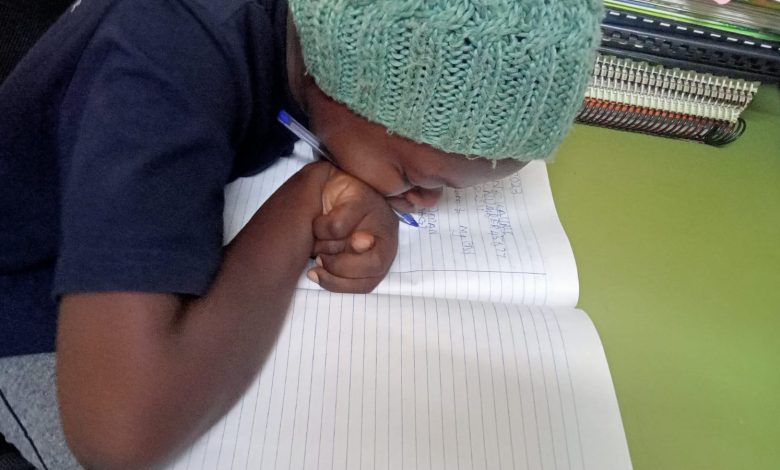
Christine Kavale, a 28-year-old college student at Thika Technical Training College (TTI) in Kiambu County, embodies the struggles many persons with disabilities face in Kenya’s education system.
Despite enrolling for a diploma in Human Resource Management in 2019, Kavale has spent seven years in college without graduating.
She has sat for her examinations multiple times since 2023 but says she has not received results, leaving her increasingly uncertain about her future.
Born in 1998 in Mutonguni, Kitui County, Christine was diagnosed with cerebral palsy as an infant, a condition that affects her mobility and has left her reliant on a wheelchair.
She writes using her mouth and operates her laptop and phone using her tongue and mouth, skills she has mastered through determination and digital learning.
Her academic journey has been marked by both resilience and frustration. She recounts instances where examination arrangements failed her, including delays after being assigned the wrong exam room, resulting in her being marked absent.
On other occasions, she found no desks or charging points despite relying on electronic devices to complete her work.
“At one time I was late for one-and-a-half hours because my papers were placed in a different exam room and nobody bothered to let me know,” she said, adding that she was forced to repeat modules, increasing both time and financial burden.
She personifies the tribulations faced by persons with disability in their pursuit of better lives.
For Christine disability has not been an obstacle as she strives towards achieving her goal to become a human resources manager, which vision has, however, been dimmed by a litany of frustrations.
The journey has not been easy given that she uses her mouth, and not hands, to write and moves around in a wheelchair.
The determined young woman who is the last-born among nine siblings adopted digital technology to make her studies easier through online learning.
Incredibly, she uses her mouth and tongue to operate her laptop and phone in order to access online lessons due to of her physical condition.
She recalls that her parents realised she had a problem while still an infant as she could not sit and was later diagnosed with cerebral palsy, an incurable condition that she has to live with the rest of her life.
Despite this, Kavale has been pursuing a diploma course in human resources management at the tertiary institution’s Virtual and Extension Learning Department and hopes to become a human resources manager.
However, her dream appears to have hit a brick wall after sitting for her diploma exams four times since 2023 without getting any results and she now fears that she may never graduate.
Christine’s case may just be one out of many like her who are suffering in silence or have given up hope after undergoing similar frustrations.
Narrating her ordeal, the young lady blames a ‘don’t care’ attitude displayed by her examiners as well as the college and Kenya National Examination Council (KNEC) officials.
“I have always started my exams late compared to other candidates. I recall at one time I was late for one-and-a-half hours because my papers were placed in a different exam room from where I was and nobody bothered to let me know,
“I was therefore marked absent and forced to repeat the entire module which is expensive and time-consuming,” laments Christine who first joined TTI in 2019 for a certificate course before later deciding to pursue a diploma.
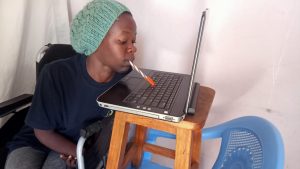
During some of the exam sessions, she had to arrive in the room only to find there was no table or desk set aside for her, further complicating matters.
“On several occasions, I have also found myself in an room without a power point despite the fact that I use a laptop and phone to answer exam questions and these need charging,” Christine recalls.
On another occasion while presenting her first project in 2022, the college failed to submit her work leading to her getting a referral to repeat.
Using her electronic wheelchair which was donated by a good Samaritan, Christine has been reporting to the college once or twice a term to physically present her continuous assessment exam papers.
While appreciating some of the college members of staff for their support and understanding, Christine says the institution lacks special or ‘friendly’ provisions for persons with disability.
“At the college, only the buildings are friendly to students with disability because there are ramps all over, but the classrooms have no provisions for such cases,” she adds.
Fellow students who are visually impaired, she adds, have suffered a similar fate as a result of delayed or cancelled exam results.
“Some have simply resigned to their fate and decided to remain quiet, I am not about to give up,” she reaffirmed.
She is, nevertheless full of praise for her former head of department Dr Rose Kiiru whom she says has been very supportive but has since left.
Kavale expresses her misgivings about the education system which she says clearly places persons with disability at a disadvantaged position when it comes to sitting for examinations.
“It is really not fair at all for these learning institutions to do an equal assessment of all the candidates regardless of whether some of us go through insurmountable challenges. Persons with disability should be assessed differently,” Kavale asserts.
In her determination to fight for her rights, she even visited the KNEC headquarters in Nairobi earlier this year accompanied by her mother but did not get much help from there.
“I was referred to an official who promised to look into my case and we remained in touch initially, but after sometime he stopped responding to my call’s and text messages and up to date I’m still in the dark,” Christine
Before enrolling for the course at TTI in 2019, she had sat for her KCSE exam the previous year at Joy Town Special School in Thika where she scored grade C-minus, which she says was below what she had hoped to attain.
She says she did not give up after failing to secure a place in University as was her dream and went on to approach a former MP from her rural home who paid for her college admission fees at TTI.
The ever jovial Christine has a message to persons living with disability; “Never lose hope, accept your situation and face the challenges of life.”
She is appealing for support from government quarters to overcome the challenges she is currently facing, fearing that her years at the college may go to waste.