High Court restores farmers’ right to save and sell indigenous seeds

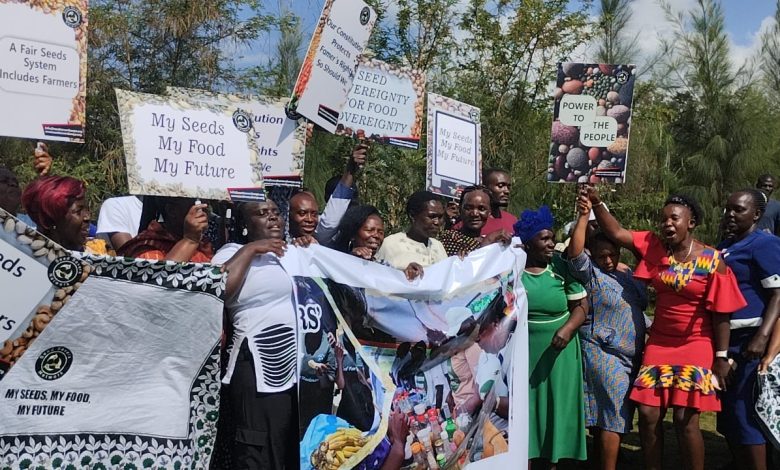
Smallholder farmers in Kenya have shared their hope of making a fortune from the sale of their seeds after the Machakos High Court secured their right to carry on the traditional practice of sharing local indigenous seeds saying parts of the clauses in the Seed and Plant Variety Act 2022 that was banning the practice was unconstitutional.
Beatrice Wangui, a petitioner among the 15 under the Seed Savers Network who had sought constitution clarification at the court has shared that she hopes to make a fortune of upto Sh20,000 from the previous Sh8,000-Sh12,000 monthly from the sale of her seeds, something that the law had prevented her from doing.
For the different indigenous maize seeds, Beatrice says a Kilo is sold for Sh250 and even more while for the vegetables it is sold starting from Sh200 depending on the grams that a buyer needs.
“As the court has decided, we shall have freedom to share and sell our seeds without the punitive law. As a farmer, I am the owner of the seeds which after harvesting we do the germination and moisture tests before storing them for replanting in different seasons. I will be able to make upto Sh… from the sale of the various seeds that I have including beans, maize (Yellow, purple and red maize varieties), indigenous vegetables like Managu, Terere, Saga and Mushrooms too,” Beatrice stated.
She shares that with the SPAV, they have been living in fear of being arrested, jailed or fined as they have been keeping their seeds in the community seedbanks and even their own seed banks at their homes where they have been sharing the seeds with their friends and not selling them as they were not certified seed merchants.
“In a month we have been making around Sh,8000 or even upto Sh12,000 a month from the sale of yellow, purple and red maize seeds together with the indigenous vegetable seeds. With the court ruling, the sale is expected to shoot to upto Sh20,000 and more because we shall not be selling the seeds in fear of being jailed or fined anymore.”
On their part, the Seed Savers Network has promised to lead in the change of policies/ laws to ensure the smallholder farmers are now protected fully and do not suffer from punitive laws.
“We have been having discussions with the devolved units and the national governments to come up with policies. In Nakuru, we shall be launching the agro-ecology policy next month after a conversation that we started at our centre here in Gilgil after the Members of County Assembly came and we discussed about food security. Among the recommendations that the legislators came up with was coming up with a policy which we have been at the forefront in developing,” Tabby Munyiri, Seed Savers Communication and advocacy strategist explained.
She mentioned that the Nakuru Agro-ecology policy will see the support of farmers to conserve, sale and save indigenous seeds.
“One of the things that has stood out in the Nakuru Agro-ecology policy is the conservation and saving of indigenous seed which will seed food security in the city in the long run,” she added.
“At the national level, we have the reviewing of the Seed and Plant Varieties Act which is ongoing even at the judgment comes timely as the review of the Act is on and we are part of the technical committee making the review for amendments. The ruling has given us strength and vindicated some of our recommendations as farmers will now be free to sale and sell their indigenous seeds.”
According to Tabby, the smallholder farmers have been living in fear but they will now be free to make not only a fortune from the food sell but also share their seeds and sell them too. She revealed that soon the farmers will be stocking their seeds in bulk and selling them.
“Farmers were operating with a lot of uncertainty because there was the fear of being arrested at the SPAV Act stated that farmers selling uncertified seeds at their community and individual seedbanks were liable to a two year jail term or pay Sh1 million which was too high for a smallholder farmer,” she said.
“We expect that they will soon be stocking seeds in bulk, packaging and selling because the quality of their seeds is good as they conserve the seeds properly and are keen ensure the seeds are free from pests, well dried and have more than 80 per cent germination rate. Once farmers start selling, I believe people will start trusting their seeds because they have been buying from them even with the limitations that have been there and now the amount will be substantial,” she explained.
She shared that even though they have started the processes of reviewing the policies, the work is till a lot but they hope to achieve soon and see the smallholder farmers also sell their indigenous seeds to the government through the various procurement channels during the planting seasons.
“There is still a lot work to be done in ensuring that the smallholder farmers indigenous seeds are recognized by the law and that is why we are now part of the initiative to amend the Act. The ministry of Agriculture and the government has included us and we know that everything that be well. We hope that when the law will be amended, even the government itself shall be able to buy from the smallholder farmers seeds for distribution and fill the shortage gaps that have always been witnessed during planting seasons.”
“A survey that we did two years ago indicated that over 50 indigenous seed varieties have already been lost. We need to do a lot to restore the lost seed biodiversity. Different crop varieties are on the verge of extinction and community seedbanks, training of farmers together with good policy formulation is what we are doing to ensure everything gets back in place.”
Under the 2012 “Seed and Plant Varieties Act”, anyone who saved uncertified seeds from their crops, then sold or shared them, could face fines or jail.
Fifteen smallholder farmers across the country under the Seed Savers Network supported by Greenpeace Africa and Bibo Africa petitioned the High Court in 2022 asking it to declare that the parts of the law imposing those penalties were unconstitutional.
During the case, the Kenya Plant Health Inspectorate Service (KEPHIS) argued that the legislation was meant to guarantee seed quality and maximize yields.
In her verdict lady Justice Rhoda Cherotich Rutto affirmed that “the ancient right of farmers to save and share seeds supersedes commercial interests, reshaping the legal balance of power between communities and agribusiness worldwide.”