Haji’s rising star and the political war with Duale shakes up 2027 Garissa governor race
His growing visibility, outreach to clan elders and emerging alliances have elevated his profile while simultaneously triggering a fierce political confrontation with Health Cabinet Secretary Aden Duale, in what is increasingly becoming one of the defining political battles ahead of the 2027 elections. Local leaders and sources who spoke to us on condition of anonymity intimated that indications and political activities on the ground show that Duale is angling to run for his previously long held Garissa Township constituency parliamentary seat in 2027, currently held by incumbent, Major Dekow Barrow Mohamed of the ruling UDA party.

By Adieri Mulaa
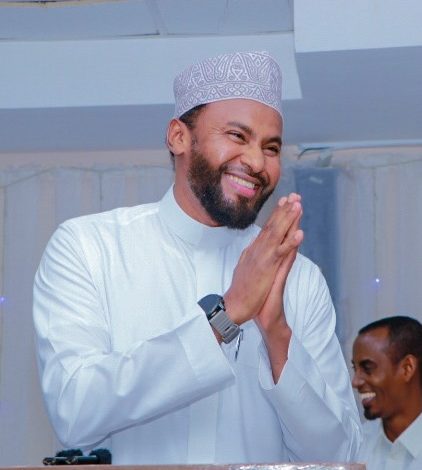
Garissa’s 2027 gubernatorial contest is steadily taking shape, with Senator Abdulkadir Mohamed Haji emerging as one of the most closely watched figures in a race already attracting a crowded field of seasoned politicians.
Haji, popularly known as Abdul Haji, has in recent months intensified his political activities across Garissa County, expanding his engagements beyond his traditional Samawathal support base and making calculated inroads into communities associated with rival gubernatorial aspirants.
His growing visibility, outreach to clan elders and emerging alliances have elevated his profile while simultaneously triggering a fierce political confrontation with Health Cabinet Secretary Aden Duale, in what is increasingly becoming one of the defining political battles ahead of the 2027 elections.
Local leaders and sources who spoke to us on condition of anonymity intimated that indications and political activities on the ground show that Duale is angling to run for his previously long held Garissa Township constituency parliamentary seat in 2027, currently held by incumbent, Major Dekow Barrow Mohamed of the ruling UDA party.
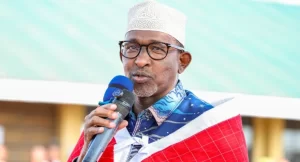
However, by the time of going to publication, CS Duale was not available for comment.
At the centre of Haji’s strategy is an attempt to build a broad political coalition cutting across Garissa’s influential clan and sub-clan networks.
Among communities in the North Eastern region, clannism impacts major political decisions on the choice of leaders. Senator Haji comes from the Samawathal clan, which is predominantly based in Ijara Constituency.
Haji comes from the Samawathal clan, which has its traditional base in Ijara Constituency.
While clan dynamics do not determine every political decision in Garissa, community structures and elders have historically played an important role in shaping political alliances, negotiations and candidate endorsements.
The senator appears keen to turn his Samawathal base into the foundation of a wider county-wide coalition.
Over the past several months, he has held town-hall meetings, consultations and community engagements in different parts of Garissa, including areas regarded as political strongholds of his competitors.
Most significantly, Haji has made sustained overtures to sections of the Aulihan community, whose political establishment is associated with former senator and ambassador Mohamed Shidiye, one of the politicians reported to be eyeing the governorship.
In the past fortnight alone, Haji has engaged members of several Aulihan sub-clans, including Abokor Cade, Sonqad, Hawes, Rer Ali and Afwah.
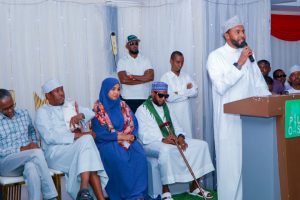
The engagements have fuelled speculation about an emerging Samawathal-Aulihan political understanding that could significantly reshape the gubernatorial contest.
An Aulihan council of elders, alongside professionals and community leaders led by Sultan Hamud and Ambassador Engineer Mahboub Maalim Mohamed, chairperson of the Equalisation Fund Advisory Board, have publicly expressed support for Haji’s gubernatorial ambitions.
For Haji, the endorsements are significant because they suggest that his political appeal could be extending beyond the community that traditionally forms his political base.
The senator has also been cultivating relationships with politicians and leaders from rival political camps.
He has engaged allies of former Garissa governor Ali Korane and Dubat Fidhow while appearing on common political platforms with younger legislators, including Fafi MP Salah Yakub, Balambala MP Abdi Omar Shurie and Garissa Woman Representative Amina Utgon Siyad.
The emerging network has been interpreted by political observers as an attempt to assemble a broad coalition capable of transcending traditional clan loyalties.
The stakes are particularly high for the Samawathal community.
If Haji succeeds in winning the governorship, he would become the first governor of Garissa from the Samawathal clan, giving his campaign an important symbolic dimension.
Samawathal politicians have previously played influential roles in Garissa’s political coalitions, including serving as deputy governors under administrations headed by leaders from other sub-clans.
Haji is now seeking to move from being a critical component of county political alliances to occupying the top seat.
His message to voters has centred on development and the promise to ensure that the benefits of devolution reach residents across the county.
But his growing political campaign has also opened a new and increasingly bitter front with Duale.
The senator has accused the Cabinet Secretary of attempting to undermine his political base and interfere with clan political formations in Garissa and neighbouring counties.
At the centre of the dispute is Haji’s allegation that Duale has attempted to weaken his standing within the Samawathal community by supporting the coronation of another Sultan.
Haji has also accused Duale of interfering in political affairs involving the Aulihan and other communities.
Speaking during a meeting with members of the Abokor Cade family of the larger Aulihan clan, Haji escalated his criticism of the former Garissa Township MP, accusing him of targeting his family for the past three years.
The senator insisted that his political confrontation with Duale was personal and should not be interpreted as a conflict between entire communities.
“For the last three years he has been fighting us Haji family,” Haji said, arguing that he had previously avoided taking the dispute back to his clan.
He accused Duale of running to his political backyard after Haji decided to respond to what he described as persistent attacks.
Haji also criticised the use of religious issues in political mobilisation, urging Duale to keep matters concerning Islam away from political contests.
The exchange has exposed the increasingly competitive nature of Garissa politics as leaders position themselves ahead of 2027.
Duale, for his part, has warned that the political contest will become tougher as the elections approach.
Speaking at political gatherings, the Cabinet Secretary has suggested that the political “kitchen” will become hotter and that those seeking to challenge him should be prepared for an intense battle.
Duale has also invoked his record of supporting Islamic causes, while Haji has dismissed what he considers attempts to use religious issues to gain political advantage.
The confrontation has given the gubernatorial contest an additional layer of complexity, particularly because both men command significant political networks.
For Haji, however, the battle with Duale appears to be occurring alongside, rather than at the expense of, his broader coalition-building strategy.
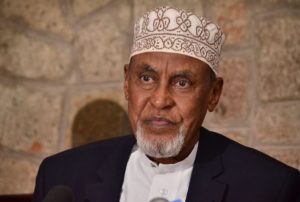
His supporters argue that the senator is well placed to build on the political legacy of his late father, Yusuf Haji, the former Defence Minister and long-serving national politician, while relying on his own relationships developed in national politics and within Garissa.
At the Senate, Abdul Haji serves on the Speaker’s Panel, a leadership position that has given him exposure to parliamentary affairs and devolved-government issues.
His supporters see the experience as an advantage as he seeks to present himself as a leader capable of managing the county government and navigating its relationship with the national administration.
But Haji faces formidable competition.
The field includes former governor Ali Korane, former Principal Secretary Abdiqani Dubat, Moulid Shurie, Ambassador Mohamed Shidiye and former Ijara MP Ahmed Ibrahim Abass.
Shidiye remains particularly significant because of his association with the Aulihan community and his own gubernatorial ambitions.
The war of words with Duale could become an important feature of the 2027 contest, particularly if the senator continues challenging what he describes as attempts to interfere with his clan’s political affairs.
Haji’s aggressive grassroots mobilisation, growing network of allies, engagement with influential elders and willingness to confront powerful political figures have placed him firmly among the leading aspirants to watch.