Fixing tax evasion, money laundering in Kenya’s gambling sector under the new authority

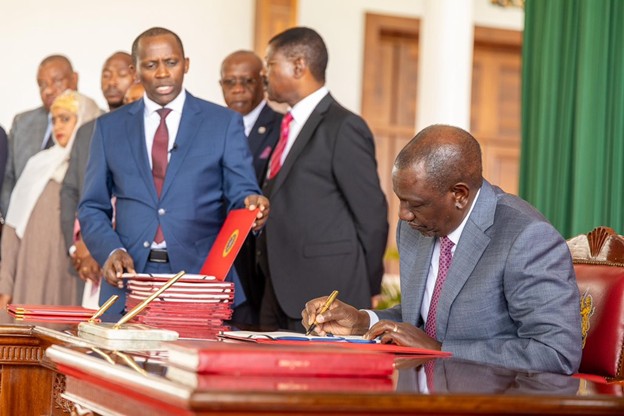
The transition from Betting Control and Licensing Board (BCLB) to Gambling Regulatory Authority (GRA) offers a crucial opportunity to address one of the sector’s most persistent challenges, tax evasion.
For years, gambling operators spanning online betting firms, casinos, lotteries, and gaming machine owners have exploited regulatory loopholes notably weak oversight, opaque financial systems and political interference to under declare revenues and avoid billions in taxes.
If GRA alongside other line government agencies like the Kenya Revenue Authority (KRA) and Financial Reporting Center (FRC) are to succeed where BCLB failed, deterring tax evasion and money laundering must be its top priority.
A number of betting firms have either been confirmed being complicit of committing tax evasion or other financial crimes like money laundering.
Thus, establishment of a transparent, technology-driven regulatory framework should be the first point of call.
Tax evasion in the gambling industry thrives in opacity. Many operators run parallel books, manipulate betting odds to mask actual revenue, or use offshore hosting to hide real-time transactions.
To curb this, GRA must enforce mandatory integration of all licensed operators into a centralised real-time monitoring system similar to the Excise Goods Management System used in the alcohol and tobacco sectors.
This system should capture all bets placed, payouts issued, jackpot winnings, deposits, and withdrawals. Real-time visibility allows KRA to compute taxes automatically, reducing reliance on self-declaration, which is easily abused.
Additionally, digital payment interoperability is essential. The authority should require all gambling transactions to be routed through approved digital wallets or payment gateways that provide verifiable audit trails.
Cash-based gambling particularly prevalent in informal gaming machines and smaller casinos creates loopholes that must be sealed. Linking operators’ Merchant IDs with their licences will ensure KRA and GRA can track every shilling transacted.
Secondly, licensing reforms must raise the compliance threshold. Under BCLB, licensing became transactional fees were collected, but compliance oversight was lax. GRA should implement a tiered licensing framework where renewal is contingent on strict adherence to financial reporting standards, including quarterly audited statements, proof of tax remittance, and system integrity evaluations. Operators found underreporting revenues should face immediate suspension, frozen access to payment platforms, or licence revocation. A regulatory authority that tolerates non-compliance loses credibility.
A robust Know Your Customer (KYC) system is also vital to combat tax evasion linked to identity manipulation and money laundering. By requiring operators to verify player identities using e-citizen integration or national ID databases, the authority can eliminate anonymous betting accounts often used by cartels to launder funds through gaming platforms.
Additionally, collaboration between GRA, KRA, the Financial Reporting Centre (FRC) and communications regulators is critical.
Gambling companies frequently exploit regulatory fragmentation. Betting operations fall under one agency, digital payments under another and anti-money laundering oversight under a third.
This creates blind spots. GRA must ensure data-sharing protocols that allow KRA to access operator systems, the FRC to monitor suspicious financial flows, and the Communications Authority to shut down illegal online platforms. A multi-agency compliance taskforce would strengthen enforcement and deter operators from exploiting jurisdictional gaps.
Moreover, deterrence requires meaningful penalties. Historically, fines have been too low compared to the profits of tax evasion making non-compliance a cost of doing business. GRA must lobby for legislative reforms that impose punitive fines tied to annual turnover, not flat rates. Additionally, directors of gambling firms should be held personally liable for fraudulent reporting or financial misrepresentation. Criminal charges, rather than administrative penalties alone, will send a strong message that tax evasion is not a negotiable offence.
Equally important is addressing the political interference that has historically undermined enforcement. Gambling companies often align with influential political actors, making regulators hesitant to impose sanctions. GRA must be insulated through board professionalism, transparent appointment processes, and strong parliamentary oversight. Regulators must also publish compliance reports to enhance public accountability and remove the secrecy that allows politically connected firms to evade taxes.
The authority should also run awareness campaigns encouraging gamblers to demand receipts or digital confirmation of bets, helping expose illegal or non-compliant operators by leveraging on public communication and consumer empowerment.
Finally, needless to say, publishing lists of licensed and tax-compliant operators will steer consumers away from illicit platforms that exploit tax loopholes.
To sum up, deterring tax evasion and money laundering in Kenya’s gambling industry requires more than replacing BCLB with the Gambling Regulatory Authority, in fact, it demands structural reforms.
Through digital surveillance, strict licensing, multi-agency cooperation, meaningful penalties, political insulation, and public awareness, Kenya can create a transparent and accountable gambling ecosystem.
If the GRA embraces these reforms with integrity and resolve, the sector can finally shed its reputation for opacity and become a reliable contributor to national revenue and responsible gaming.