Experts highlight leadership, culture and vision as keys to institutional sustainability
Omwoyo emphasised that leaders must operate with a long-term vision that extends beyond their own tenure

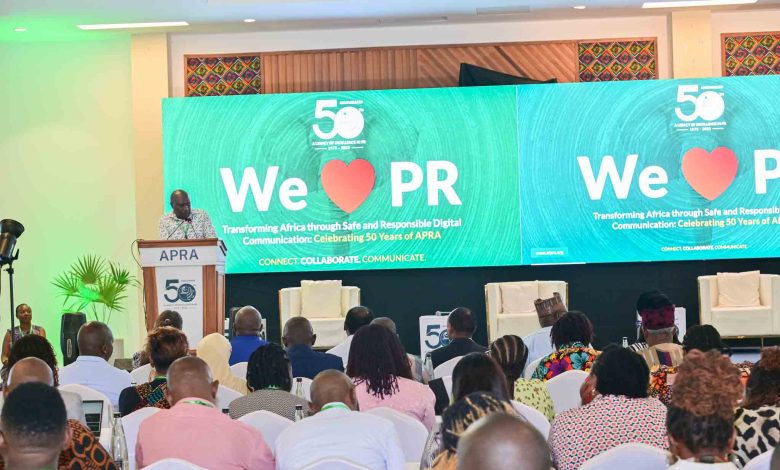
The Media Council of Kenya (MCK) has underscored the crucial role of leadership, organisational culture, and strategic talent acquisition in ensuring the long-term viability of institutions.
MCK CEO David Omwoyo told the 36th African Public Relations Association (APRA) Conference that sustainability is not merely a question of infrastructure or resources, but of values deeply rooted within people and organisational culture.
“Viability is selling a set of values and identifying a set of people who will protect those values even beyond your absence,” he observed, reflecting on the enduring strength of institutions built on solid foundations.
Omwoyo emphasised that leaders must operate with a long-term vision that extends beyond their own tenure. He argued that true institutional resilience is achieved by aligning strategy with performance and embedding systems that preserve core values through leadership transitions.
“A leader of an institution must think of himself beyond the organisation. It’s a place where you entrench cultural values and systems,” he added.
This perspective was echoed by Joseph Chebongkeng Kalabubsuis, President of Cameroon’s National Communication Council (NCC), who highlighted the importance of starting with a clear institutional vision.
“When you are the head of an institution, you would like to make a difference, and that difference will depend on the vision which you have. It’s important to assess what is in the institution, what the vision is, and how you can modify and explore all avenues available for progress,” he said.
Ernest Sungura, Chairperson of the Independent Media Council of Africa (NIMCA) and Executive Director of the Media Council of Tanzania, emphasised that clarity of purpose is at the heart of institutional viability.
“It is essential to clearly define our vision, mission and core values to guide our actions and decisions. This is critical for aligning efforts and ensuring a unified direction,” Mr Sungura remarked.
Esther Cobbah, CEO of Stratcomm Africa Ltd and President of the Institute of Public Relations (IPR), Ghana, highlighted that discussions about institutional resilience must go beyond governance structures and policy frameworks, noting the pivotal role of strategic communication.
She advocated for a professional, ethical, and forward-looking approach to communication as a key driver of institutional credibility and impact.
“The immediate short-term decisions are based on what you want to see in the future. It’s called strategy. Leaders must have their eyes on the goal. It’s all about aligning the short term and the long term,” Cobbah said.