Ex-President Assad sentenced to death as Syria takes revenge on old regime
Assad, who is now living in exile in Moscow under Russian protection, was convicted after the court found that he had been the ultimate decision-maker behind crimes committed through state institutions during the war.

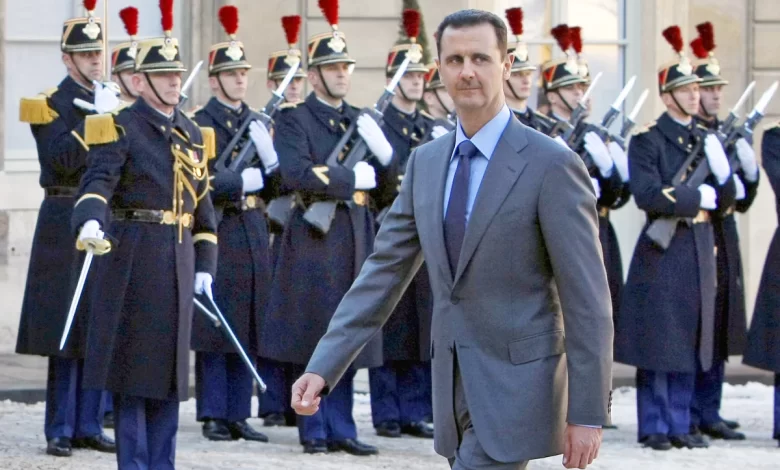
Former Syrian president Bashar al-Assad has been sentenced to death in absentia after a court in Damascus convicted him of premeditated murder, torture and crimes against humanity committed during the country’s nearly 14-year civil war.
The landmark ruling marks the first conviction of Assad since his regime was toppled in December 2024, ending more than five decades of rule by the Assad family and opening a new chapter in Syria’s efforts to hold former regime officials accountable for atrocities committed during the conflict.
The Fourth Criminal Court in Damascus also sentenced Assad’s younger brother, Maher al-Assad, to death in absentia.
Maher commanded the elite Fourth Division of the Syrian army and fled to Russia with his brother after the collapse of the regime.
Assad, who is now living in exile in Moscow under Russian protection, was convicted after the court found that he had been the ultimate decision-maker behind crimes committed through state institutions during the war.
Judge Fakhr al-Din al-Aryan said witness testimony established Assad’s role as the “highest decision-maker”, allowing state institutions to be used to facilitate the commission of crimes against civilians.
Assad did not attend the proceedings and is not expected to serve the sentence unless Russia agrees to extradite him to Syria.
The court also sentenced Assad’s cousin, Atef Najib, the former head of political security in the southern province of Deraa, to death.
Unlike Assad and Maher, Najib appeared in court wearing a striped prison uniform and standing inside a cage as the judge delivered the verdict.
Najib was convicted of crimes including murder, the intentional killing of children under 15 and torture leading to death. The court said he had denied the charges and shown no remorse.
His conviction carries particular significance because Deraa is widely regarded as the birthplace of the 2011 uprising against Assad’s rule.
The uprising began after security forces detained and allegedly tortured teenagers accused of writing anti-government graffiti. The authorities’ violent response triggered protests that spread across Syria and eventually developed into a devastating civil war.
Hundreds of thousands of people were killed and millions displaced during the conflict, while cities and communities were destroyed in fighting between government forces, opposition groups and jihadist organisations.
Several other former military and security officials were also sentenced to death in absentia, including former Defence Minister Fahd al-Freij and Louay al-Ali, who served as military intelligence chief in Deraa during the early stages of the uprising.
The verdicts are part of a broader effort by Syria’s transitional authorities to prosecute senior figures linked to the former regime.
Outside the Damascus courthouse, hundreds of Syrians gathered to celebrate the ruling, many carrying photographs of relatives who were killed, tortured or disappeared during Assad’s rule.
Crowds clapped and chanted as vehicles passed by honking their horns, while others distributed Syrian flags.
“The joy is indescribable,” one man told foreign media while holding a photograph of his late father. He expressed hope that Assad and his senior aides would eventually face execution.
The conviction comes as a reprieve for victims and their families for the long-awaited attempt to establish accountability after years in which senior regime figures remained beyond the reach of Syrian courts.
The transitional government has described the prosecution of former regime officials as an important part of the country’s healing process.
“This is something they’ve waited for a long time,” said a representative of the Syrian transitional authorities, adding that Syrians wanted those who tortured their children, displaced families and destroyed communities to be held accountable.
Syria has repeatedly demanded that Russia extradite the former president, a longstanding ally of Moscow who was granted asylum after fleeing Damascus.
Despite improved relations between Moscow and Syria’s new authorities, Russia has so far refused to surrender Assad.