Ex-Liberia VP Jewel Howard-Taylor arrested in Sh18billion cocaine trafficking probe
Police Chief Gregory Coleman has linked Howard-Taylor to a major cocaine seizure made last month, involving drugs authorities valued at approximately $317 million. Police have not publicly detailed the precise nature of her alleged involvement in the shipment or disclosed the evidence they say connects her to the trafficking operation.

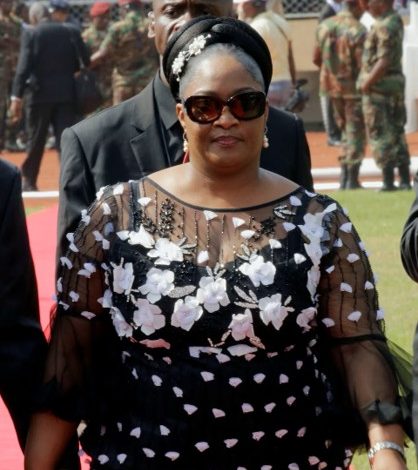
Liberia’s former Vice-President Jewel Howard-Taylor has been arrested and charged in connection with an alleged Sh18billion ($317million) transnational drug-trafficking network, sending shockwaves through the country’s political establishment and escalating a government crackdown on cocaine trafficking.
Howard-Taylor, 63, was this week detained at Roberts International Airport in Monrovia as she prepared to board a flight out of the country, according to Liberia’s Justice Ministry.
Local authorities said that the former vice-president is facing charges including drug trafficking, money laundering, unlawful importation and transportation of controlled substances, criminal solicitation and facilitation of criminal activity.
The allegations represent one of the most serious criminal cases involving a senior Liberian political figure in recent years.
Police Chief Gregory Coleman has linked Howard-Taylor to a major cocaine seizure made last month, involving drugs authorities valued at approximately $317 million.
Police have not publicly detailed the precise nature of her alleged involvement in the shipment or disclosed the evidence they say connects her to the trafficking operation.
Howard-Taylor has not publicly responded to the accusations. Her lawyer told the BBC that he could not comment until she had formally appeared in court and the charges had been presented through the judicial process.
From political power to criminal investigation
Howard-Taylor’s arrest marks a dramatic turn in the career of a politician who has occupied some of Liberia’s most influential political circles.
She entered national politics after the departure of her former husband, Charles Taylor, who rose from rebel leader to become Liberia’s president in 1997.
His presidency ended in 2003 amid Liberia’s devastating civil war and growing international pressure.
Charles Taylor was later prosecuted by a United Nations-backed tribunal and convicted of aiding and abetting rebels in neighbouring Sierra Leone during that country’s 1991-2002 civil war. The conflict claimed an estimated 50,000 lives.
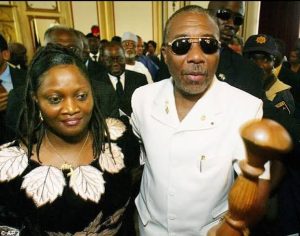
Howard-Taylor subsequently established her own political career. In 2017, former football star George Weah selected her as his running mate.
Their ticket won the election, making Howard-Taylor vice-president from 2018 until 2024.
Her arrest now places a former holder of Liberia’s second-highest constitutional office at the centre of an investigation authorities say extends beyond the movement of narcotics to the financial and political structures supporting the trade.
The cocaine trail
Liberian authorities have intensified their campaign against drug trafficking following a series of major cocaine seizures in recent months.
The investigation gained momentum after security agencies uncovered large quantities of cocaine believed to have been destined for Europe.
A July operation resulted in the seizure of almost four tonnes of cocaine, which authorities described as the largest drug bust in Liberia’s history.
The drugs were allegedly part of a sophisticated international operation involving individuals from different countries and using Liberia as a transit point.
The scale of the seizure has raised concerns about the growing sophistication of trafficking networks operating through West Africa, where criminal groups have increasingly exploited the region’s coastal access, international air links and vulnerabilities in border enforcement.
Police say the investigation has expanded beyond those physically transporting the drugs. Local law enforcement authorities are examining the roles of alleged financiers, organisers, facilitators and individuals accused of providing protection or logistical assistance to the network.
Howard-Taylor is among the most prominent figures to have been implicated so far.
Three foreign nationals — two Croatians and a Ukrainian — have also been charged in absentia. Liberian authorities allege that they were connected to the same trafficking network.
Justice Minister Oswald Tweh has vowed that the government will use both domestic and international mechanisms to locate the three suspects and bring them before the courts.
The decision to pursue suspects outside Liberia reflects the increasingly international character of the investigation.
Government sends warning to political elite
The case comes as President Joseph Boakai’s administration seeks to demonstrate that its campaign against corruption and organised crime will not spare politically connected individuals.
When Boakai took office in January 2024, he pledged to strengthen accountability and tackle corruption following years of public concern over alleged financial mismanagement under the previous administration.
His government has also repeatedly warned against Liberia becoming a hub or safe haven for international drug traffickers.
The investigation involving Howard-Taylor therefore presents a major test of those commitments.
In a strongly worded statement, the Liberian government declared that the investigation would pursue the entire network rather than focus only on individuals caught transporting drugs.
“No office is too high, no political connection is too powerful, no nationality provides immunity, and no individual is beyond the reach of the law,” the government said.
The statement was widely seen as a warning to political figures, security officials and businesspeople who might be suspected of facilitating the narcotics trade.
The government’s determination is also significant because the investigation has reportedly reached into sections of Liberia’s security establishment. Authorities are examining allegations that individuals with access to official systems may have helped protect or facilitate trafficking operations.
A regional cocaine corridor
Liberia’s investigation comes against the backdrop of a broader transformation in the global cocaine trade.
West Africa has emerged as a major transit corridor for cocaine produced in South America and destined primarily for European markets. Criminal organisations have increasingly exploited the region’s geographic position between the two continents.
Countries along West Africa’s Atlantic coast offer traffickers access to maritime routes linking South America and Europe. Once shipments reach the region, they can be moved through ports, airports and overland routes before being transported northwards.
The expansion of the trade has raised concerns among African governments and international law-enforcement agencies about the involvement of organised criminal networks, money laundering operations and corrupt officials.
For countries with limited law-enforcement resources, tracking the financial flows behind major drug shipments can be as challenging as intercepting the narcotics themselves.
Liberian authorities now appear determined to follow that money trail.
The charges against Howard-Taylor include money laundering, suggesting investigators are examining not only the movement of cocaine but also how proceeds from the alleged operation were generated, transferred or concealed.
A test for Liberia’s justice system
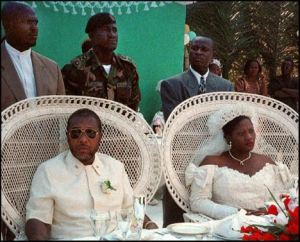
Locally and internationally, her case is likely to attract intense scrutiny because of Howard-Taylor’s political history and her former position as vice-president.
Howard-Taylor remains entitled to defend herself against the allegations, and the charges have yet to be tested in court.
Her detention also raises questions about whether investigators will uncover further links between the alleged trafficking network and Liberia’s political, business or security circles.
The seizure of nearly four tonnes of cocaine in July already exposed the scale at which international traffickers may be operating through the country.
The subsequent arrest of a former vice-president has transformed the investigation from a major narcotics case into a political and national security story.
Investigators have now widen their search for financiers, organisers and facilitators of the multi-million-dollar organised crime.