EACC recovers Sh20 milion land from former DC Peter Muhatia
Magistrate said Muhatia presented evidence that was laced with lies and incorrect material facts that included an application for a parcel of land disguised as an allocation letter

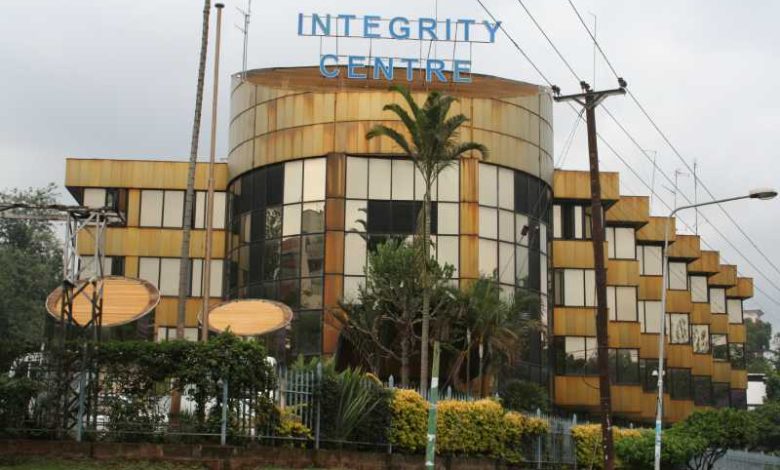
The Ethics and Anti-Corruption Commission (EACC) has recovered a Sh20 million parcel of land in Kakamenga which had been irregularly allocated to a former District Commissioner Peter Muhatia Alubale in 1996.
The land belonged to the Ministry of Housing before it was illegally hived off and awarded to Peter Muhatia by the then Commissioner of Lands Wilson Gachanja.
Gachanja allocated the land to Muhatia on a lease of 99 years.
EACC sued the Muhatia and Gachanja seeking to recover the land and Kakamega Chief Magistrate Philip Mutua nullified the lease to Muhatia and directed the registrar of lands to rectify the register to indicate that the land belongs to the government.
The magistrate said that the EACC had proved that there existed a government house on the land and there were civil servants who were living on it while paying rent to the government and therefore the land could not have been available for allocation.
Mutua said Muhatia presented evidence that was laced with lies and incorrect material facts that included an application for a parcel of land disguised as an allocation letter.
And in dismissing the argument by Muhatia, who insisted he had been allocated the land legally, Mutua pointed the facts that according to evidence by EACC, the land had been reserved for the government civil servant houses, a house and a servant’s quarter been constructed on it and the same occupied by civil servants who were paying rent to the Housing Department.
And with this being the case, the magistrate said the land was not un-alianated government land and therefore the same was neither available for allocation to (Muhatia) nor any other entity nor could it be sub0-divided and part thereof allocated to anybody.
“Apart from the land being already reserved for government house and therefore unavailable for sub-divisions and allocation, the two pointed out anomalies renders the allocations unprocedural, irregular and unlawful as it is based on untrue allegations of fact or in concealment of material facts namely – the land was already surveyed; allocated to County Council of Kakamenga and therefore not unsurveyed as alleged and that on it, stood servant’s quarters to the main government house,” stated Mutua.
“Any such sub-division and allocation is null and void, and unlawful and cannot confer any title to anybody.”
The court visited the land during the hearing of the case between EACC, Muhatia and Gachanja and established for itself that the servants’ quarter to the main house actually lies in the plot allocated to Muhatia.
In a daring land fraud, Muhatia had acquired part of a government land where housing civil servants lived. The ministry of Lands, Housing and Urban Development will repossess the property after EACC victory.
The recovery after a ruling earlier this month by the Kakamega High Court, which indicated that the land, which was originally part of Kakamega Municipality Block 111/100, was trust land reserved for civil servants’ housing.
According to the ruling by Justice Peter Mutua, by being a civil Servants’ quarter, the land could not be allocated to private individuals.
The judge stated that any lease or title issued over it was declared null and void.
Mutua ordered the cancellation of all illegal register entries for the land as he directed Muhatia to vacate the land and surrender it.
He further issued a permanent injunction stopping any dealings with the land other than returning it to the government.
“This decisive ruling not only restores the land to the rightful owner but also sends a strong message that public resources are not for private grabbing. EACC remains committed to protecting Kenya’s public assets and holding all who engage in corruption accountable,” EACC said in a statement after the recovery.
Currently, the anti-graft commission is pursuing over 400 cases for forfeiture of corruptly acquired assets estimated at Sh50 billion in various courts across the country.
The recovery in Kakamega comes a few days after the anti-corruption authority indicated that Kenyans are more likely to encounter unethical practices and corruption in the Ministry of Interior and National Administration than in any other public institution, a recent national survey by EACC shows.
According to the 2024 National Ethics and Corruption Survey, 47.8 per cent of Kenyans who interacted with the Interior ministry reported experiencing or witnessing corrupt or unethical conduct.
This makes it the ministry with the highest prevalence of such incidents.
The ministry of Health ranked second with 19.7 per cent, while the National Treasury followed at a distant third with 5.8 per cent.
Other public institutions that featured prominently include the ministries of Lands (5.6 per cent), Transport (3.9 per cent) and Education (2.6 per cent).