Court orders troubled Kenya Railways boss Mainga to pay Sh77million over demolition
The order adds to the legal challenges surrounding Mainga, whose continued tenure as Kenya Railways chief executive has in recent months triggered a series of court battles in Nairobi and Kisumu. The tenure storm and protracted disputes come against the backdrop of wider scrutiny of Kenya Railways' operations and land-related matters.

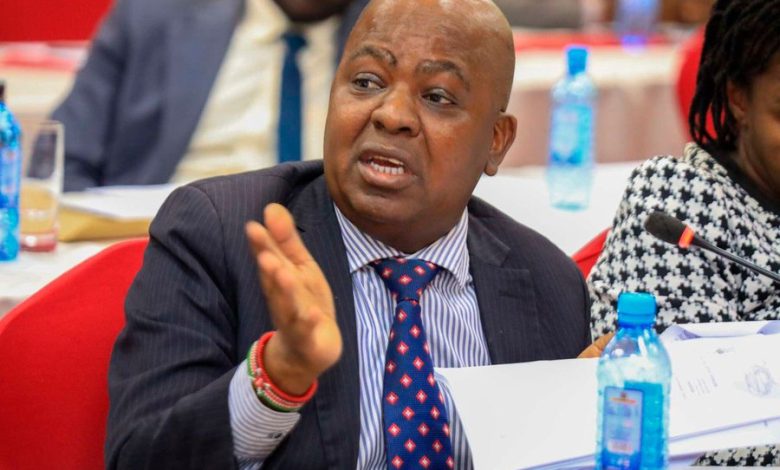
Kenya Railways Corporation Managing Director Philip Mainga has been ordered by the High Court in Kisumu to pay more than Sh77 million to Tilapia Beach Resort Limited and its proprietor, Amina Achieng Ochieng, over the unlawful demolition of their property.
Justice Edward Wabwoto directed Mainga, the Principal Secretary in the Interior Ministry and the Chief Finance Officer of Kisumu County to settle Sh76.87 million awarded to the resort, together with Sh963,543 in taxed costs and accrued interest at court rates.
The order adds to the legal challenges surrounding Mainga, whose continued tenure as Kenya Railways chief executive has in recent months triggered a series of court battles in Nairobi and Kisumu.
Several petitions challenging his stay in office have been filed, withdrawn and replaced with fresh cases, with petitioners questioning whether he has remained in office beyond the lawful limit.
In the Tilapia Beach Resort case, the High Court order followed a judicial review application seeking enforcement of an earlier judgment arising from the demolition and destruction of the applicants’ property.
The Environment and Land Court had, in a judgment delivered on February 24, 2022, found Kenya Railways, the national government and Kisumu County Government jointly and severally liable and awarded the resort Sh76.87 million in damages, together with costs and interest from the date the suit was filed until payment in full.
The decree was followed by the issuance of a certificate of costs against the government and a certificate of order against the government on October 3, 2022.
The documents were served on the judgment debtors in accordance with the Government Proceedings Act.
Kenya Railways subsequently appealed part of the judgment at the Court of Appeal in Kisumu and secured a stay of execution on March 28, 2023.
The stay was conditional on the corporation depositing half of the decretal amount in a joint interest-earning account operated by the parties’ advocates within 45 days.
Although the joint account was opened at KCB Bank’s Eldoret branch, the court found that Kenya Railways never deposited the required amount.
“The conditional stay therefore lapsed by operation of the very terms upon which it was granted. The decretal sum, taxed costs and accrued interest remain wholly unsettled to date, more than four years since the delivery of the judgment,” Justice Wabwoto said.
The applicants turned to the High Court after the corporation and the other government entities failed to honour the decree, seeking an order of mandamus compelling the responsible accounting officers to settle the judgment debt.
They argued that the continued failure to pay violated their right to expeditious, efficient and reasonable administrative action under the Fair Administrative Action Act.
They also told the court that they had no ordinary means of enforcing the judgment because execution proceedings cannot ordinarily be undertaken against the Government.
Justice Wabwoto agreed and ordered the three accounting officers to settle the outstanding decretal sum, taxed costs and all accrued interest until payment is made in full.
The amount owed had risen substantially because of accumulated interest. Court records indicated that the outstanding sum, including interest, had reached Sh142.4 million as of October 14, 2025.
The judgment comes as Mainga faces a separate and increasingly contentious legal battle over his continued occupation of the Kenya Railways top office.
Mainga was appointed managing director for an initial three-year term beginning February 3, 2020. A second three-year term commenced on February 3, 2023 and, according to recent petitions, expired on February 2, 2026.
Several petitioners have since challenged his continued stay, arguing that he no longer has a lawful mandate to exercise the powers of managing director.
The Centre for Litigation Trust recently filed a fresh petition at the High Court in Nairobi seeking orders barring him from exercising the functions of the office and asking Kenya Railways to disclose documents supporting his continued tenure.
The succession of cases has included petitions filed in Kisumu and Nairobi. One petitioner, Joan Machuma Nyongesa, obtained interim orders in August temporarily restraining Mainga from occupying or exercising the powers of the office, but withdrew the petition and application a day later, lifting the orders.
Another petition had earlier been filed by activist Francis Owino in Kisumu before it was withdrawn, while a separate Nairobi case by Wahome Mucunu also challenged Mainga’s tenure and was subsequently withdrawn.
The latest litigation has revived questions over whether his second term expired in February and the legal effect of the Government Owned Enterprises Act, 2025, which came into force in December last year.
The law is being cited by petitioners who argue that the tenure of a state corporation chief executive is limited to three years, renewable once, and that the new statutory framework did not create an additional term or restart the limit.
The tenure dispute comes against the backdrop of wider scrutiny of Kenya Railways’ operations and land-related matters.
A 2025 High Court case, for instance, raised allegations of irregular procurement and payments relating to land compensation, although those allegations remain matters of litigation rather than established findings of wrongdoing.