Protected heist? Parliament probes Sh9.4 billion irregular transfers from e-Citizen platform
The firms include Webmasters Africa Ltd, Electronic Citizen Solutions, Pesaflow Ltd and Goldrock Capital Ltd

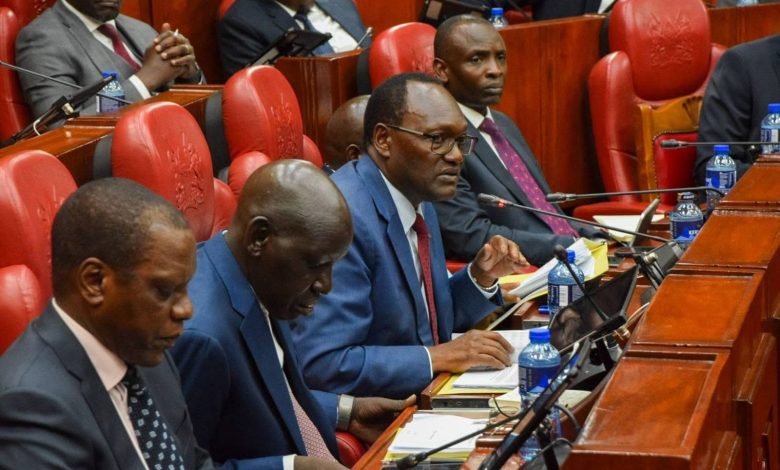
Kenya’s Parliament has launched a high-stakes probe into the management of the e-Citizen platform after a special audit revealed possible loss and diversion of billions of shillings in public revenue, raising fresh concerns over governance and accountability in the country’s digital payments system.
The National Assembly’s Public Accounts Committee (PAC) has summoned Attorney-General Dorcas Oduor, James Mwangi, the Chief Executive Officer and Group Managing Director of Equity Bank, and four private firms linked to the platform over suspected irregularities involving at least Sh9.4 billion.
The firms include Webmasters Africa Ltd, Electronic Citizen Solutions, Pesaflow Ltd and Goldrock Capital Ltd.
The summons follow a special audit covering the 2021/22, 2022/23 and 2023/24 financial years, conducted by Auditor-General Nancy Gathungu.
The audit flagged major weaknesses in revenue collection, settlement systems and oversight structures within the e-Citizen platform.
At the centre of the findings is the alleged diversion of Sh6.3 billion into an unauthorised account held at Equity Bank under the name Pesaflow.
The account, which was not approved by the National Treasury, received substantial deposits, including Sh68.7 million and $48.1 million (approximately Sh6.24 billion).
Auditors noted that the total amount transacted through the account could not be established after the bank failed to provide statements for review, raising concerns over the ultimate beneficiaries of the funds.
“This account was not listed among the approved collection accounts by the National Treasury. In this regard, it was used to irregularly collect money,” the audit states.
Further scrutiny revealed four transactions totalling Sh127.9 million that were transferred from M-Pesa Paybill number 222222 to private entities instead of the designated Treasury settlement account at KCB Bank. No documentation was provided to justify the transfers.
Treasury Principal Secretary Chris Kiptoo told the committee that the unauthorised accounts had since been frozen after the matter came to the attention of the National Treasury. “When the matter came to our attention, instructions were issued to freeze the accounts and the funds were withheld,” he said.
The audit also uncovered that Kenyans may have been overcharged Sh2.6 billion in convenience fees through the platform. Instead of applying prorated charges as required under gazetted regulations, a flat fee of Sh50 or $1 was imposed. The overcharges included Sh30.7 million through the previous payment gateway and Sh319.09 million through an unauthorised new system.
Lawmakers, led by PAC chair Tindi Mwale, said the summoned parties must explain the licensing agreements, approvals of payment systems and circumstances surrounding the diversion and handling of public funds.
“The committee invites the concerned parties to shed light on licensing, approvals, withholding of money and diversion of funds,” Mwale said.
The audit further exposed structural weaknesses in the governance of the e-Citizen platform, including unclear coordination between the National Treasury and the Directorate of Citizen Services, as well as the absence of service-level agreements with financial service providers.
These gaps, auditors warned, created opportunities for private service providers to control and utilise public funds with minimal oversight.
In a separate finding, the audit questioned how control of the e-Citizen platform appeared to revert to Webmasters Kenya Limited in 2023 despite the government having taken full ownership in 2017 following a handover facilitated by the World Bank’s International Finance Corporation.
“It was not explained how ownership and control of the platform ended up back in the hands of the vendor,” the report noted.
The National Treasury was also faulted for failing to provide key documents required for the audit, limiting the assessment of system controls and safeguards.
The revelations have intensified pressure on authorities to tighten oversight of digital revenue systems, amid fears that weak controls could expose billions of shillings in public funds to misuse.