Respecting the rule of law: The best way to mourn Raila Odinga
To mourn Raila Odinga is to carry forward his vision of a just society. It is to reject the culture of impunity, corruption, and disregard for due process that has long haunted Kenya’s politics. The truest tribute to him lies in each citizen, leader, and institution committing anew to the rule of law for that was Raila’s lifelong struggle, and the legacy he leaves behind.

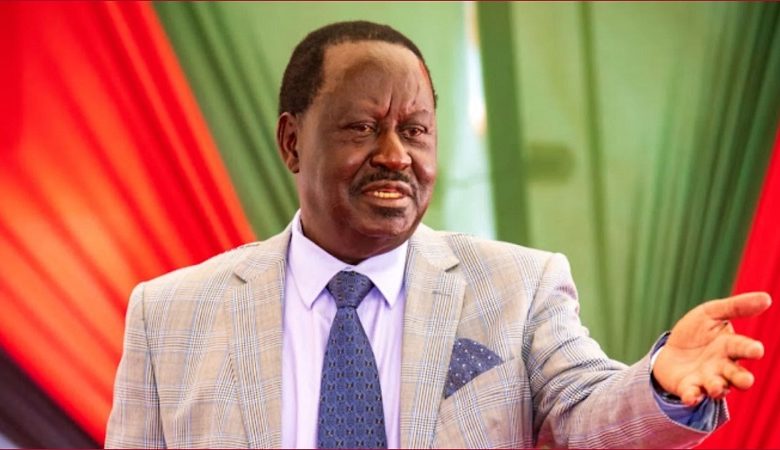
The passing of Raila Amolo Odinga has left Kenya in collective grief. A man whose life was inseparable from the nation’s democratic journey, Raila was not just a politician, rather, he was an institution.
He spent decades in the trenches of political struggle, endured imprisonment, exile, and betrayal, all in pursuit of a freer and fairer Kenya.
As the country mourns his death, there will be many calls for tributes, processions, and symbolic gestures.
But perhaps the most fitting way to honor his memory is not in loud displays of emotion, but through a renewed national commitment to respect the rule of law the very ideal for which he fought tirelessly.
A call for national discipline
Respecting the rule of law in this moment is not weakness, rather, it is strength in itself best manifested through institutional independence.
It means allowing national institutions from the security agencies to the courts and state protocols to operate without interference or intimidation. It means ensuring that Raila’s funeral arrangements, national tributes, and public commemorations proceed peacefully, with dignity befitting a statesman of his stature.
More importantly, it means upholding the rights and freedoms for which he suffered and not resorting to political repression, upholding freedom of expression, assembly, and belief all exercised within the bounds of order and respect.
Leadership’s test of integrity
For those in power, this is a moment to show magnanimity and restraint. The government must ensure inclusivity in mourning, allowing Kenyans from all walks of life and political persuasions to grieve freely. Any attempt to politicise or control the process would be an insult to the man who devoted his life to openness and justice.
For the opposition and civil society, this is the time to channel their energy into building institutions, not breaking them; to advance reform, not revenge.
A life anchored on justice and equality
Raila’s political journey was defined by an unyielding belief that power must be accountable, and that justice must serve the people, not the powerful.
From his days as a detainee under President Daniel arap Moi’s authoritarian regime, to his leadership during Kenya’s transition to multiparty democracy, Raila consistently championed the principles of fairness, human rights, and institutional integrity.
He believed that no Kenyan, however humble or mighty should be above the law, and that the rule of law was the foundation of true democracy.
The temptation of disorder
Yet, as the nation mourns, there is a real danger that grief may give way to political opportunism or unrest.
In moments of national emotion, it is easy for well-meaning supporters to cross the line to turn mourning into protest, or tribute into tension. That would not honor Raila’s legacy; it would betray it.
Raila’s struggle was never about chaos. Even in his most defiant moments, he sought reform through lawful means from pushing for constitutional change to demanding transparent elections and judicial accountability. His life’s work was to strengthen the very institutions that some may now be tempted to defy.
The living tribute
The true measure of Raila’s legacy will not be in monuments or public holidays, but in whether Kenya finally embraces the principles he lived and bled for constitutionalism, transparency, accountability, and the sanctity of the law.
If Kenya can emerge from this period of mourning with a deeper respect for its legal institutions, stronger civic responsibility, and greater tolerance for dissent, then Raila’s spirit will live on not as a memory, but as a living force in the nation’s conscience.
To mourn Raila Odinga is to carry forward his vision of a just society. It is to reject the culture of impunity, corruption, and disregard for due process that has long haunted Kenya’s politics. The truest tribute to him lies in each citizen, leader, and institution committing anew to the rule of law for that was Raila’s lifelong struggle, and the legacy he leaves behind.