Barricading a city is not policing, it is collective punishment


On Thursday, June 25, 2026, Nairobi awoke not to a city under attack, nor to a declared state of emergency, but to a capital under lockdown by its own police service.
From the early hours of the morning, major highways feeding into the city centre were blocked with razor wire, steel barriers, anti-riot trucks and heavily armed officers.
Motorists were turned back at Kangemi, Roysambu, Mlolongo, Bunyala Roundabout, Westlands and other strategic entry points.
Private Public service vehicles were stopped miles from the Central Business District, forcing thousands of commuters to walk long distances to workplaces, hospitals and schools. Businesses remained shuttered, restaurants closed, and economic activity in the heart of the capital ground to a halt.
This was not a response to violence already underway. It was a pre-emptive security operation mounted ahead of memorial demonstrations marking the second anniversary of the June 25, 2024 Gen Z protests, during which dozens of Kenyans lost their lives.
The government had insisted that June 25 would be a normal working day and urged citizens to go about their businesses uninterrupted.
Yet the reality witnessed by millions was anything but normal. Nairobi was effectively sealed off from the rest of the country.
The most troubling aspect of this operation is not merely the inconvenience it caused. It is the troubling precedent it sets for constitutional governance.
Kenya’s constitution guarantees freedom of movement, freedom of assembly, access to healthcare, access to public services and the right to pursue economic activity without arbitrary state interference.
The National Police Service is mandated to facilitate peaceful demonstrations, protect life and property, and uphold constitutional rights.
It is not empowered to suspend the ordinary functioning of an entire city simply because citizens intend to commemorate a painful chapter in the nation’s history.
Civil society organisations, including rights groups and legal advocates, were quick to point out that the police actions appeared to fly in the face of previous High Court pronouncements that barred indiscriminate obstruction of public roads without adequate notice and lawful justification.
The Kenya Human Rights Commission and Katiba Institute argued that the barricades imposed a disproportionate burden on millions of innocent Kenyans and unlawfully restricted movement, access to medical services and economic activity.
What happened in Nairobi raises a simple but profound question: If every anticipated protest is met with the closure of highways, paralysis of transport systems and mass restrictions on movement, what remains of the constitutional right to assemble?
Security concerns are real. Kenya still bears the scars of the violence witnessed in 2024, when protesters breached Parliament and security agencies responded with lethal force, leaving scores dead and many others injured.
Authorities have a legitimate duty to protect key installations, maintain public order and prevent criminal infiltration of demonstrations.
But security measures must always pass the tests of legality, necessity and proportionality.
Blanket road closures affecting millions of people cannot become the default policing model. A democratic state does not demonstrate confidence by locking down its capital at the mere prospect of dissent.
It demonstrates confidence by allowing citizens to exercise their rights peacefully while deploying officers strategically to isolate and deal with those who may seek to engage in violence.
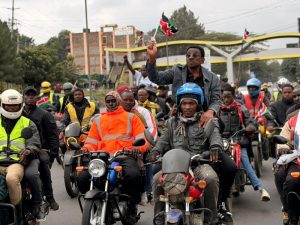
The images that emerged from Nairobi on Thursday were deeply symbolic. Families seeking to lay flowers in memory of loved ones killed during the 2024 protests were prevented from approaching Parliament.
Activists were arrested. Tear gas was used against commemorative gatherings. Large sections of the CBD resembled an occupied zone rather than the commercial and civic heart of an open republic.
Such scenes damage public trust in policing.
The National Police Service has spent years attempting to rebuild confidence following allegations of excessive force, enforced disappearances and unlawful killings.
Yet every instance in which officers appear to disregard court orders, impede ordinary movement without clear legal basis or treat peaceful civic expression as a security threat erodes that trust further.
Kenyans deserve better than a choice between chaos and lockdown. They deserve professional policing anchored in intelligence, dialogue, advance public communication and respect for constitutional freedoms.
The lesson from June 25 should not be that the state can shut down a city whenever it fears public anger. It should be that governments must learn to listen to their citizens before frustration spills into the streets. Police officers are guardians of rights, not gatekeepers of democracy.
Barricades may stop traffic for a day. They cannot barricade memory, grief or demands for accountability. Nor should they be allowed to barricade the constitution.