Africa faces highest agricultural losses from disasters, FAO warns

By Gilbert Ian
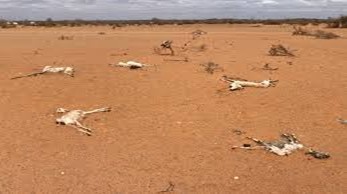
African countries are bearing the heaviest relative burden of global agricultural losses caused by disasters, the Food and Agriculture Organisation (FAO) has warned, raising fresh concerns over food security and livelihoods across the continent.
In its 2025 update on the impact of disasters on agriculture and food security, FAO estimates that global agricultural losses between 1991 and 2023 amounted to $3.26 trillion (about Sh420.3 trillion). Although Africa’s absolute losses are lower than those of other regions, the continent carries the highest relative impact, equivalent to 7.4 per cent of agricultural gross domestic product (GDP).
Lower-middle-income countries, including Kenya, are among the hardest hit. FAO estimates that about five per cent of agricultural GDP in such countries is lost to disasters, compared with three per cent in low-income countries and four per cent in high-income economies. This highlights the vulnerability of countries that rely heavily on agriculture but have limited buffers against shocks.
On average, disasters have inflicted global agricultural losses of about $99 billion (Sh12.8 trillion) annually. Cereal crops have suffered the greatest damage, with losses estimated at 4.6 billion tonnes over the period under review. Fruits and vegetables followed at 2.8 billion tonnes, while meat and dairy losses stood at around 900 million tonnes.
Beyond production, the impacts have serious nutritional consequences. FAO notes that disaster-related losses translate into a global shortfall of about 320 kilocalories per person per day, alongside significant deficiencies in iron, vitamins and other essential nutrients—gaps that disproportionately affect vulnerable populations.
Marine and aquatic systems are also under pressure. Marine heatwaves alone caused an estimated $6.6 billion (Sh851 billion) in fisheries losses between 1985 and 2022, affecting 15 per cent of global fisheries production.
To curb these losses, FAO urges countries to invest in digital technologies such as artificial intelligence, remote sensing and early warning systems, calling for urgent action in Africa where the cost of inaction is highest.