From byline to seedbed: Ex-journalist turns cherry tomatoes into a growing business
Social media orders for seeds and seedlings have opened a new income stream for Bernard Gitau, whose farming venture is cutting costs, attracting customers and nurturing his passion for organic agriculture.

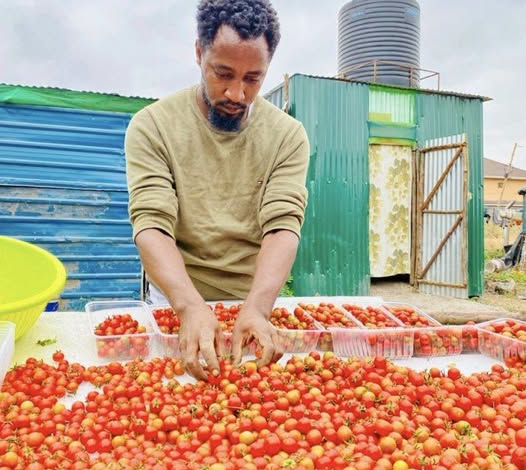
When Bernard Gitau began growing and selling cherry tomatoes, his immediate goal was to produce fresh fruits for customers.
But as word about his farm spread through social media, friends and acquaintances, an unexpected opportunity emerged: buyers wanted to grow the crop themselves.
What began as a small venture selling fresh cherry tomatoes has gradually evolved into a business offering seeds, seedlings and fresh produce, giving the former journalist another way to earn from the farm while reducing his own production costs.
Gitau, who markets his produce through social media and personal networks around Joska, has found that demand for planting materials is growing alongside interest in the tomatoes themselves.
Friends in the community and people working at the National Museums of Kenya, where he has acquaintances, were among those who began asking him for seeds after learning about his farming activities.
Their requests prompted him to rethink how he used overripe tomatoes, which he had previously reserved mainly for obtaining seeds for his next planting season.
Instead of allowing the excess fruit to go to waste or using it only for his own farm, he began extracting and preparing larger quantities of seeds for sale.
“People are making orders for the seeds because they want to plant it at their homes for domestic use. We are improving and increasing our production of the seeds even as this is our first batch. The overripe are the ones that I will continue to make seeds from. I will not stop the production of seeds after this first batch,” he said.
The new line of business illustrates how small-scale farmers can identify additional income opportunities by responding to customer needs and making productive use of what they already have.
For Gitau, the transition has been particularly encouraging because the demand has come largely through existing relationships and social media rather than an elaborate marketing campaign.
Turning ripe fruit into planting material
Seed production requires patience, careful handling and confidence that the finished product will grow.
Speaking to The Informer Media Group, Gitau said he uses overripe cherry tomatoes to obtain seeds, which he then dries thoroughly before preparing them for planting or sale.
“To make the seeds, I dry the overripe tomato, then scrub it and continue drying to ensure 100 per cent germination when I am doing it for the nursery or selling to someone,” he explained.
He is also keen to establish trust with buyers by testing the seeds before selling them. Rather than relying solely on assurances about their quality, he points to the results of germination tests conducted on his farm.
“By next week I will deliver to them because they will be fully dried. Something that I need to mention is, before I sell the seeds, I do a germination test here at the farm to be sure the buyer will be safe,” he said.
“As you have seen on the nursery, the germination is 99 per cent. So if someone asks if it will germinate, I can show them that truly, it will germinate and there is no need to worry.”
The reported germination rate gives him a practical selling point, particularly for first-time growers who may be reluctant to spend money on seeds without knowing whether they will establish successfully.
His approach also highlights the importance of quality control in small agricultural enterprises. For a farmer building a customer base through personal recommendations, the ability to demonstrate that seeds can germinate is essential to sustaining confidence and generating repeat orders.
Social media brings the market closer
The growing demand has required Gitau to think beyond his immediate production needs.
On one Thursday, he received inquiries from five people seeking seeds, while two others wanted to know whether he had seedlings ready for planting.
The orders arrived as he was already preparing seeds from overripe tomatoes collected during the week’s harvest.
The timing allowed him to respond to the inquiries without abandoning his own planting schedule.
Social media has therefore become more than a platform for advertising his produce. It has given him a direct connection to potential customers, allowing him to identify demand, plan production and explore new sources of income.
Unlike a farmer who must depend entirely on selling harvested produce, Gitau can now reach customers at different stages of the growing process.
Some want fresh tomatoes, others prefer seeds to start their own gardens, while those seeking a quicker start can purchase seedlings from his nursery.
This diversification gives the venture more than one route to market and could help him reach households interested in growing their own food as well as farmers considering commercial production.
More than 300 seedlings ready for transplanting
Even as he expands seed production, Gitau continues to invest in his main cherry tomato crop.
He plans to transplant more than 300 seedlings from the nursery, while more than 700 additional seedlings will be available for sale at Sh4 each.
The seedlings are intended for customers both near and farther from his farm who want to grow cherry tomatoes for household consumption or commercial purposes.
For home gardeners, the seedlings offer an opportunity to grow fresh tomatoes within their own compounds, subject to suitable growing conditions and proper care. For commercial growers, they provide a starting point for a crop that can be cultivated for sale.
The growing interest in seedlings also means Gitau must balance his own planting requirements with orders from customers.
His experience demonstrates the value of planning production around emerging demand. By maintaining a nursery alongside his fruit production, he can serve customers who would otherwise need to source planting materials from agricultural input shops.
Cutting costs through farming
Another advantage of the venture is the reduction in the cost of buying seeds from agrovet shops.
By saving seeds from his own crop, Gitau has reduced his dependence on purchased planting materials, while the sale of surplus seeds creates an additional potential revenue stream.
He also says he does not buy pesticides for his cherry tomatoes, relying instead on pruning and proper management of the plants to encourage healthy growth and fruit production.
His approach reflects his preference for a more natural farming system, although effective pest and disease management remains important for maintaining healthy crops and protecting yields.
For a small-scale farmer, reducing input costs can make a significant difference to profitability, particularly when combined with multiple income streams.
However, the long-term success of the business will depend on maintaining seed quality, managing production costs, meeting customer expectations and ensuring that the crop remains productive.
A new chapter after journalism
Gitau’s agricultural journey represents a change of direction for a seasoned journalist who has discovered a new professional interest beyond the newsroom.
Journalism demands research, communication, attention to detail and the ability to respond to changing circumstances.
Many of these qualities can also be useful in farming, where observation, planning, record-keeping and understanding the market influence business decisions.
His use of social media to connect with customers demonstrates how communication skills can support an agricultural enterprise. Instead of relying exclusively on traditional produce markets, he can engage directly with prospective buyers, explain his products and receive feedback.
The transition also challenges the assumption that farming is simply a fallback option for people leaving other professions.
For Gitau, it has become an opportunity to build a business, experiment with production methods and discover new possibilities in agriculture.
His expanding cherry tomato venture is still developing, but the early response to his seeds and seedlings suggests that customer demand can create opportunities beyond the original product.
As he prepares to transplant his next crop and fulfil orders for planting materials, Gitau is cultivating more than tomatoes. He is building a business around the idea that every harvest can yield another opportunity.
For the former journalist, the newsroom may belong to an earlier chapter, but the skills of telling a story, connecting with an audience and recognising an opportunity remain valuable.
This time, the story is being written in the soil, one seed at a time.