Kenya Met unveil new curriculum to improve climate information delivery to farmers

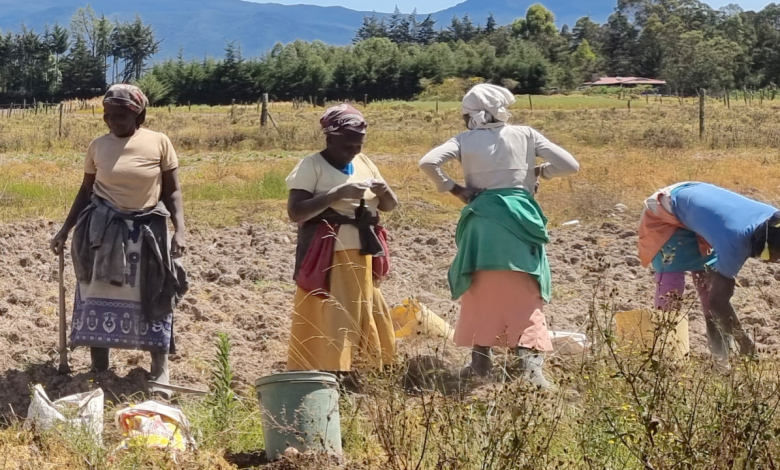
Farmers across Kenya are set to benefit from improved access to weather and climate information after the Kenya Meteorological Service Authority (KMSA) launched a new training curriculum aimed at strengthening how forecasts are communicated and used in decision-making across the agricultural sector.
The curriculum, which will be offered at the Institute for Meteorological Training and Research (IMTR), targets private sector stakeholders who play a key role in disseminating weekly, monthly, and seasonal weather updates from the Kenya Meteorological Department to farmers and agribusiness actors.
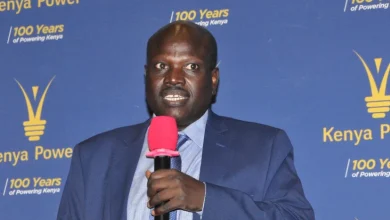
According to KMSA acting Director General Edward Maina Muriuki, the programme is designed to improve the interpretation and communication of climate information, particularly among private actors operating in climate-sensitive sectors such as agriculture.
“The curriculum promotes a culture of preparedness and resilience for smallholder farmers and the private sector. Businesses that understand climate risks are better positioned to minimize losses, protect assets, ensure operational continuity and identify emerging opportunities within the economy,” Muriuki said.
The initiative reflects a growing recognition that while public institutions generate climate data, private actors are increasingly critical in ensuring last-mile delivery to farming communities. The World Meteorological Organization (WMO) and the Meteorological Training and Research Directorate (MTRD) emphasised that private sector participation is essential in strengthening climate services and expanding access to reliable weather information.
MTRD Director Bernard Chanzu said the curriculum goes beyond improving data access to building institutional and leadership capacity for effective climate communication.
“This curriculum demonstrates that strengthening climate services is not only about improving access to climate data, but also about building the leadership and institutional capacity needed to transform information into meaningful action,” Chanzu said.
He added that the private sector is not merely a recipient of climate information but a key partner in ensuring that forecasts reach end users in usable formats. The programme is expected to equip participants with practical skills in interpreting, communicating, and integrating climate data into sector-specific planning and decision-making.
WMO Regional Coordination Office Director Ishaam Abader noted that the organisation has developed guidelines for public-private engagement to improve the delivery of weather and climate services globally. He said private sector innovation, technology, and financing are increasingly vital in strengthening climate resilience systems.
“WMO recognizes the impact of highly severe weather events on the private sector, which plays a crucial role in climate services through innovative solutions, technological advancements, financial support, and technical expertise,” Abader said.
Mercy Corps AgriFin Program Director Sieka Gatabaki said the curriculum could be scaled beyond Kenya to support broader climate resilience efforts across Africa. He noted that private sector players are already playing a key role in localizing and simplifying climate information for farmers through digital platforms and mobile applications.
“For the first cohort, the focus is primarily on start-ups serving farmers, agribusinesses, and those in the climate space,” Gatabaki said. “They will be enabled to utilize Kenya Met information accurately and improve how they disseminate it to smallholder farmers.”
He added that improved access to accurate forecasts could help farmers make better decisions on planting times, pest control, water harvesting, and livestock management, ultimately improving productivity and income.
Kenya Met routinely issues seasonal, monthly, and weekly forecasts intended to guide agricultural planning and other economic activities. For instance, in its advisory for May 21 to 31, the agency encouraged farmers to take advantage of expected rainfall for crop growth, conserve pasture for livestock, harvest rainwater, and closely monitor weather updates for timely decision-making.
Recent assessments, however, suggest gaps in direct access to official forecasts among farmers, with many relying on private sector platforms for climate information. The new curriculum seeks to bridge this gap by improving coordination between public institutions and private actors to ensure more accurate, timely, and actionable weather communication.