Kenyans could pay more for eCitizen transactions under new rules
The proposed regulations are now expected to trigger fresh public debate over the cost of accessing government services online, the role of private firms in state digital systems and accountability in the management of public revenues collected through eCitizen

Kenyans using the eCitizen platform could soon face revised transaction charges under new regulations proposed by the National Treasury aimed at restructuring how payments for government services are processed online.
The proposed Public Finance Management (E-Citizen System Management) Regulations, 2026 introduce a new fee structure that would replace the current flat Sh50 convenience charge imposed on payments made through the platform.
Under the draft regulations, transactions valued between Sh100 and Sh499 would attract a convenience fee of Sh5, while payments exceeding Sh100,000 would be capped at a maximum charge of Sh100. Transactions made in foreign currency would attract a fixed fee of $1.
The proposed regulations are now expected to trigger fresh public debate over the cost of accessing government services online, the role of private firms in state digital systems and accountability in the management of public revenues collected through eCitizen.
The proposed changes come months after the Court of Appeal upheld a High Court decision declaring the mandatory payment of school fees through the eCitizen platform unconstitutional.
The court found that the government had failed to conduct adequate public participation before introducing the payments system and imposing convenience charges on citizens.
The new regulations seek to formally establish eCitizen as the official digital payment platform for both national and county government services under the management of the National Treasury.
If adopted, the regulations would create a new steering committee chaired by the Treasury to oversee operations of the platform and implementation of digital payment systems across government institutions.
The committee would comprise the Principal Secretary to the National Treasury, the Principal Secretary responsible for eCitizen services, the Solicitor General and the Chief Executive Officer of the Council of Governors.
According to the draft law, the committee would be tasked with approving payment channels, monitoring service delivery and ensuring proper management of digital government transactions.
The regulations also propose stricter accountability and oversight measures for the platform amid growing scrutiny over the management of billions of shillings collected through eCitizen.
The draft rules require regular audits of the system to ensure compliance with legal, financial and regulatory standards.
In addition, the platform would be required to maintain detailed audit trails documenting access to the system, changes made and processing of electronic records in an effort to enhance transparency and accountability.
The proposed regulations come against the backdrop of concerns raised over the involvement of private companies in the management and collection of revenues through the eCitizen platform.
Among the firms that have come under scrutiny is Olive Tree Limited, which has been mentioned alongside Pesaflow Limited and Webmasters Kenya Limited over their role in the operation of the platform and the handling of revenue collections.
Pesaflow Limited has been identified as one of the private firms involved in collecting payments on behalf of government agencies through accounts linked to the platform.
Reports and audit findings have previously raised concerns that some funds collected through the system did not immediately reach government accounts.
Webmasters Kenya Limited, a technology firm associated with the development and management of eCitizen, has also faced scrutiny following reports that it continued to control aspects of the system as late as 2025 despite directives requiring a handover to the government.

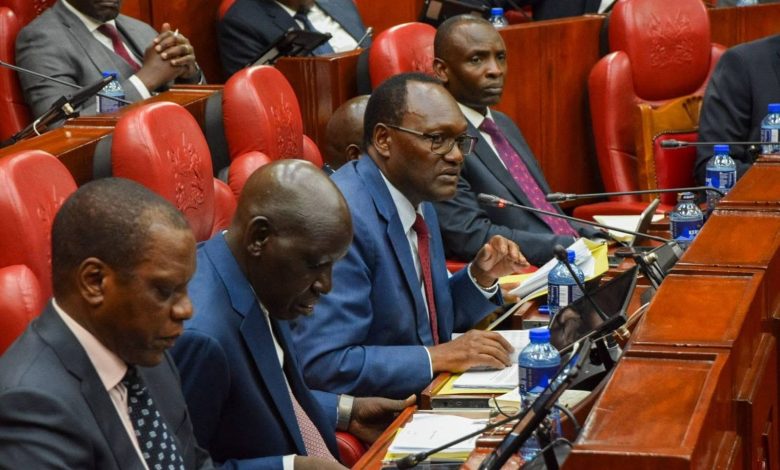
In August 2025, the National Assembly’s Public Accounts Committee (PAC) raised alarm over massive irregularities and unauthorised payments linked to the government’s digital payments platform, E-Citizen describing it as a “crime scene” marred by large-scale corruption and theft of public resources.
Responding to a special audit report by the Office of the Auditor-General on the operations of E-Citizen, committee members called for the immediate shutdown of the platform, citing grave national security concerns and the misuse of public funds.
Led by PAC chairperson and Butere MP raised the alarm over massive irregularities and unauthorised payments linked to the government’s digital payments platform, e-Citizen describing it as a “crime scene” marred by large-scale corruption and theft of public resources.
Responding to a special audit report by the Auditor-General Nancy Gathungu on the operations of E-Citizen, committee members called for the immediate shutdown of the platform, citing grave national security concerns and the misuse of public funds.
The committee members said the system operates without any legal foundation and should not be in use.
“From the findings of this report, the truth is, this system operates without any legal foundation. It completely lacks a legal framework, there’s no law under which it can be validated or regulated. There’s also no clear government structure to govern its operations,” Mwale said.
He further pointed out that the platform lacks standard operating procedures (SOPs) and service level agreements (SLAs) with financial service providers, which he said leaves the government exposed to legal and financial risks.
“Let’s be honest: if we truly care about this country and with the National Treasury represented here we must admit that we should not be using this system. It has no legal backing whatsoever,” he added.
Auditor reports and government officials have further indicated that the firm billed the government heavily for services related to management and maintenance of the platform.