What suspension of pending bills verification means for SHA, hospitals and patients
In issuing the conservatory orders, Justice Nyakundi said he was mindful of the need for expeditious disposal of the petition given the nature of the issues raised and their implications for public health administration and issued strict timelines for the hearing and determination of the petition

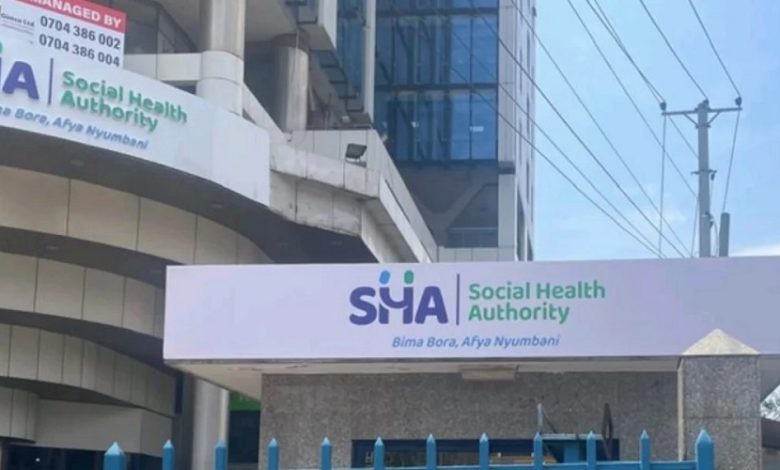
The ruling by the High Court in Eldoret, which suspended the National Hospital Insurance Fund (NHIF) Pending Medical Claims Verification Committee’s work, while likely to be hailed as a win for constitutionalism, could, however, also further complicate the work of the Social Health Insurance Authority (SHA) even more.
Managers of various hospitals, especially those run by faith-based organisations, are likely to consider halting services as they are already weary of the delays in processing their claims that were carried over from NHIF, which stood at Sh8 billion as of March this year.
In March, when President William Ruto on March 5 pledged to pay those owed less than Sh10 million, the hospitals termed it as grossly inadequate to relief their cashflow distress.
Statistics indicate that NHIF left the Social Health Authority (SHA) with a debt of Sh33 billion, much of which remains unsettled, leading to major challenges in service delivery in both public and private hospitals.
At the time, the faith-based hospitals, for instance, noted that they were the ones left to handle the more complicated diseases, specialised surgeries, critical patients which are costly and life- saving at a time the rollout of the Social Health Insurance Fund (SHIF) services was in chaos.
The 1,300 hospitals said they were also owed Sh15 billion by SHA, which manages SHIF, which had exceeded the 90-day repayment period.
They demanded that the NHIF pending claims and those owed by SHA be paid fully by March 21 in line with the Social Health Insurance Act 2023.
More than five months later, nothing much has changed with the hospitals left with no option but to wait for the NHIF Pending Medical Claims Verification Committee established by Health Cabinet Secretary Aden Duale on March 28 to determine if their claims are genuine and legitimate so that they can be paid.
However, on Tuesday, Eldoret High Court Judge Reuben Nyakundi agreed with a petition filed by Nakuru surgeon Magare Gikenyi and three others and issued a conservatory order suspending the operation of the committee and restraining the committee from compiling any report, recommendations, or undertaking any actions pursuant to Gazette Notice No. 4069 Vol. CXXVII—No. 64 of 28th March, 2025.
“The Respondents, either by themselves, their agents, or any person acting at their behest, instructions, or directions, are hereby restrained from taking any action whatsoever pursuant to or in reliance on Gazette Notice No. 4069 Vol. CXXVII—No. 64 of 28th March, 2025 pending the hearing and determination of the Petition,” he added.
Justice Nyakundi, however, said he was mindful of the need for expeditious disposal of the petition given the nature of the issues raised and their implications for public health administration and issued strict timelines for the hearing and determination of the petition.
To this end, he directed the respondents to file and serve their responses to the petition within seven days from the date of the ruling and thereafter, the petitioners shall file and serve their respective submissions within seven days upon the respondents.
The respondents shall then file and serve their submissions within seven days of service of the petitioners’ submissions with Justice Nyakundi scheduling the highlighting of submissions for June 2nd June, 2025.
He further directed that the orders be served upon the Cabinet Secretary, the Attorney General and the Chairman of the Ad hoc Committee or taskforce who shall bring to the attention of this decision to the respective members of the committee.
Roadside Declaration
In their petition, Dr Magare, Eliud Karanja Matindi, Dishon Keroti Mogire and Philemon Abuga Nyakundi contended that Duale established the Committee without any proper legal or constitutional foundation, characterising it a mere roadside declaration lacking citation of any specific authorising legislation.
They grounded their challenge on several constitutional provisions, primarily Article 229 of the Constitution, which designates the Auditor-General as the one tasked with auditing public accounts.
The petitioners also raised signifcant privacy concerns ,arguing that allowing committee members who are neither NHIF employees nor public servants to access sensitive medical records violates privacy rights under Article 31 and contravenes the Data Protection Act, as patients have not consented to such disclosure.
In their response, the committee, the Cabinet, the Medical Service Principal Secretary, the Attorney General and the Auditor General, contended that the application had not satisfied the legal test for the grant of interim conservative orders under Article 23(3)(c) of the Constitution.
They further submitted that it did not disclose a prima facie constitutional or legal breach by the Cabinet Secretary, adding that it was wrong to mischaracterise the empanelment of the committee as an unlawful act, despite the clear existence of executive discretion to establish internal advisory structures.
Further, the respondents said the committee has no coercive or decision-making authority. It is an internal
advisory body constituted to assist the ministry in addressing performance, compliance, and operational challenges in the health sector. Its role does not encroach upon the mandate of the Auditor-General.
While opposing the quest for conservatory orders, they, among others, said the committee was established as matter of urgency to address critical governance, financial and performance issues in the health sector, adding that suspending its operations at an interim stage would compromise public service delivery and accountability, contrary to the public interest.
In his ruling, Justice Nyakundi, however, agreed that the mandate of the committee established by Duale includes scrutinising and auditing NHIF claims spanning from July 2022 to September 2024, a function that appears to raise questions about the constitutional mandate of the Auditor General.
“Article 229(4)(g) specifically empowers the Auditor-General to audit and report on the accounts of any entity that is funded from public funds. The NHIF, being a public entity funded largely through statutory deductions, clearly falls within this ambit. The petitioners’ assertion that the committee’s mandate may interact with the Auditor-General’s constitutional preserve raises an arguable constitutional question,” he said.
Proper Constitutional Pathway
Furthermore, he said Article 226(3) of the Constitution provides that the accounts of all governments and state organs shall be audited by the Auditor-General, adding that the petitioners’ contention regarding the proper constitutional pathway presents a substantial constitutional question deserving of full adjudication.
The petitioners also raised questions regarding the selection process of committee members, citing Article 232(1)(g) of the Constitution with the judge agreeing that principle of transparency in public service is a cornerstone of our constitutional order, and questions about its application in this context merit careful consideration.
Additionally, the Justice Nyakundi ruled that the petitioners’ privacy concerns under Article 31 and the Data Protection Act regarding the handling of sensitive medical records present another dimension to the constitutional challenge that warrants serious examination in the main petition.
“I acknowledge the Respondents’ argument that the committee is an internal advisory body with no coercive powers. This characterisation and its constitutional implications deserve thorough examination during the full hearing of this petition.”
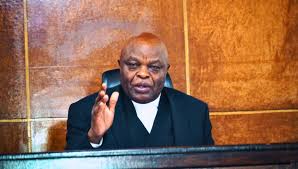
He also determined that the respondents’ assertions that the Cabinet Secretary has the constitutional and statutory authority to establish such a committee under Article 1of the Constitution, read together with the Health Act, 2017 and its relationship with specific constitutional provisions that establish independent offices with clearly delineated mandates present complex constitutional questions that require full ventilation.
“The interaction between executive functions and constitutionally established independent offices raises important questions about our constitutional design that should be thoroughly examined in the main petition. These are not matters that can or should be determined at this preliminary stage.”
“Based on these considerations, I am satisfied that the petitioners have demonstrated a prima facie case. I emphasise that this finding is strictly for the purpose of this application and does not in any way prejudge the merits of the main petition, which will require comprehensive arguments and analysis,” he said.
According to the judge, the other limb that needs consideration is whether, unless the court grants the conservatory order, there is a real danger that the petition would be rendered nugatory if it were to ultimately succeed.
“The committee established by the Gazette Notice has been tasked with scrutinising and auditing NHIF claims spanning a specific period . If the committee proceeds to complete its mandate before the constitutional questions raised in the petition are determined, there would be limited practical remedy available even if the petition were ultimately successful. The constitutional questions raised would risk becoming academic.”
Defending his ruling, the judge noted that conservatory orders are designed to preserve the substratum of the petition pending full hearing., adding that if the committee proceeds with its work before the constitutional questions surrounding its establishment are fully ventilated and determined, there is a substantial risk that the court’s ability to grant effective relief, should the petition succeed, would be compromised.
“It is important to emphasise that conservatory orders do not determine the merits of the petition or suggest any particular outcome. They merely preserve the subject matter of the dispute to ensure that the court’s eventual determination, whatever it may be, remains meaningful. While I appreciate the respondents’ concernsabouteciency and addressing issues in the health sector, I must balance these against the need to ensure that the constitutional questions raised receive proper judicial consideration. Temporary preservation of the status quo through conservatory orders serves this important judicial function,” he added.
According to the judge, the public interest in this case lies in ensuring that both the important work of improving healthcare administration and the equally important adherence to constitutional principles receive proper consideration.
“A temporary pause through conservatory orders achieves this balance. On the face of it there are competing interests and rights as between the public and the health sector wide institutions which had signed Service Level Agreements with the defunct National Hospital Insurance Fund. The question therefore to ponder is whether there is a public interest in this petition,” he added.