Court of Appeal shields over 30 senior ODPP prosecutors after recruitment row
The interim order issued by the appellate court protects the positions of Senior Deputy Directors and Deputy Directors appointed by the ODPP in December 2025.

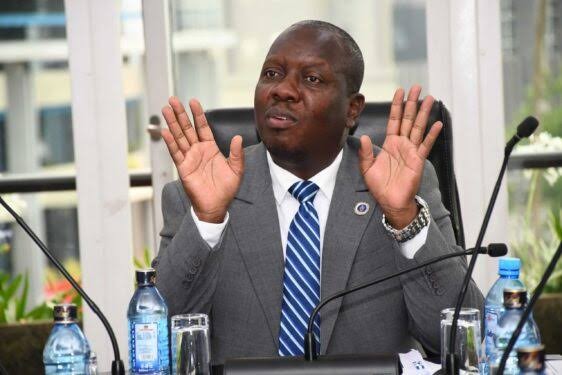
The Court of Appeal has temporarily suspended a judgment that nullified the appointment of more than 30 senior prosecutors at the Office of the Director of Public Prosecutions (ODPP), allowing them to remain in office pending the determination of an appeal.
The interim order issued by the appellate court protects the positions of Senior Deputy Directors and Deputy Directors appointed by the ODPP in December 2025.
The Court of Appeal is expected to deliver its substantive ruling on September 25, 2026.
The ODPP, through Director of Public Prosecutions Renson Ingonga, moved to the appellate court seeking to preserve the appointments after the Employment and Labour Relations Court (ELRC) cancelled them in a judgment delivered on June 25.
“Pending delivery of the ruling, an interim order of stay of execution of the judgment of the ELRC delivered on 25th June 2026 is hereby granted in terms of prayer 1 of the application,” the Court of Appeal ruled.
Principal Prosecution Counsel Victor Owiti told the court that Mark Barasa, the prosecutor who challenged the recruitment, had already begun enforcing the ELRC judgment, including pursuing payment of the Sh1 million compensation awarded to him.
The ODPP maintains that the December 2025 appointments followed a competitive recruitment process conducted in accordance with the law and public service principles.
However, the ELRC found serious shortcomings in the process and ordered the ODPP to re-advertise the positions of Senior Deputy Director of Public Prosecutions and conduct a fresh recruitment exercise.
“The respondent shall re-advertise the positions and invite eligible candidates to express their interest and thereafter conduct a transparent, credible and auditable recruitment process,” the court ordered.
Barasa, a Senior Assistant Director of Public Prosecutions, sued after being excluded from the initial shortlist despite applying for the senior positions.
He argued that the ODPP violated his constitutional right to fair administrative action by failing to explain his exclusion and declining to provide records relating to the recruitment.
The ELRC found that the ODPP had failed to demonstrate that the appointments were founded on objective merit, fair competition and equal treatment.
“A panoramic view of the recruitment process reveals that the processes employed by the Respondents fell below the constitutional threshold and the resultant appointments cannot stand and are declared null and void,” the court said.
The court faulted the ODPP for failing to produce the shortlisting criteria, interview scores and other records showing how successful candidates were selected.
“Puzzlingly, the ODPP had the opportunity to demonstrate that the process was constitutionally compliant but opted not to do so,” it observed.
Barasa, who joined public service in 2006 and became a Senior Assistant Director of Public Prosecutions in 2021, said he was excluded from a shortlist published on January 26 despite meeting the qualifications and having no disciplinary record.
He claimed that some officers junior to him, including those on secondment outside the ODPP, were shortlisted while he was excluded without explanation.
According to his evidence, when he sought reasons for his exclusion, he received a message from the DPP asking: “You want war with me?”
Barasa was later invited for an interview despite not appearing on the original shortlist, which he argued was an attempt to sanitise an already flawed recruitment process.
The court noted that the ODPP acknowledged Barasa was among 21 officers initially excluded from the shortlist before being invited for interviews following internal appeals. However, it found that the agency had failed to explain why the officers were excluded in the first place or how their appeals were evaluated.
The ELRC also found that the ODPP violated Barasa’s right to access information by failing to provide documents he requested concerning the recruitment.
The failure, the court said, rendered the process “unauditable and undermined public confidence in appointments to senior prosecutorial offices.”