More promises as Ruto make 13th State of the Nation Address in Parliament

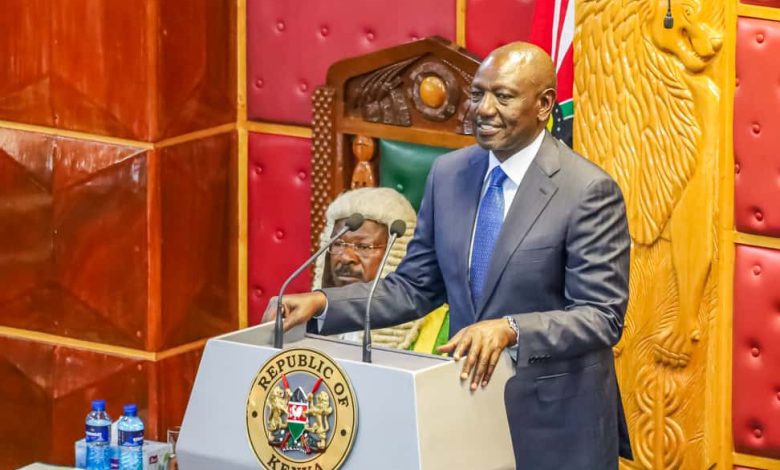
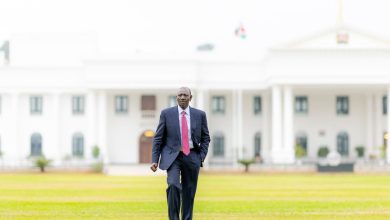
President William Ruto’s Thursday November 20, 2025 13th State of the Nation Address in Parliament bore all the hallmarks of more lofty promissory government initiatives delivered in a dismissive tone towards critics whom he described as “high priests of eternal pessimism” while asserting Kenya’s economic recovery, stability, and long-term transformation.
In what critics have described as a mere pipe dream and political rhetoric in transitioning Kenya to a first world country citing bad governance, corruption and disregard for the rule of law, President Ruto affirmed that his ambitious plan to make Kenya Singapore of Africa will require at least Sh5trillion.
Ruto said that despite a challenging starting point in 2022 and skepticism over his reforms, the country now has “clear, verifiable, and indisputable” evidence of progress.
“Two years ago, I had a vision to sell. Today, I have a story to tell. A story written in the blazing sun of our farms, in our factories, in construction sites, and in the quiet courage of our people,” he said.
Conspicuously missing issues in Ruto’s third state of the nation address were crisis dogging the education sector notably the unclear transition model to Senior Secondary (Grade 10), ghost learners audits, capitation shortfalls that threaten to see massive school drop out rate and the Social Health Authority (SHA) hiccups.
The president highlighted key economic indicators that demonstrate Kenya’s resilience.He noted inflation has dropped from 9.6 percent in 2022 to 4.6 percent, while the Kenya shilling has stabilized at 129 to the US dollar for nearly two years.
However, the president unveiled a sweeping blueprint to dual 2,500 kilometres of major highways and tarmac 28,000 kilometres of roads over a 10-year period.
He also outlined an ambitious irrigation plan that will see the construction of 50 mega dams, 200 medium and small dams, and thousands of micro-dams, aimed at ending Kenya’s reliance on rain-fed agriculture.
“The Ministry of Roads and Transport have already mapped out a comprehensive network of 2,500 kilometres of highway for dualling and 28,000 kilometres of road to (be) tarmacked over the next 10 years,” he said.
Ruto described the country’s food insecurity as a self-inflicted limitation caused by underinvestment in water storage, despite Kenya’s abundant natural resources.
“We cannot continue to be a nation that imports food worth Sh500 billion every year while 85 percent of our land waits for water,” he said.
Ruto emphasised that the country must break the cycle where the presence or absence of clouds determines whether Kenyans eat, insisting that water harvesting, storage, and distribution are the only sustainable paths to food security.
Meanwhile, the United Opposition led by Wiper Party leader Kalonzo Musyoka accused Ruto of presiding over a government that is steadily dismantling democratic safeguards while subjecting Kenyans to economic hardship and political manipulation.
In a solidarity-driven message titled “State of the Nation Address by the United Opposition,” Kalonzo and other Opposition leaders framed the present political climate as a defining moment in Kenya’s history—one marked by the rise of the Gen Z movement, whose peaceful demonstrations last year, they said, were a moral stand against corruption, economic exploitation, and failed leadership.
They criticised the mismanagement of the Social Health Insurance Fund (SHIF), which they say has left families unable to access essential healthcare, and dismissed the Housing Levy as a fraudulent scheme that serves as a slush fund rather than a genuine public development programme. They further accused the President of running the country like a personal enterprise—what they termed “Rutopreneurship.”