Why it is now time for President Ruto to host unemployed Kenyans
If State House is truly the people's home, then unemployed Kenyans should be among its most important guests.

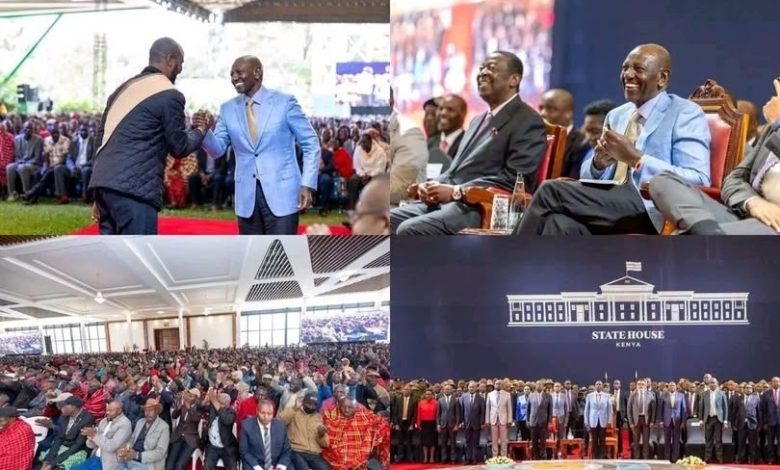
President William Ruto says State House belongs to the people. Fine. Then perhaps it is time he opened its gates to the people who need it most — not just elders, politicians, religious leaders, businesspeople and carefully assembled delegations, but unemployed graduates, struggling hustlers and young Kenyans sending out hundreds of applications without receiving a single reply.
The argument is not that village elders, religious leaders or community representatives should never meet the President. They should. A President must listen to citizens. The question is what happens after the photographs, speeches, meals, security arrangements and promises.
And, more importantly, who gets invited?
On August 4, 2026, President Ruto defended his decision to host village elders at State House, saying allowing ordinary Kenyans into the presidential residence does not diminish its dignity but elevates the dignity of citizens. That is a powerful argument — but it should be taken to its logical conclusion.
If State House is truly the people’s home, then unemployed Kenyans should be among its most important guests.
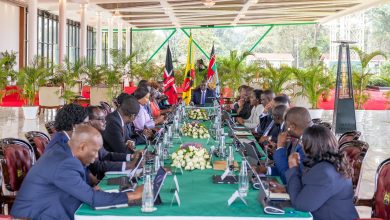
The president’s State House calendar over the past year shows an increasingly broad range of delegations.
On June 5, 2025, he hosted Siaya leaders and businesspeople, including Governor James Orengo, and announced billions of shillings in proposed investments in markets, electricity and blue-economy infrastructure.
On July 4, he hosted a delegation from Embu led by Governor Cecily Mbarire for discussions on development priorities.
On August 11, 2025, a California delegation led by Transportation Secretary Toks Omishakin, alongside US Embassy and private-sector representatives, visited State House.
On August 15, according to a recent legal challenge, Ruto hosted Gusii political leaders. On August 27, he met a Kiambu delegation comprising religious leaders, elected leaders, businesspeople and youth.
On September 2, Turkana grassroots leaders — including elected leaders, businesspeople, current and former office holders — were hosted at State House.
On October 10, 2025, the President met a delegation from Ukambani, while on November 10 he held talks with a Sharjah, UAE delegation over infrastructure partnerships involving roads, ports, airports, energy and dams.
Then came the December 2025 meeting with more than 15,000 chiefs and assistant chiefs at State House, where Ruto announced reforms for grassroots administrators and a Sh3,000 monthly stipend for village elders.
And now, in August 2026, village elders from across the country have once again been welcomed into State House.
None of these engagements is inherently wrong. Some are plainly part of the President’s constitutional and diplomatic responsibilities. But the sheer scale of State House activity raises a legitimate question about priorities when the government is simultaneously asking citizens to endure austerity, higher taxes and painful economic choices.
The Treasury’s own figures make the debate harder to dismiss. State House’s approved budget for 2025/26 was Sh17.5 billion and was subsequently revised upwards to Sh18.5 billion through Supplementary Estimates II.
For 2026/27, Treasury estimates initially reduced State House’s allocation to Sh13 billion, prompting the State House Comptroller to lobby Parliament for an increase to Sh18 billion.
That is an extraordinary amount of public money at a time when Kenyans are being told that government must tighten its belt.
The criticism from Jubilee Deputy Party Leader Fred Matiang’i and other opposition leaders therefore taps into a deeper public frustration.
They allege that State House engagements are increasingly becoming instruments of political mobilisation and that public resources are being used to cultivate political loyalty ahead of 2027.
Those are political allegations, not established facts. But they deserve scrutiny — particularly where public institutions, public officials and public money intersect with partisan politics.
Even the latest claims about “watchmen” and other ordinary workers being invited to State House should provoke a bigger conversation. If the President is genuinely committed to elevating ordinary Kenyans, why stop at ceremonial invitations?
Host the unemployed
Bring 1,000 unemployed graduates to State House and ask them what is preventing them from finding work.
Bring young engineers who cannot secure internships.
Bring trained nurses waiting for employment.
Bring teachers who have spent years looking for jobs.
Bring university graduates driving taxis, selling second-hand clothes or surviving on casual work despite having invested years and family savings in education.
Bring young people whose businesses collapsed under the weight of taxes, expensive credit and declining purchasing power.
And instead of serving them tea and giving them a speech, give them a jobs programme with measurable targets.
The symbolism would be extraordinary.
There is also a fiscal question that cannot be avoided. State House hospitality, travel, security, logistics and administration are paid for by taxpayers.
Presidential security is a legitimate state obligation, but every additional public function comes with costs that should be transparent and defensible. The President’s movements also require deployment of security officers, including local police, adding another layer of public expenditure.
The problem, therefore, is not that Ruto hosts Kenyans.
It is what hosting Kenyans achieves.
If the State House gates are open, let them remain open. But let the unemployed have their day there. Let the struggling entrepreneur sit at the President’s table. Let the graduate who has never found a job tell the Head of State what unemployment really means.
President Ruto has repeatedly presented himself as the champion of the hustler.
Now he has an opportunity to prove it.
The next delegation to State House should not be selected because it can deliver votes. It should be selected because it represents Kenya’s unemployed.
And perhaps, for once, the biggest photograph from State House should not be of political leaders surrounding the President.
It should be of young Kenyans holding letters of appointment.