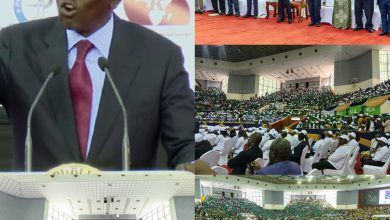
When politics storms the altar: A shameful desecration at AIPCA Karure, Gatundu North
What happened at AIPCA Karure demeaned women of the church, mocked religious discipline, and dragged a house of prayer into the mud of partisan spectacle. It is time for the Church and all religious faiths to redeem themselves

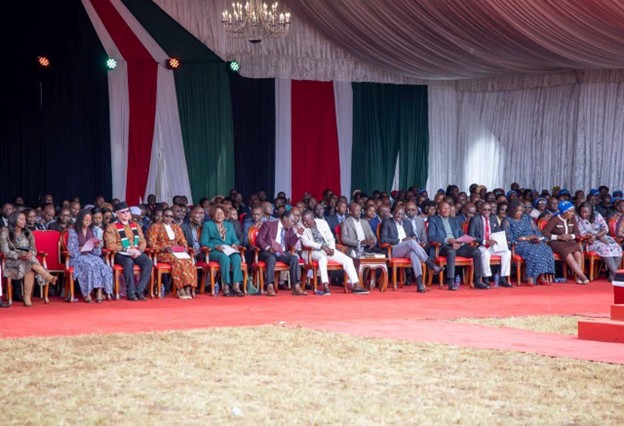
The scenes witnessed last Sunday at African Independent Pentecostal Church of Africa (AIPCA) Karure in Gatundu North were not just unbecoming, rather, they were tantamount to the desecration of the altar and a dangerous assault on the sanctity of worship.
Indeed, needless to say, such an eyesore scene must be condemned by any well-meaning Kenyan citizen, who, at the very least, still advocates for basic common decency.
Confessions are already pouring out that politicians allegedly hired artificial congregants, dressed them in women’s church headgear, unleashed choreographed shouting inside a place of prayer, and did so as President William Ruto watched, should trouble every Kenyan, regardless of political leaning or faith tradition.
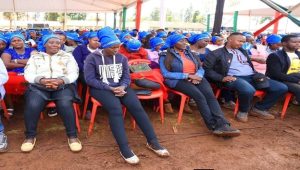
A church is not a campaign podium. The altar is not a stage for political theatrics. When worship is weaponised for optics, when sacred symbols are reduced to props, and when congregants are turned into hired extras, the line between faith and manipulation is not merely blurred, it is trampled upon as well.
What happened at AIPCA Karure demeaned women of the church, mocked religious discipline, and dragged a house of prayer into the mud of partisan spectacle.
The alleged use of women’s headgear as costume is particularly offensive. In many Christian traditions, including AIPCA, women’s attire in worship carries spiritual and cultural meaning, humility, reverence, and order.
To hand it out as a political accessory is to ridicule that meaning and to instrumentalise women’s faith for cheap applause. It sends a chilling message that religious identity can be borrowed, worn, and discarded for political gain.
Equally troubling is the normalisation of noise and disorder in a sacred space to project strength or popularity. Shouting in church to impress a political principal is not zeal, it is staged contempt for worshippers who came seeking peace, prayer, and moral grounding. It intimidates genuine congregants, drowns out the gospel, and replaces reflection with raucous propaganda.
Leadership matters most when restraint is required. The presence of the Head of State imposes a higher standard, not a lower one. Watching such conduct unfold without visible rebuke risks signalling that anything goes so long as it flatters power. The presidency should be a custodian of national values, among them respect for faith communities and freedom of worship without coercion or manipulation.
Kenya’s history warns us where this road leads. When politicians colonise pulpits, faith fractures. Churches become battlegrounds, congregations split along party lines, and the moral voice of religion is compromised. The result is a cynical politics that hides behind scripture while hollowing it out.
This is not a call to exile politicians from churches. Faith and public life inevitably intersect. It is a call for boundaries clear, enforced, and respected. Politicians who attend worship should come as congregants, not conductors.
Churches must guard their altars jealously, refusing theatrics, hired crowds, or partisan chanting. Clergy who allows such abuses betray their vocation.
AIPCA Karure deserves an apology first to its congregants, especially women whose faith symbols were demeaned. Secondly to the wider Christian community whose worship was mocked and third to a nation weary of seeing sacred spaces exploited. The church must reaffirm its autonomy, and political leaders must recommit to humility in places of worship.
If we allow the altar to be desecrated today for convenience, we will wake up tomorrow to find that nothing is sacred and that is a price Kenya cannot afford to pay.