KJSEA agony: Girl locked out of exams by registration blunder
As 1.2 million candidates sit national assessments, Irene Asiago faces a lost academic year after her name failed to appear on the examination register, leaving her distressed and demanding justice.

As millions of Kenyan learners settle into examination rooms to determine their academic futures, Irene Asiago is fighting a different battle — one that threatens to derail years of hard work through a registration blunder she says was not her fault.

The Grade Nine pupil at Kionduso PAG Junior School in Kisii County watched helplessly as her classmates prepared to sit the Kenya Junior School Education Assessment (KJSEA), only to discover at the eleventh hour that her name was missing from the list of registered candidates.

Now, instead of joining her peers in the national assessment that began on Monday, October 26, the distraught teenager has been told to repeat the school year and sit the examination next year.
For Irene, the news has shattered her hopes, leaving her angry, heartbroken and uncertain about her academic future.
“I was shocked to learn at the last minute that my name is not in the list of candidates in this year’s KJSEA. Now they are telling me to repeat and sit the exam next year. I am angry, desperate and heartbroken,” she said in a telephone interview.
Having successfully completed her Grade Six assessment and progressed through the education system, Irene is struggling to understand how she could prepare for months, only to be locked out of an examination that will help determine her transition to senior school.
“I am deeply worried about my future after earlier doing my Grade Six exam and moving to the next level, only to be told I am not in the system. This is sad, unfair and disheartening. I am appealing to the government to intervene,” she added.
Her family is now demanding answers from the Ministry of Education, accusing the school’s administration of negligence and calling for accountability over the registration failure.
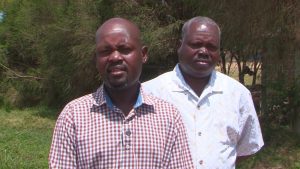
Her father, Dickson Asiago, who resides in Ruiru, Kiambu County, said the incident had taken a heavy emotional toll on his daughter, who has become so distressed that she refuses to eat.
He said the family was initially assured that Irene was among candidates whose registration had been delayed, only for them to discover that the situation was more serious.
“Initially, I was informed by the school that my child was among those registered late for the exam, but it emerged that this was not the case. Now she is feeling bad and stressed after realising she won’t do the exams along with her classmates,” he said.
Irene’s uncle, Willy Ragira, described the situation as particularly painful because the girl was a school prefect and among the top performers in her class.
He accused former school principal Rachael Kerubo, who has since been transferred to another institution, of failing to ensure the candidate was registered and demanded disciplinary action.
Contacted by phone, Kerubo admitted she was partly responsible for the registration failure but said she had accepted responsibility and pledged to support Irene financially if she had to repeat the year.
“I have taken responsibility for the mistake and agreed to support the girl financially, including buying her school uniform so that she can do the exam next year,” she said.
However, the offer has done little to address the family’s immediate concern: why should a learner who prepared for the assessment lose an academic year because of an administrative failure?
A national examination under scrutiny
Irene’s predicament comes as 1,206,028 Grade Nine learners registered for this year’s KJSEA, part of a national examination cycle involving 3,634,846 learners undertaking KPSEA, KJSEA and the Kenya Certificate of Secondary Education (KCSE).
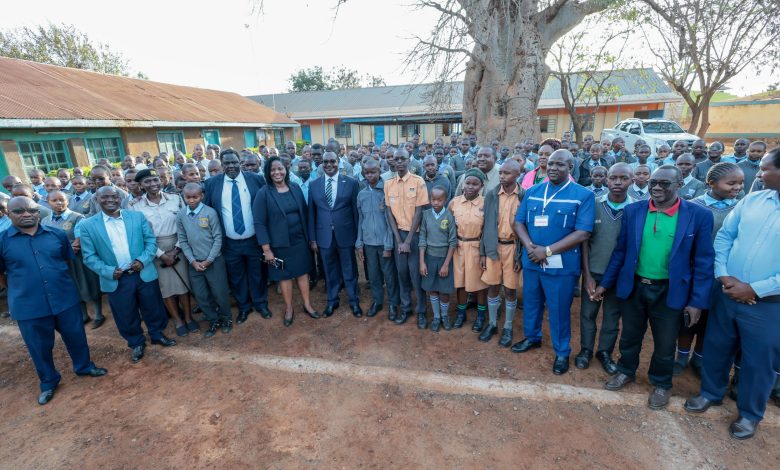
Education Cabinet Secretary Julius Ogamba launched the assessments in Makueni County, witnessing the opening of an examination container at the Makindu Deputy County Commissioner’s Office before visiting Kiambani Comprehensive School.
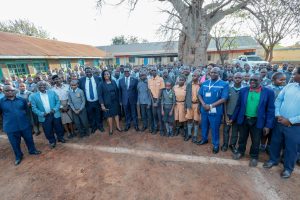
The government has deployed 295,091 personnel through the Teachers Service Commission to support the administration of KPSEA, KJSEA and other assessments, including 207,973 invigilators, 43,606 supervisors and 43,040 centre managers.
Ogamba has warned against examination malpractice, insisting that officials must uphold integrity and that fraudsters claiming to sell examination papers will face action.
The government has also made contingency arrangements to address disruptions caused by heavy rainfall, flooding, insecurity and difficult terrain.
Yet, while authorities focus on securing examination materials and preventing cheating, Irene’s case raises another troubling question on who protects learners from the consequences of mistakes made by the very institutions entrusted with their education.