Uhuru reclaims opposition space as Ruto-Oburu redraw power lines after Raila’s death

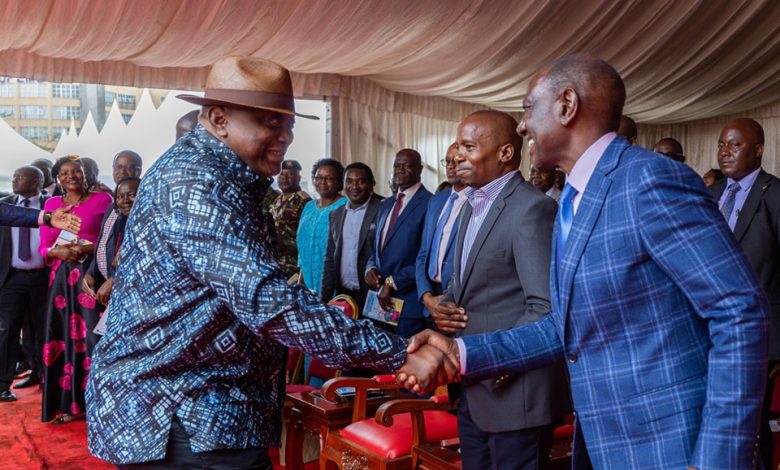
The death of veteran opposition leader Raila Odinga has triggered a major political realignment, reopening opposition space that President William Ruto and ODM interim leader Oburu Odinga are now racing to control.
Into this vacuum step retired President Uhuru Kenyatta, quietly but deliberately repositioning himself as the anchor of a reconstituted opposition.
Raila’s absence has left ODM ideologically unsettled and structurally exposed.
Oburu’s public declaration that ODM is not seeking the deputy president’s slot in any merger with Ruto’s United Democratic Alliance (UDA) signals a strategic retreat rather than ambition.
It effectively confirms ODM’s drift toward the centre of power, leaving millions of opposition voters politically homeless.
For President Ruto, engaging Oburu-led ODM offers short-term parliamentary comfort and a softer political climate. By co-opting ODM’s institutional machinery, Ruto neutralises resistance and projects inclusivity. But this accommodation also redraws power lines in a way that benefits Uhuru’s chaired Azimio coalition.
Uhuru’s revival of the Azimio coalition is less about nostalgia and more about filling the opposition vacuum Raila once occupied. With ODM increasingly aligned to the government, Uhuru is emerging as the custodian of dissent, attractive to disgruntled ODM loyalists, younger voters skeptical of elite power-sharing, and politicians wary of being absorbed into Ruto’s orbit.
Unlike Raila, Uhuru carries no burden of leading street protests or contesting elections himself. This gives him flexibility to play kingmaker, mobiliser and ideological referee. Azimio, under his watch, is being repackaged as a broad platform for political alternatives rather than a single-person movement.
The implications for Ruto are double-edged. While the UDA–ODM convergence consolidates power at the centre, it risks legitimising Uhuru as the face of opposition politics ahead of 2027. A weakened, government-leaning ODM leaves room for Azimio to regroup with fresh leadership and renewed purpose.
In the post-Raila era, Kenyan politics is entering a quieter but sharper contest, one defined less by rallies and more by strategic positioning, legacy battles and the struggle to inherit the opposition mantle.
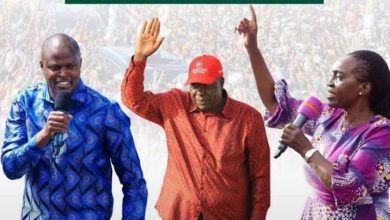
Splinter factions have emerhed within ODM one allied to the Broad-Based government and another dubbed the ‘rebel faction’ opposed to the controversial ODM-ODA deal.
Kisumu Woman Representative Ruth Odinga is the latest to claim the government is funding the ODM Linda Ground rallies in order to control and force the party to support President William Ruto in next year’s General Election.
“I can state authoritatively that the money you see being spent in those rallies does not come from ODM HQ,” said ODM Secretary General Edwin Sifuna on a Citizen TV interview on Tuesday this week.
Kisumu Woman Representative Ruth Odinga, who took to her social media platforms in defence of Sifuna, called out those who have been attacking him as hypocritical cowards.
“Those with the answers, why can’t you provide them? Are governors funding the campaigns? Are MPs doing it from the CDF kitty? Did we get a philanthropist that a party SG is not aware of who is funding the clearly expensive public fora? And what is in it for the ‘philanthropist’?” posed Ruth Odinga.