The silent Sh12.5 billion heist at KUSCCO: Will proposed reforms rescue Saccos?
Oparanya warns against borrowing to pay dividends as backs plans to sell umbrella body's assets to pay depositors


Savings and Credit Cooperative Societies (Saccos) have been engaging in dangerous acrobatics to satisfy depositors with their returns, with some going as far as borrowing loans to pay dividends.
This was revealed a few weeks ago when the Cooperatives Cabinet Secretary Wycliffe Oparanya issued a warning against the practice, highlighting the vulnerability of the sector.
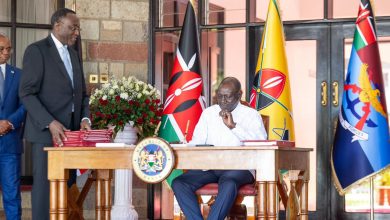
Oparanya said the government will be taking stern measures to curb mismanagement of finances even as it streamlines operations and implements decisive measures to ensure accountability and integrity in the Saccos’ operations.
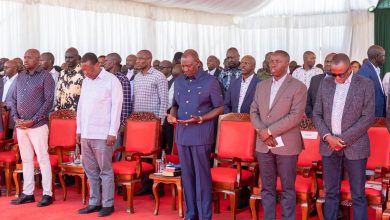
“Moving forward, similar measures will be taken against any cooperative leaders who misappropriate or mismanage members’ funds—let me be clear, this will no longer be tolerated,” Oparanya said during the 10th Annual Sacco Leaders Convention.
Oparanya’s assurance to end the mismanagement of SACCOs comes in the wake of a 208-page audit report by PwC, which unleashed the ‘fraud of the decade’ in history at the Kenya Union of Savings and Credit Cooperatives (KUSCCO).
The explosive forensic audit revealed how top executives siphoned Ksh 12.5 billion belonging to various Saccos, with top officials cooking the financial books to reflect fictitious profits and dividends, yet it was on the verge of collapsing. They even forged a dead man’s signature.
Former Managing Director George Ototo, Finance Manager George Owino, and KUSCCO chairman George Magutu, who are at the centre of the fraud, concealed Ksh 6.5 billion in internal loans, Ksh 1.6 billion commission, Ksh 3.7 billion hidden transactions, and Ksh 9.3 billion misstated accounts, in addition to a misstated Ksh 6.5 billion in internal loans.
After retrieving a trove of incriminating information from the emails, M-Pesa statements, and computer logins of 23 directors at KUSCCO, PwC spotlighted eight executives, placing them at the centre of the circus with four already presented in court.
The PwC reports reveal that the officials inflated the assets of KUSCCO, pocketing Sh206 million each in unexplained withdrawals, which they lied were used to refurbish its branch.
The officials did all this to advocate, train, and lobby for the extension of deposits by Saccos.
The audit unmasked Ksh 1.2 billion paid to contractors where only two out of the 16 contractors of the Kitengela project signed the agreements with questionable credibility.
The built houses from the projects were sold, but there is no evidence of the cash deposited by the buyers, with only Ksh 5,000 being received.
The PwC report stated that the Thrift Savings Plans loans were marked as paid off, yet no evidence was provided to show the same.
A former KUSCCO director, Alfred Mwadime, got a Ksh 7.8 million TPS loan as a staff member but paid less by Ksh 500,000 and the paid amount did not reflect in bank statements.
“Loan statement of member 15327 shows they paid Sh7.37 million marked as lump sum clearing of TPS loan. However, the amount is not traceable in statements from the bank,” PwC stated.
A total of Ksh 489.2 million given out as internal loans was defaulted, with most of the KUSCCO officials breaching the policy that caps borrowing five times of a personal deposit.
In their conclusion, the auditors say the scamming at KUSCCO was meant to even confuse financial experts with the sophisticated internal web of loans.
In the end, Ksh 13.3 billion was lost, leaving the umbrella body of Saccos being insolvent to tune of Ksh 12.5 billion putting Ksh 24.8 billion deposit by Saccos at risk.
The complex web of fraudulent transactions, which included manual and cash dealings, bank trails excluded, show the investigations by detectives from the Directorate of Criminal Investigations (DCI) will take longer.
Investigations began when Oparanya, handed over the PwC report to the Inspector General of Police Douglas Kanja for the investigation and prosecution of those liable.
According to the CS, there is a need for the recovery of the billions lost which the scam puts the 247 Saccos who are members of KUSCCO at risk of insolvency.
The IG formed an investigations team headed by officers from the DCI who arrested the top five officials, including the trio Georges and two ladies in relation to a Ksh 82.8 land transaction that they flagged.
They were later released on cash bails of between Ksh 7-10 million.
More cases are likely to be build as the investigations continue.
The Sacco Societies Regulatory Authority (SASRA) termed the financial loss from the fraud at KUSCCO as ‘too significant to be fully recovered even with asset sale’, a statement that angered some of the Saccos leading them to sue the regulator.
“They can recover something but not 100 per cent. It is not possible because we are talking about billions. The assets being talked about in the sale are about Sh5 billion,” SASRA boss Peter Njuguna said in an interview.
He called on the Saccos to absorb the financial losses arising from the scam.
Nyati Sacco, however, sued SASRA, saying it was shielding the embattled Sacco umbrella body.
“The applicant contends the aforesaid guidelines, which must be implemented immediately as per the letter by SASRA are irregular, unfair and contrary to their objectives and functions,” Nyati said in their applications to the court.
The inadequacies in the existing legal frameworks in the wake of the audit report raise the need for stronger legal frameworks to be established.
In a bid to recover from the Sh12.5 billion heist, KUSCCO is now considering the sale of a majority of its stake in its insurance subsidiary, KUSCCO Mutual Insurance, to refund Saccos.
They have also indicated that they have started the sale of houses and land whose buyers have defaulted in paying mortgage loans under the KUSCCO Housing Cooperative.
The proposed restructuring, which will now see KUSCCO return to its core mandate, has received backing from the ministry with Oparanya directing the constitution of a new nine-member board as the current interim board exits.
“The government is directing the constitution of a new nine-member board with a three-year mandate to revive KUSCCO and build the confidence of SACCOs in Kenya as a secure investment vehicle at the grassroots. KUSCCO will narrow itself to its core mandate of advocacy and training. If that insurance firm was doing well, the plan is to sell out the majority stake so that it can operate on its own,” the CS stated.
In a bid to enhance the stability, efficiency, and competitiveness of Saccos, the Cabinet on has approved amendments to the Sacco Societies Act, 2008.
The proposed reforms, outlined in the Sacco Societies (Amendment) Bill, 2023—now before Parliament—aim to
modernise financial and technological operations, particularly benefiting smaller Saccos.
Key reforms include a SACCO Shared Services Framework, allowing the financial institutions to pool resources, adopt fintech solutions, and enhance cooperation, while maintaining operational independence.
A Central Liquidity Facility (CLF) has been proposed to facilitate inter-SACCO transactions, short-term lending, and participation in the National Payment System, while a centralised data repository will improve regulatory oversight and efficiency.
Part of the proceeds from KUSCCO’s sale of its stake in the insurance arm and auction of houses and land will be used as capital in the proposed CLF to continue doing business and, in turn, refund Saccos from the profits realised.
A Cabinet media brief also said reforms to the Deposit Guarantee Fund will ensure better protection of Sacco
deposits, reduce government bailout risks, and strengthen the cooperative financial sector.