The youth revolt as contentious Finance Bill 2024 sails through Second Reading


A new wave of revolt against the government taxation policies spearheaded by youthful generation affirmed their resolve in today’s day two anti-Finance Bill 2024 protests that were widespread across major towns in the country even as contentious Bill sailed through the Second Reading on the floor of the National Assembly.
Dozens of protesters were arrested during the largely peaceful demosntrations across the country that left over 200 others injured.
Despite the protests, the controversial Finance Bill 2024 passed its Second Reading in the National Assembly with 204 votes in favour and 115 against.
The result has angered many Kenyans, particularly the youth, who have been protesting since Tuesday and have vowed to continue in the coming days
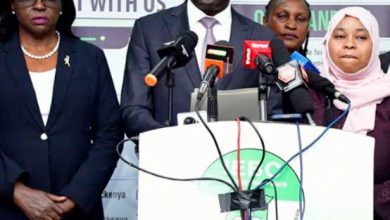
A joint statement by the Law Society of Kenya, Kenya Medical Association, Defenders Coalition, Independent Medical Legal Unit and Amnesty International condemned police brutality saying most of the protesters were arrested in the capital Nairobi, Garissa, Kisumu, Vihiga, Narok, Uasin Gishu and Nakuru.
According to the statement, the peaceful demonstrations took place across 19 counties but turned violent when police resorted to use of force.
The Bill now proceeds to the Third Reading stage also known as the Committee of the Whole House stage where amendments to the text of the Bill are proposed and independent clauses of the Bill are voted on and any new additions made.
The committee will consider the amendments including those introduced by the Finance and Planning Committee and also others to be introduced by members.
“The matter of the Finance Bill is now over for today (Thursday). It will continue on Tuesday where the Committee of the Whole House will consider the amendments,” added the Speaker.
The House resorted to voting manually shortly after Speaker Moses Wetangula closed the debate on the Bill which started on Tuesday.
“The results of the division on the Second Reading of the Finance Bill, 2024 are as follows. The ‘aye’s 204, nays 115, abstentions nil. So, the aye’s have it. I now order for the Bill to be read for a second time,” announced Wetangula.
The vote was greeted with angst and a feeling of retribution.
Majority of the parliamentarians defied Kenyans and their protests against heavy taxation and pushed through the controversial Finance Bill, 2024.
MPs allied to the ruling Kenya Kwanza administration led by president William Ruto won the first round in having the controversial Finance Bill sail through to the Second Reading against unprecedented protests by thousands of unarmed youths who held demonstrations across the country.
In the do-or-die duel in Parliament, the majority of Kenya Kwanza MPs voted to ensure the Finance Bill proceeded to the Third Reading stage.
Those who voted in support of the Bill were 204 against 115 from the opposition who were opposed to the Bill proceeding. A total of 319 MPs out of a total of 449 lawmakers were present.
However, protests spread from the capital Nairobi to various parts of the country, as taxpayers continue to oppose Ruto’s plan to finance his Ksh3.9 trillion ($31 billion) Budget.
Similar demos were witnessed in other cities and towns— including Kisumu, Lodwar, Kakamega, Kisii, Nakuru, Eldoret, Nyeri, Meru, Nanyuki, Mombasa and Kilifi at the Coast.
“Don’t Amend, Reject! Ruto Must Go!,” they chanted as they engaged police in cat-and-mouse games in Nairobi’s Central Business District.
In Ruto’s hometown of Eldoret, thousands of youthful protesters poured on the streets, bringing business in the town to a standstill.
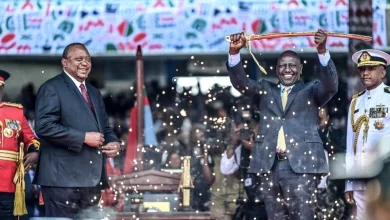
The large crowds that took part in #OccupyEldoret demos mimicked the sea of humanity that was witnessed during celebration of President Ruto’s 2022 election win, and when he was sworn into office.
The demonstrators caused excitement in the town, with onlookers expressing support for their push to have the Kenya Kwanza administration drop punitive taxes in Finance Bill
LSK threatened to institute legal proceedings against police officers found to have violently attacked peaceful protesters during the anti-Finance Bill 2024 demonstrations.
LSK President Faith Odhimabo reiterated that the right to protest is guaranteed in the constitution and no Kenyan should be persecuted or met with unwarranted acts of aggression as a result.
“We reiterate our stern warning to officers of the National Police Service across the country that acts of violence and arbitrariness will be met with strong opposition and personal legal consequences.” She noted.
Further, Odhiambo indicated that the society is already probing incidences where Kenyans were met with violence while expressing their displeasure with proposed new taxes and that action will be taken against anyone found culpable.
“We are taking a detailed record of all atrocities being perpetrated by officers contrary to their duty to protect all citizens and will commence necessary legal action against all officers identified acting unlawfully.” LSK boss observed.
The Finance Bill process
During the First reading, the bill was introduced in the House on May 13, 2024, by way of reading the title which the clerk does.
At this stage, no debate takes place. It is then referred to the relevant Departmental Committee for consideration which in turn facilitated public participation through public hearings, consulting relevant stakeholders and experts.
The National Assembly Finance Committee then facilitated public participation through public hearings, consulting relevant stakeholders and experts, and the process was concluded on June 12, 2024, before the committee retreated to write a report based on the views it received.
The Committee, chaired by Molo MP Kimani Kuria, wrote a report to the House including any particular revisions that were suggested. The whole house committee will then consider these suggestions.
Second reading
During the second reading, which began on Wednesday, June 19, 2024, the sponsor moved the bill, which was to be seconded by any member.
When a bill is not seconded, it is withdrawn.
This is the stage where members will have an opportunity to debate the bill on how the enactment of the law would affect the citizens.
After the debate, the proposer of the bill responds to any issues raised by the members of the house.
Being a money bill, the bill is the sole function of the National Assembly and does not require the concurrence of the Senate like in other bills.
The MPs will then take a vote. If more MPs are in favour of the vote, it moves to the next stage which is the Committee of the Whole House.
Which in this case happened on Thursday, June 20, 2024.
Committee stage
The committee stage comprises the whole membership of the assembly.
At this stage, any proposed amendments to the bill are considered and a vote is taken on each.
If it is approved, it moves to the final stage which is the Third reading.
Third Reading
This is the final stage of the bill.
Here, no amendments are made and a final vote is taken.
If the National Assembly approves the bill, the Speaker presents it to the President for assent.
President’s assent
The Speaker presents a bill to the President for assent after it has been passed by the House.
Within 14 days, the President may assent to the bill or refer the bill back to the House with some reservations.