Billions in debt, thousands in limbo as Ruto’s varsities funding model collapses
Thousands of students complained of being wrongly categorised into higher-income bands, forcing families to shoulder tuition costs they could not afford. Others were locked out of funding altogether due to technical glitches affecting the Higher Education Financing (HEF) portal, delaying admissions and registration in universities across the country.

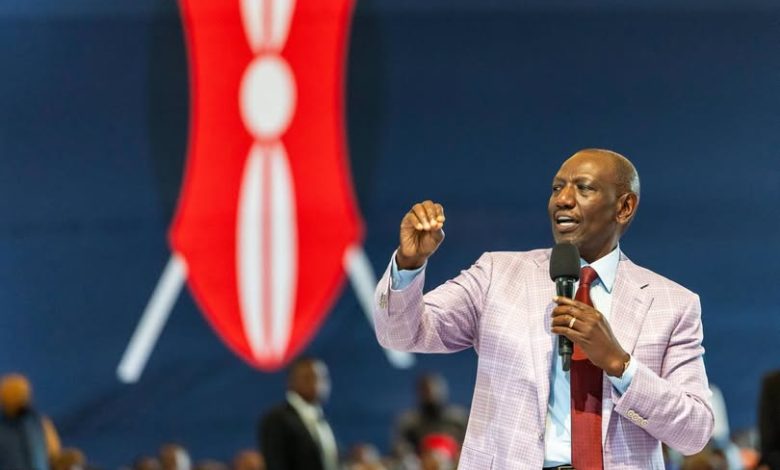
President William Ruto’s ambitious university funding model, introduced in 2023 as a solution to chronic underfunding in higher education, is on the brink of collapse after just three years, weighed down by scholarship deficits, legal battles, technical failures and mounting public university debts running into billions of shillings.
The government is now moving to abandon the Variable Scholarship and Loan Funding Model, marking a dramatic reversal of one of the administration’s flagship education reforms.
The funding framework was rolled out in May 2023 with the promise of replacing the previous uniform financing system with a needs-based model that would ensure students from poor households received more government support than their wealthier counterparts.
Under the framework, students were classified into funding bands based on their assessed financial need, with government scholarships and loans varying accordingly.
The model was implemented as university enrolment continued to grow.
Government data shows that the number of students funded under the scheme increased from 122,634 in the inaugural 2023 cohort to 134,889 students admitted in 2024 before rising sharply to 180,125 students in the 2025 intake.
Despite the growing uptake, the model quickly ran into turbulence.
Thousands of students complained of being wrongly categorised into higher-income bands, forcing families to shoulder tuition costs they could not afford.
Others were locked out of funding altogether due to technical glitches affecting the Higher Education Financing (HEF) portal, delaying admissions and registration in universities across the country.
The crisis was compounded by court challenges, with litigants arguing that the funding framework was discriminatory and violated the constitutional right to education.
The legal uncertainty disrupted implementation as universities struggled to admit and retain students amid delayed government disbursements.
At the same time, public universities continued to sink deeper into financial distress, with outstanding debts running into billions of shillings despite the introduction of the new funding model that had been touted as the solution to years of funding crises.
The collapse of the framework comes as the Kenya Universities and Colleges Central Placement Service (KUCCPS) announced another record placement cycle for the 2025/2026 academic year, highlighting the growing demand for higher education.
According to placement results released in July 2026, KUCCPS placed 293,869 students across universities and colleges.
Of these, 220,684 secured places in public universities to pursue degree programmes, while another 17,151 students were admitted to private universities for the 2026/2027 academic cycle.
Kenyatta University emerged as the most preferred institution, admitting 11,224 students, followed by Maseno University with 9,196 students and Moi University with 8,869 students.
The University of Nairobi admitted 8,604 students, Chuka University received 7,946 students, Kisii University admitted 7,903 students, while Jomo Kenyatta University of Agriculture and Technology (JKUAT) enrolled 7,649 students.
The latest placement figures underscore the enormous pressure facing the government’s higher education financing system.
Every increase in university enrolment translates into higher scholarship and loan obligations at a time when the Treasury is struggling to meet existing commitments.
Education stakeholders warn that abandoning the funding model without a credible replacement could plunge universities into a deeper financial crisis, leaving thousands of students uncertain about how they will finance their education.
While defending the government’s proposal to fully fund university and college education, insisting that every student admitted to a university or TVET institution, Ruto said that every student will have access to financial support despite growing concerns over how the programme will be financed.
Speaking on Thursday last week during a meeting with Nairobi County artisans at State House, Ruto urged those in doubt to trust the government’s plan, saying his administration has already delivered on other promises, including the construction of affordable housing, markets and student hostels.
“In 2022, some of the universities were facing shutdowns because they could not afford to pay lecturers and supplies. I changed the funding model, which brought change to the universities.
“I am not a madman, nor a drunk, nor am I stupid. I know what I am saying. We said we will have affordable housing. Aren’t houses, markets and hostels being built? I know what I am doing,” Ruto reiterated.