Sudan and South Sudan emerge epicenters of alarming food crisis, IGAD warns

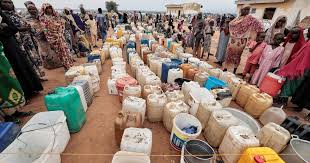
Forty two million people face high levels of acute food insecurity (IPC Phase 3 or above*) this year across six IGAD member states (Djibouti, Kenya, Somalia, South Sudan, the Sudan and Uganda), a report by the Intergovernmental Authority on Development (IGAD) dubbed ‘IGAD Regional Focus of the 2025 Global Report on Food Crises’.
In five countries with comparable data since 2016 (Kenya, Somalia, South Sudan, the Sudan and Uganda), the number of people facing high levels of acute food insecurity has tripled over recent years – from 13.9 million in 2016 during the first edition of the Global Report on Food Crises to 41.7 million in 2025.
Sudan and South Sudan are the largest and most severe food crises in the region. Sudan currently has the largest highly food-insecure population in the region, at 24.6 million, with Famine and risk of Famine in multiple areas.
Meanwhile, South Sudan continues to have the largest share of people (57 per cent) in IPC Phase 3 and above in the region, with two of its counties at risk of Famine.
From conflict to economic challenges and climate extremes, the drivers of acute food insecurity in the IGAD region are interlinked and mutually reinforcing, increasing vulnerabilities, undermining resilience and reversing development gains.
The situation is expected to deteriorate further, as the latest forecast by IGAD’s Climate Prediction and Applications Centre (ICPAC) points to drier-than-usual conditions in parts of the region, including southern Ethiopia, eastern Kenya and much of Somalia.
Some of these areas, particularly central and northern Somalia, have already experienced at least one below-average rainy season, and drought conditions already persist.
Another below-average season risks driving further deteriorations in food insecurity and malnutrition.
Acute malnutrition remains at alarming levels across the region, with 11.4 million children aged 6–59 months acutely malnourished in seven member states.
Among them, 3.1 million urgently need lifesaving treatment for severe acute malnutrition. However, due to significant funding cuts, an estimated 1 million people could be left without access to this treatment.
Furthermore, the IGAD region continues to have more forcibly displaced people in the world. As of the end of June, 23.2 million people were living in forced displacement, including 17.8 million internally displaced (IDPs) and 5.4 million refugees and asylum seekers. Sudan remains the world’s largest internal displacement crisis with about 10 million IDPs.
Meanwhile, Uganda continues to host the largest refugee population on the continent, with over 1.9 million.
Displaced populations face some of the worst food security and nutritional outcomes due to a loss of livelihoods and social support networks, and a heavy reliance on humanitarian assistance at a time of reduced funding.
Speaking during the release of the report, IGAD Executive Secretary Workneh Gebeyehu stressed the importance of collective action, noting that no single institution can address these crises alone.
“The food crisis in our region is more than just hunger; it is a stark reminder of the interconnected challenges we face. As IGAD, we strive to strengthen cooperation, resilience, peace, and security. Only through joint efforts across governments, regional institutions, and partners can we address the root causes of vulnerability and deliver lasting solutions for our people,” he stated.
The Food and Agriculture Organization’s Sub regional Coordinator for Eastern Africa ad-interim, Farayi Zimudzi, underscored the urgent need to protect rural livelihoods, with agricultural communities among the hardest hit.
“With another poor rainy season expected in parts of the region, we must act now with anticipatory measures. But anticipatory action alone is not enough—it must be paired with long-term investments in sustainable agriculture and resilience building so that no one is left behind,” she emphasized.
World Food Programme (WFP) Regional Director for Eastern and Southern Africa, Eric Perdison, described the scale of the hunger crisis as “deeply alarming,” pointing out that famine is already unfolding in Sudan.
“Saving lives remains an immediate priority, but we must also help communities build resilience and reduce dependence on humanitarian aid for survival,” he said.
The seventh edition of the IGAD Regional Focus of the Global Report on Food Crises highlights these challenges, offering analysis and insights to guide joint responses.
The report forms part of the Global Report on Food Crises (GRFC 2025), produced through a multi-partner process coordinated by the Food Security Information Network (FSIN) under the Global Network Against Food Crises (GNAFC).