Sh2.5billion stalled BRT debt haunts NaMATA, Auditor-General warns
The project was awarded for Sh5.575 billion, with work valued at Sh3.108 billion certified as completed. However, the value of work in progress has remained unchanged over successive financial years.

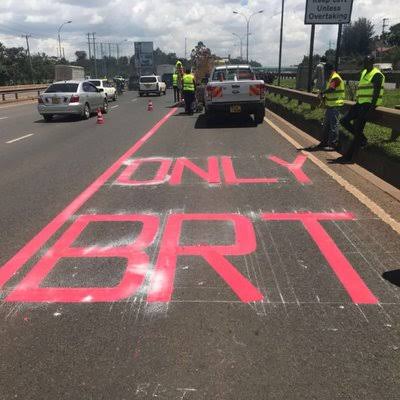
Nairobi’s stalled Bus Rapid Transit (BRT) programme is sinking deeper into financial trouble, with delayed payments and unresolved contractor claims now piling an additional Sh1.784 billion bill onto taxpayers.
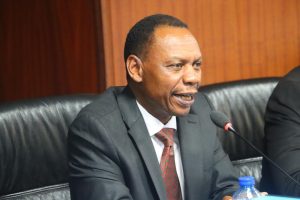
An audit report by the Auditor-General Nancy Gathungu shows that the Director General Eng. Francis Gitau led Nairobi Metropolitan Area Transport Authority (NaMATA) owes Sh2.5 billion in trade and other payables, more than double the Sh1.563 billion recorded a year earlier.
Of this amount, Sh2.449 billion—98 per cent—had remained unpaid for more than three years by June 30, 2025, exposing the authority to mounting interest charges and contractor claims.
A major portion of the debt is owed to the contractor engaged to design and construct BRT facilities along the Thika Superhighway Corridor, a project that has been frozen since January 11, 2022 after the contractor suspended works over non-payment.
The project was awarded for Sh5.575 billion, with work valued at Sh3.108 billion certified as completed. However, the value of work in progress has remained unchanged over successive financial years.
The financial consequences have been severe. The Auditor-General found that Sh1.039 billion of NaMATA’s outstanding payables represents interest accumulated on delayed payments for certificates issued for the Thika Road BRT project.
NaMATA is also facing Sh745.1 million in contingent liabilities arising from contractor claims linked to delayed approval of drawings, delayed land acquisition and suspension of works.
Combined, the interest and claims amount to Sh1.784 billion—equivalent to nearly a third of the original contract price.
The Auditor-General warned that the additional costs had undermined the economic case for the project, declaring that there was “no value for money” arising from interest on delayed payments.
NaMATA blamed inadequate development budget allocations, saying funding had failed to match the capital requirements of the project amid fiscal constraints.
The funding shortfall has created a costly cycle in which delayed payments generate interest and claims, further increasing the money required to complete the project.
The crisis threatens NaMATA’s wider plans to develop BRT Lines 2, 3, 4 and 5 across Nairobi and the metropolitan region. Line 2, the Simba corridor, is planned to feature 10 stations, 100 buses and dedicated lanes capable of carrying up to 15,000 passengers per hour in each direction.
The authority’s financial position raises further questions. Although NaMATA reported a Sh370.7 million surplus, it had total assets of Sh4.56 billion but only Sh32.5 million in current assets against current liabilities of Sh2.516 billion.
Capacity constraints are also evident. Of 215 approved positions, only 94 were filled, leaving 121 vacancies. The Auditor-General warned that the shortage could force staff to handle multiple responsibilities and weaken service delivery.
NaMATA has also failed to establish a retirement benefit scheme, leaving Sh4.98 million in employee deductions and employer contributions unremitted.
Governance concerns persist, with the board comprising 14 members against the nine-member maximum prescribed by the Mwongozo Code. Some directors also sit on multiple committees, raising remuneration costs.
The revelations come as NaMATA continues implementing other transport initiatives, including a month-long subsidised public transport pilot with PSVs.