Senators query leasing of crucial LPG facility in Mombasa to Asharami Synergy for 31 years
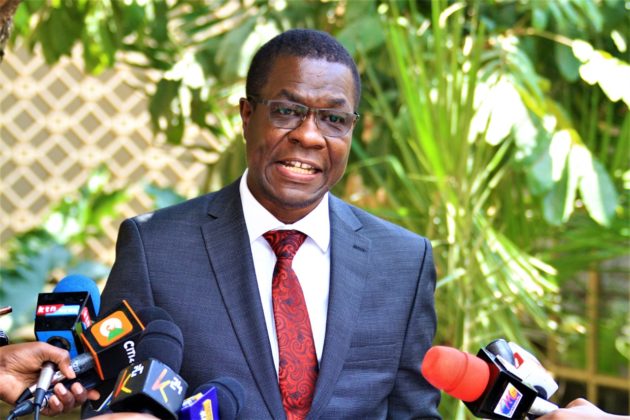
Omtatah said legal amendments affecting the project were introduced quietly through the Finance Bill, a move he described as underhanded

A storm is brewing in Kenya’s energy sector following the ministry of Energy and Petroleum’s decision to hand over the development of a crucial liquefied petroleum gas (LPG) handling facility in Mombasa to Asharami Synergy, a Nigerian subsidiary of the Sahara Group.
The move, made under a 31-year-lease agreement, has triggered a sharp response from the Senate Standing Committee on Energy, raising concerns about transparency, legality, and the level of public involvement in the decision-making process.
While appearing before the committee, the ministry defended its actions, citing the National LPG Growth Strategy, which aims to double the country’s per capita LPG consumption from 7.5 kg to 15 kg by 2028.
Energy Cabinet Secretary Opiyo Wandayi stated that the lease aligns with a Cabinet directive issued in October 2023, which encourages private sector participation in LPG infrastructure due to existing budgetary constraints.
Wandayi clarified that only 23.19 acres of public land at the Kenya Petroleum Refineries Limited (KPRL) site had been leased to Asharami for the project. He added that after the 31-year lease period, the facility would revert to the government through Kenya Pipeline Company (KPC) management.
However, several senators expressed deep dissatisfaction with both the process and the ministry’s explanations.
Busia Senator Okiya Omtatah led the charge, questioning the legality of the Cabinet’s decision.
Kakamega Senator Bonnie Khalwale asked what the ministry is doing to put incentives for investors to put their money in LPG sector.
In response, Energy and Petroleum Regulatory Authority (EPRA) Managing Director Daniel Kiptoo said that all taxes on LGP cylinders were removed in 2023/24 financial year.
However, Omtatah held that the decision did not comply with Article 10 of the Constitution of Kenya, which demands public participation in governance matters.
“The decision of the Cabinet does not align with Article 10 of the Constitution of Kenya. It was not submitted to public participation; therefore, it was a boardroom decision. The response is not good enough and does not address the matter that I asked satisfactorily,” he said.
The ministry had explained that six companies were invited to submit proposals under a Specially Permitted Procurement Procedure approved by the National Treasury. Out of the six—TotalEnergies, Rubis Energy Kenya, Galana Energies, Gulf Energy, Vivo Energy, and Asharami Synergy—only Gulf Energy and Asharami submitted proposals. Asharami was selected after evaluation.
Despite this explanation, Nominated Senator Veronica Maina supported calls for more clarity, suggesting that the ministry should return with more comprehensive responses.
“Since the report is not good enough according to Senator Omtatah, then the Cabinet Secretary should seek leave and come up with more substantial answers,” she said.
In contrast, Vice Chairman Senator William Kisang offered a more supportive perspective on private sector involvement.
“The private sector is doing a good job in LPG as compared to what the government is doing,” he said, hinting at a broader acceptance of public-private partnerships in the energy sector.
Yet another point of contention was the expenditure of Sh192.64 million by KPC on early project studies—including environmental and social impact assessments and engineering designs—before the project was handed over.
The ministry acknowledged that discussions between KPC, KPRL and Asharami regarding information sharing and cost recovery were still pending.
Omtatah said legal amendments affecting the project were introduced quietly through the Finance Bill, a move he described as underhanded.
“The amendment was sneaked in public finance through the Finance Bill,” he said.
The committee resolved that the ministry needs to provide more detailed, transparent, and constitutionally sound answers.
As Kenya seeks to modernise its energy infrastructure and improve LPG access across the country, this controversial handover may prove to be a pivotal moment—one that tests the government’s commitment to accountability, legality, and public trust.