Somalia is no stranger to crisis: overrun by Islamist insurgents, desperately short on food, and plagued by climate extremes, the fragile state faces many considerable challenges.
But a bitter dispute over elections has thrust the Horn of Africa nation into a dangerous new phase, with the president accused of refusing to leave office as tensions with his political foes reach breaking point.
What is happening?
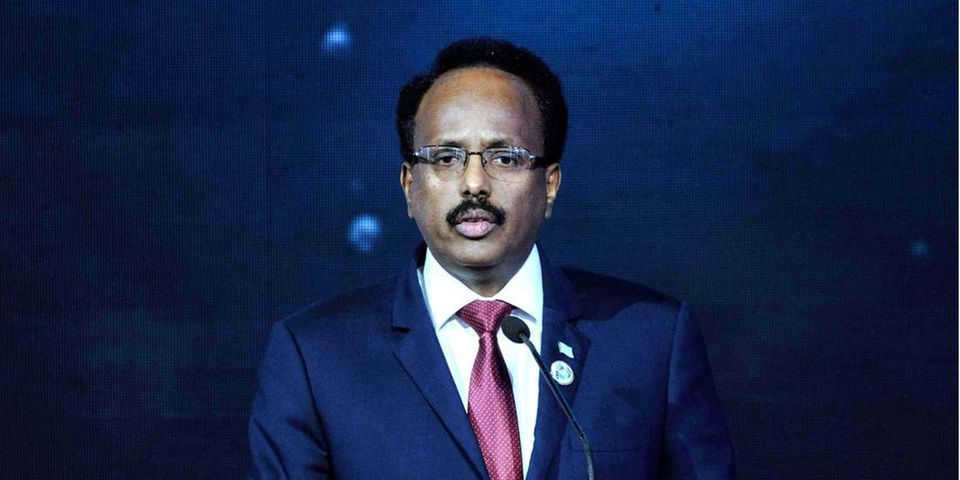
Somalia’s President Mohamed Abdullahi Mohamed, better known by his nickname Farmaajo, on Tuesday signed into law a parliamentary bill extending his mandate for two years.
The bill bypassed the Senate, after being adopted by the lower house of parliament earlier this week, and the move has been decried as an unconstitutional bid to cling to power.
Farmaajo’s legal authority had been in doubt since February, when his four-year term expired before fresh presidential elections were held.
Opposition parties had already declared they no longer recognised him.
The decision to extend his mandate sets Farmaajo on a collision course with influential armed rivals and the Western powers that prop up his weak administration.
“This is uncharted territory,” said Hussein Sheikh-Ali, chairman of the Mogadishu-based Hiraal Institute think tank, and a former national security adviser to Farmaajo’s government.
“Somalia is on the brink of total collapse once again, I have no doubt.”
How did we get here?
The crisis mushroomed from a long-simmering disagreement between Farmaajo and the leaders of Puntland and Jubaland, two of Somalia’s five semi-autonomous states, over how to conduct elections.
A deal was cobbled together in September paving the way for indirect elections in late 2020 and early 2021, whereby special delegates chosen by Somalia’s myriad clan elders pick lawmakers, who in turn choose the president.
But that agreement collapsed as the parties accused each other of reneging on promises and refusing to compromise.
Multiple rounds of talks failed to salvage the September accord, and deadlines for the election came and went.
Members of Somalia’s political elite have reached consensus in past electoral cycles despite historic rivalries and vastly divergent agendas, said Murithi Mutiga from the International Crisis Group (ICG).
“But this is a new, more dangerous phase,” the ICG’s project director for the Horn of Africa said.
“The level of trust between the parties is so low that it’s hard to conceive a situation where they will compromise.”
The new law signed by Farmaajo promises the country’s first one-person, one-vote election in more than half a century.
Is there a risk of violence?
Farmaajo’s rivals in Puntland and Jubaland have formed an alliance with a powerful coalition of presidential aspirants and other opposition heavyweights in Mogadishu.
They include two former presidents and the Speaker of the Senate, whose chamber was denied the opportunity to review the mandate extension before its signing into law, and declared it null and void.
The have warned that ruling by decree risks peace and stability in Somalia — a loaded threat given Jubaland and Somali forces have clashed on the battlefield, and some of Farmaajo’s enemies command clan militias.
There have already been some high-profile defections. Mogadishu’s police chief was fired after trying to shut down parliament ahead of the mandate vote, declaring it a theft of power in an extraordinary public address.
Analysts fear a splintering of Somalia’s security forces along political and clan lines, and the risk of deadly street-to-street combat in Mogadishu should the crisis fester.
“It’s not going to be a couple of hours of shootout and things go back to normal,” said Sheikh-Ali.