Ruto caught in party crossfire as Omar Hassan faces backlash
According to sources who spoke to us on condition of anonymity, the push for Omar’s exit is being framed as a strategic move to protect the president’s image as a national unifier and prevent further erosion of trust in a region already showing signs of political restiveness

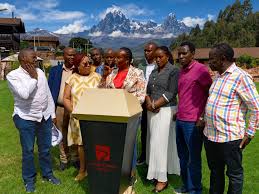
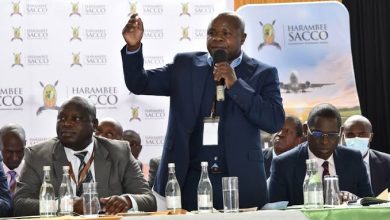
Tensions are mounting within the ruling United Democratic Alliance (UDA) as a growing faction of senior party figures intensifies pressure on Secretary General Omar Hassan to resign over controversial remarks perceived as ethnic profiling against communities in Central Kenya.
The unfolding dispute has exposed widening fault lines within the party and raised fresh questions about President William Ruto’s handling of internal dissent at a politically sensitive moment.
Insiders within UDA say close allies of the President are privately urging him to distance the party from Omar, arguing that the remarks risk alienating the vote-rich Mount Kenya region, which remains central to Ruto’s re-election calculus ahead of the 2027 General Election.
According to sources who spoke to us on condition of anonymity, the push for Omar’s exit is being framed as a strategic move to protect the president’s image as a national unifier and prevent further erosion of trust in a region already showing signs of political restiveness.
The National Cohesion and Integration Commission (NCIC) has confirmed it is investigating Omar over alleged hate speech, placing the matter squarely within the legal and institutional framework meant to curb ethnic incitement. NCIC Chairperson Bishop Dr Kepha Nyamweya
Omae said the commission is still in the “research, investigate and recommend” phase, signaling that formal conclusions are yet to be reached but pressure is steadily building.
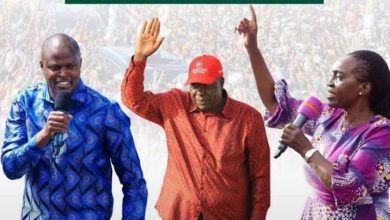
The controversy escalated after reports that UDA legislators from Mount Kenya, led by Kiambaa MP John Njuguna Wanjiku, Thika Town MP Alice Ng’ang’a, and Laikipia Woman Representative Jane Kagiri, demanded Omar’s immediate resignation.
The lawmakers dismissed his apology, insisting it failed to address the gravity of what they termed calculated ethnic profiling.
“We flatly reject the statement of clarification and apology issued by the UDA Secretary General Hassan Omar,” Kagiri said, adding that the remarks were “targeted, vilifying and scapegoating the Kikuyu community.”
The MPs further argued that such rhetoric undermines constitutional guarantees of equality and freedom of movement across Kenya.
Their position reflects a broader political unease within the ruling coalition, where Mount Kenya leaders are increasingly asserting themselves in response to perceived marginalisation and political uncertainty following shifts in the region’s leadership dynamics.
Analysts say the growing revolt signals an early test of cohesion for UDA as it attempts to maintain its national coalition structure.
The controversy has also drawn in retired President Uhuru Kenyatta, who used a public address at a Jubilee Party meeting in Kiambu to condemn rising ethnic rhetoric in Kenyan politics.
Uhuru warned that unchecked divisive statements could return the country to the dark trajectory witnessed during the 2007 post-election violence.
He criticised both emerging and senior leaders for tolerating inflammatory language in public discourse, urging a return to issue-based politics centered on economic delivery.
“People are making noise because someone is saying, ‘I earn Sh20,000… and after rent and fuel I am left with nothing,’” Uhuru said, shifting attention to economic hardship as a key driver of political frustration.
His remarks positioned the ethnic debate within a broader socio-economic context, suggesting that governance failures risk amplifying identity-based tensions.
Meanwhile, former Deputy President Rigathi Gachagua has also placed responsibility on President Ruto’s leadership, accusing him of allowing divisive rhetoric to flourish within his administration.
Together, the interventions by Uhuru and Gachagua have intensified pressure on State House to respond decisively, though the president has so far maintained public silence on the matter.
Within UDA, this silence is being interpreted in contrasting ways. Some political leaders close to the president argue it reflects a calculated attempt by Ruto to avoid inflaming internal divisions, while others see it as tacit tolerance of emerging hardline voices within his political machinery.