Questions mount over Somali Deputy PM Haji’s Kenyan passport acquisition procedure
The controversy has intensified amid reports that Somali President Hassan Sheikh Mohamud directed senior public officials holding Kenyan passports to surrender the documents or resign from government positions, in an apparent effort to reinforce loyalty to Somalia.

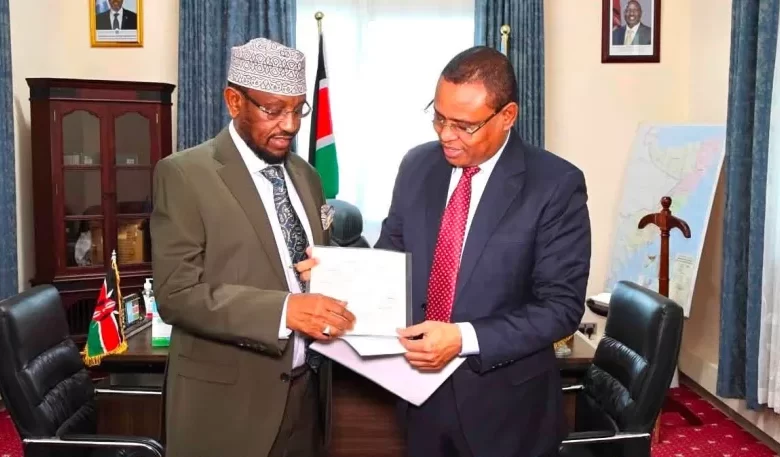
Fresh questions have emerged over the integrity of Kenya’s passport issuance system after Somalia’s Second Deputy Prime Minister, Jibril Abdirashid Haji, surrendered his Kenyan passport weeks after he was deported from Nairobi over the controversial document.
The development has renewed scrutiny over how a serving senior foreign government official came to possess a Kenyan passport, with attention now shifting to the processes through which the travel document was acquired.
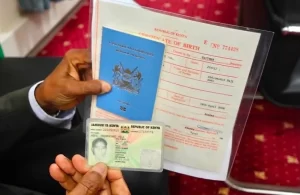
Haji handed over the passport to officials at the Kenyan Embassy in Mogadishu earlier today, Monday, August 3, 2026, describing the move as a voluntary administrative decision intended to demonstrate his loyalty and commitment to the Federal Republic of Somalia.
The latest revelations are expected to pile pressure on Kenyan Immigration authorities to explain how such a sensitive document was issued and whether proper citizenship verification procedures were followed, as calls grow for greater transparency and accountability in the country’s passport issuance system.
Haji insisted that the passport had been lawfully acquired and used in full compliance with Kenyan laws and procedures, maintaining that the decision to surrender it was neither prompted by a request from Kenyan authorities nor linked to any dispute with Nairobi.
“The passport was genuine and lawfully obtained, and its use fully complied with Kenyan laws and procedures,” Haji said, describing the handover as “purely administrative.”
He thanked Kenya for decades of hospitality extended to Somali nationals and reaffirmed his commitment to strengthening relations between the two neighbouring countries.
“My commitment to the Federal Republic of Somalia remains unwavering,” he said.
However, Haji’s decision comes barely a month after he was deported from Kenya following an encounter with immigration officials at Jomo Kenyatta International Airport (JKIA).
According to a police incident report filed on June 26, the Somali Deputy Prime Minister arrived in Nairobi from Mogadishu aboard a Saacid Airlines flight using a Somali diplomatic passport and a valid Kenyan visa.
During immigration clearance, officers reportedly questioned him over a Kenyan passport they suspected had been fraudulently acquired.
The report states that Haji acknowledged possessing the passport but declined to surrender it when requested, insisting he would only produce it before a court of law.
“He admitted and when asked to produce the passport, he declined to surrender and claimed that he can only produce it in a court of law,” the report states.
Immigration officials subsequently detained him briefly at the VIP lounge in Terminal 2 before facilitating his return to Mogadishu aboard a Daallo Airlines flight the following day.
The controversy has intensified amid reports that Somali President Hassan Sheikh Mohamud directed senior public officials holding Kenyan passports to surrender the documents or resign from government positions, in an apparent effort to reinforce loyalty to Somalia.
The incident has also reignited debate in Kenya over the safeguards surrounding the issuance of passports.
Under the constitution and the Kenya Citizenship and Immigration Act, Kenyan passports are reserved for Kenyan citizens, including those with dual citizenship.
The law does not provide for the issuance of Kenyan passports to non-citizen foreign government officials or any other underserving individuals.