Parliament divided as National Infrastructure Fund Bill sparks oversight concerns

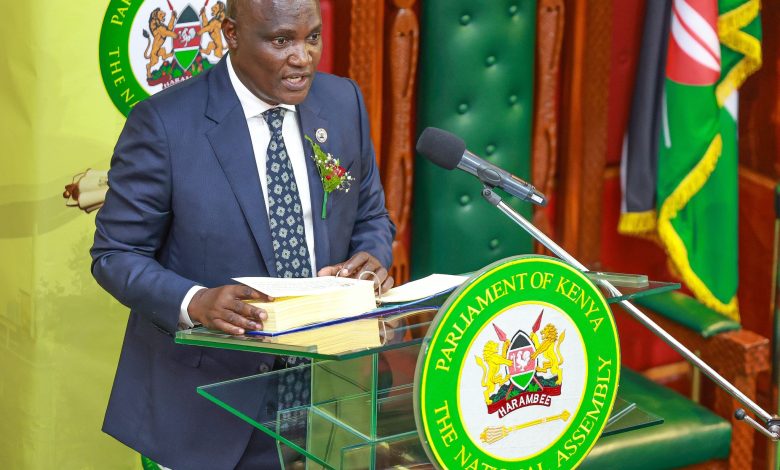
The proposed controversial National Infrastructure Fund Bill sparked heated debate in the National Assembly yesterday, exposing deep divisions over its structure, oversight framework and the extent of Executive control, particularly the powers granted to Treasury Cabinet Secretary John Mbadi.
Supporters of the Bill argue it offers Kenya a bold alternative to traditional borrowing and taxation, positioning it as a vehicle to unlock trillions of shillings for large-scale infrastructure development, especially in historically marginalised regions.
Critics, however, warn that the framework centralises excessive authority in the hands of the Treasury and sidelines Parliament.
The debate has effectively split the House between backers of President William Ruto’s much-touted “Singapore dream” and sceptics who question both the design and intent of the proposed fund.
National Assembly Majority Leader Kimani Ichung’wah defended the initiative, saying the President had been clear that Kenya cannot continue financing development through debt or overburdening taxpayers. \
He maintained that constitutional oversight mechanisms, particularly through the Auditor General, would remain intact.
“The President said we cannot continue funding development through borrowing and he said we cannot continue overburdening Kenyans with borrowing…” said National Assembly Majority Leader Kimani Ichung’wah.
But opposition voices were forceful. Suba South MP Caroli Omondi warned the Bill could be declared unconstitutional if passed in its current form.
Mukurweini MP John Kaguchia criticised what he termed “sweeping powers” vested in the Treasury CS, arguing that control, not oversight, sits at the centre of the structure.
Under the proposal, the fund would be managed by a nine-member board comprising a chairperson, the Treasury CS or representative, four independent directors, two development banking experts and a chief executive officer.
The independent directors and experts would be competitively recruited through a selection panel established by the Treasury CS, who would also appoint them, determine their remuneration and sign performance contracts.
Several MPs questioned the absence of parliamentary involvement in appointments and approvals.
Kajiado North MP Onesmus Ngogoyo contrasted the Bill with the NG-CDF framework, where Parliament vets board members. Funyula MP Wilberforce Oundo lamented that the National Assembly would have “no say” in appointments or project selection.
Kiharu MP Ndindi Nyoro went further, branding the proposal the “national illegal borrowing fund bill,” arguing it merely shifts debt outside the formal budget process.
He warned against moving trillions of shillings into a structure with limited upfront scrutiny, stating that Parliament currently oversees a Sh4 trillion budget but would effectively relinquish oversight of an even larger fund.
Questions also arose about the fund’s commercial focus.
Kitui Central MP Makali Mulu emphasised that projects must demonstrate commercial viability, while Omondi cautioned colleagues against expecting constituency-level road projects from the fund.
Ichung’wah clarified that commercially viable roads would be financed through the fund, while non-revenue-generating projects would remain under the national budget.
Regional equity featured prominently in the debate.
Marsabit Woman Representative Naomi Waqo argued the fund could unlock long-awaited water projects in arid areas, while Dadaab MP Farah Maalim said northern regions hold mineral wealth and economic potential beyond traditional cash crops.
Still, concerns persist that the fund would operate outside the direct control of Parliament, the Controller of Budget and line ministries, with oversight occurring only after expenditure through audit reports.
Homa Bay Woman Representative Joyce Atieno Bensuda urged amendments to clarify ambiguous provisions and strengthen safeguards before final passage.
The Bill now proceeds to the Committee of the Whole House stage, where proposed amendments are expected to shape its final form before a decisive vote.