Pain ahead as Ruto’s administration domestic debt hits Sh7trillion
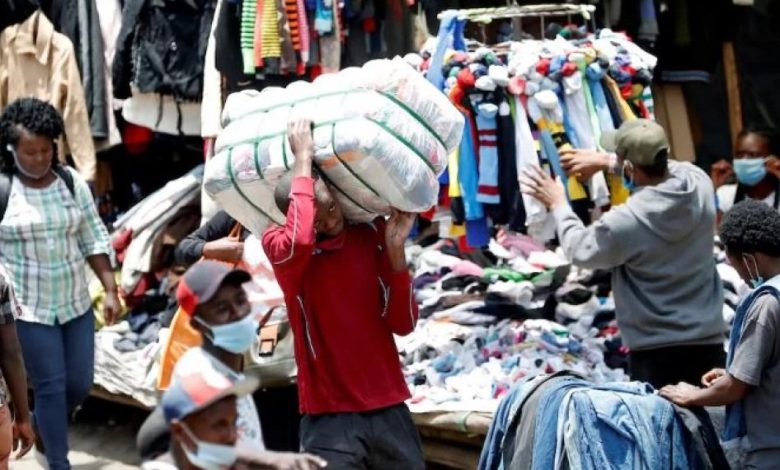
Members of Parliament (MPs) have now sounded alarm warning that internal government borrowing has out crowded the private sector both in formal and informal sector, a move that is likely to complicate the ease of doing business, access to affordable finance and ultimately plunge them deeper into poverty

By Suleiman Mbatiah
Harsh economic realities are beckoning ahead owing to heavy domestic borrowing by the President William Ruto’s led government which could inevitably limit credit available to businesses and slow economic growth and further push Kenyans to poverty.
Members of Parliament (MPs) have now sounded alarm warning that internal government borrowing has out crowded the private sector both in formal and informal sector, a move that is likely to complicate the ease of doing business, access to affordable finance and ultimately plunge them deeper into poverty.
The MPs made the cautionary statement while reviewing Kenya’s 2026/27 Budget Policy Statement.
A report by the National Assembly’s Budget and Appropriations Committee says the government’s growing reliance on domestic debt risks crowding out private sector borrowing and raising the cost of credit.
According to the Central Bank of Kenya, the country’s domestic debt stock rose to Sh7.052 trillion as of February 20, 2026, the first time it has crossed the Sh7trillion mark.
The rapid increase underscores the scale of government borrowing from the local market even as fiscal pressures persist.
Parliament’s Budget and Appropriations Committee cautioned that sustained borrowing from domestic markets could push interest rates higher and limit affordable financing for businesses, particularly micro, small and medium enterprises.
“Continued reliance on domestic borrowing to finance the fiscal deficit could crowd out credit to the private sector and raise the cost of borrowing,” the committee said in its report on the 2026/27 Budget Policy Statement.
Government securities dominate the domestic debt portfolio. Treasury bonds account for Sh5.739 trillion, or about 81 per cent of domestic debt, while Treasury bills stand at Sh1.144trillion, according to the Central Bank.
Local financial institutions remain the main lenders to the government. Commercial banks, pension funds and insurance firms hold about 79 per cent of domestic securities, with banks alone accounting for roughly 36 per cent.

Economists say this growing exposure has strengthened links between the banking sector and government finances, but it also risks diverting funds away from private investment.
“Sustained high levels of government borrowing from the domestic market may crowd out credit to the private sector, leading to higher interest rates and reduced access to affordable financing for businesses,” the committee observed.
The warning comes as Kenya prepares a larger spending plan for the 2026/27 financial year.
According to the Budget Policy Statement reviewed by Parliament, total revenue is projected at about Sh3.588 trillion, equivalent to 17.7 per cent of GDP, while total expenditure and net lending are expected to reach about Sh4.737 trillion.
The gap will widen the fiscal deficit to roughly Sh1.149 trillion, or about 5.5 per cent of GDP, which the government plans to finance through a mix of domestic and external borrowing.
Debt servicing costs are also rising sharply. Interest payments on public debt — estimated at about Sh12.3 trillion ($95 billion) — are projected to reach about Sh1.2 trillion in the 2026/27 fiscal year, according to the Parliamentary Budget Office.
That level of debt servicing could absorb more than a quarter of the national budget, leaving limited fiscal room for development spending on infrastructure, health and education.
“Debt-related costs continue to constrain fiscal space and limit the resources available for development spending,” the committee said.
The committee further noted that domestic borrowing has become increasingly expensive compared with external financing in recent years.
The Office of the Auditor General has also warned that domestic borrowing costs have risen significantly, noting that in the past five years borrowing locally has been more than three times as expensive as external financing, even though domestic debt accounts for roughly half of total public debt.
Persistent revenue shortfalls have compounded the fiscal challenge.
Actual revenue collections between July and December 2025 reached Sh1.506 trillion, falling short of the Sh1.654 trillion target, according to the parliamentary report.
Lawmakers said the Treasury must improve revenue forecasting and strengthen tax administration to avoid widening budget gaps that increase borrowing needs.
“The National Treasury should strengthen revenue projections through realistic forecasting anchored on historical collection performance,” the committee recommended.
Despite the fiscal pressures, the Treasury expects the economy to continue expanding.
The Budget Policy Statement projects economic growth of about 5.3 percent in 2026, supported by recovery in agriculture, infrastructure investment and expansion in services such as tourism and transport.
However, lawmakers warned that sustained borrowing pressures could undermine those gains if fiscal risks are not carefully managed.
They urged the government to tighten fiscal discipline, curb spending growth and ensure new borrowing is directed to projects that deliver clear economic returns.