Opposition calls for ICC probe into President Ruto over political violence
Karua also challenged the Independent Electoral and Boundaries Commission (IEBC) to guarantee a peaceful, transparent and credible election in which voters can participate without fear or intimidation.

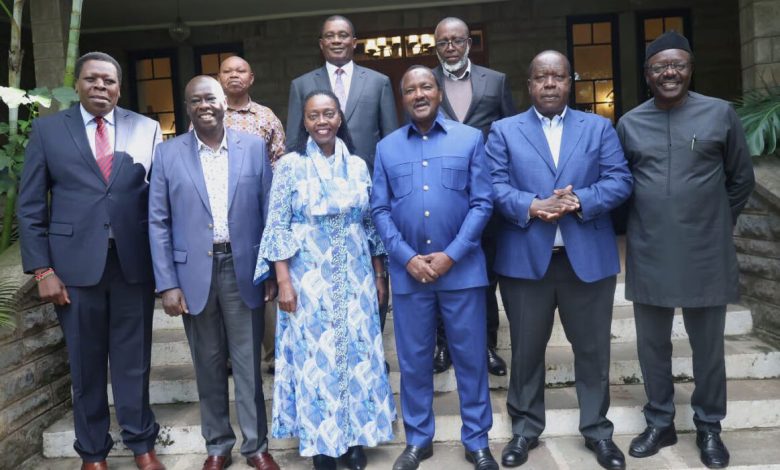
The United Opposition has asked the International Criminal Court (ICC) to scrutinise recent political violence in Kenya and consider opening proceedings against President William Ruto if evidence emerges linking those in authority to widespread or systematic attacks against civilians, systematic political repression and shrinking civic space.
In a strongly worded statement issued yesterday, Wednesday, August 19, 2026, the United Alternative Government of Kenya (UAG) and Linda Mwananchi urged ICC Prosecutor’s office to closely monitor developments in the country and undertake a preliminary assessment of whether recent incidents warrant examination under the Rome Statute.
The position of Prosecutor of the International Criminal Court (ICC) is currently vacant following the removal of Karim Khan on July 24, 2026. Deputy prosecutors Mame Mandiaye Niang and Nazhat Shameem Khan are currently heading the Office of the Prosecutor until a new permanent prosecutor is elected.
The statement was read on behalf of the opposition by People’s Liberation Party leader Martha Karua, who cited a series of attacks involving opposition politicians and supporters during political rallies.
Karua pointed to reported violence involving former Deputy President Rigathi Gachagua in Rongai, Jubilee Deputy Party Leader Fred Matiang’i’s team in Mulot, as well as clashes surrounding Linda Mwananchi activities in Homa Bay and Keumbu in Kisii County.
“These incidents require independent investigation,” the coalition said.
The opposition wants the ICC prosecutor to establish whether the reported incidents are isolated cases of political violence or part of a broader pattern of organised attacks.
“Should evidence emerge of widespread or systematic attacks against civilians being organised, financed, directed or tolerated by those in authority, we urge the prosecutor to investigate President Ruto, a former ICC indictee, and review the status of previous charges against him,” Karua said.
Any decision to proceed would rest with the prosecutor and would have to satisfy the court’s legal requirements under the Rome Statute.
The opposition, however, argues that the reported attacks raise serious questions about the government’s ability to protect political leaders, supporters, journalists and ordinary citizens as the country heads towards the 2027 General Election.
“The government must explain how organised groups of armed civilians can repeatedly mobilise, move openly, attack political leaders, journalists, citizens and even police officers, and apparently operate with such confidence,” the coalition said.
Karua also challenged the Independent Electoral and Boundaries Commission (IEBC) to guarantee a peaceful, transparent and credible election in which voters can participate without fear or intimidation.
The opposition’s appeal comes against the backdrop of Kenya’s troubled history with political violence and the ICC.
Ruto’s ICC case
President Ruto previously faced crimes against humanity charges at the Hague over his alleged role in the 2007-2008 post-election violence.
The ICC confirmed three charges against Ruto and former radio journalist Joshua Arap Sang in January 2012 — murder, deportation or forcible transfer of population, and persecution — over alleged crimes committed in the greater Eldoret area. Their trial began in September 2013.
The case was terminated by the Trial Chamber on April 5, 2016, without prejudice to possible future prosecution. The judges vacated the charges and discharged Ruto and Sang, meaning the termination did not permanently prevent a future case based on new evidence.
Ruto was not the only prominent Kenyan to face ICC proceedings arising from the post-election violence.
Former President Uhuru Kenyatta was charged with five counts of crimes against humanity, including murder, deportation or forcible transfer of population, rape, persecution and other inhumane acts.
The prosecution withdrew the charges in December 2014, citing insufficient evidence, and the Trial Chamber terminated the proceedings in March 2015.
Former Head of Civil Service Francis Muthaura also faced charges alongside Kenyatta, but the prosecution withdrew the case against him in 2013.
The ICC had also brought proceedings involving former Police Commissioner Mohammed Hussein Ali, but the Pre-Trial Chamber declined to confirm charges against him.
The ICC cases arose from the violence that followed Kenya’s disputed 2007 presidential election. The unrest left more than 1,000 people dead and hundreds of thousands displaced, with widespread allegations of killings, sexual violence, injuries and destruction of property.
The collapse of the cases did not erase the ICC’s jurisdiction over Kenya. Indeed, the court has previously indicated that some matters could be pursued again if new evidence emerges. The ICC’s records describe the Kenyatta case as closed unless and until the prosecutor submits new evidence.
The Ruto-Sang case was likewise terminated without prejudice to future prosecution, a point the opposition is now invoking as it calls for scrutiny of the latest incidents.
Warning ahead of 2027
Karua warned that political violence must not be allowed to become a feature of the 2027 election campaign.
“No citizen should be denied the right to campaign, assemble or vote because armed militia have been unleashed upon them,” she said. “The 2027 elections must be a contest of ideas, not intimidation; a contest of ballots, not bullets.”
She urged Kenyans to reject political violence regardless of which side is responsible.
“The protection of democracy cannot be left to citizens and political leaders alone; it is the responsibility of every Kenyan,” she said.
The coalition’s appeal places fresh international scrutiny on the government’s handling of political violence at a time when political parties and movements are intensifying preparations for the 2027 election.
It also revives memories of the ICC’s intervention following the 2007-2008 crisis, when the court pursued cases against some of the country’s most powerful political and security figures.
Ruto administration is facing criticism over allegations that politically organised violence is being tolerated or enabled by state actors.
The opposition insists its appeal is aimed at preventing a repeat of Kenya’s darkest electoral violence rather than waiting until after the 2027 vote.
“The 2027 General Election must be a contest of ideas, not intimidation; ballots, not bullets; democracy, not violence,” the coalition said.