Oil firms, offshore links, and a Sh4billion scandal unravel

Fresh company registry documents have lifted the lid on a complex web of corporate ownership, financing, and cross-border linkages in Kenya’s petroleum supply chain, as investigations into the Sh4billion fuel import scandal intensify.
The filings, extracted under the Companies Act, 2015 on April 3 and 4, 2026, detail the internal structures of One Petroleum Limited and Oryx Energies Kenya Limited—two firms operating within a sector now under scrutiny over alleged irregular fuel imports, inflated contracts, and regulatory breaches.
According to the records, One Petroleum Limited was incorporated on November 24, 2010, with a nominal share capital of Sh5.1 million. Its registered office in Mombasa places it at the heart of Kenya’s petroleum import hub.
The documents reveal extensive financial encumbrances, pointing to significant borrowing. These include multiple debentures and assignments of receivables collectively worth tens of millions of dollars, suggesting either aggressive expansion or heavy financial obligations tied to its operations.
The company’s leadership structure also stands out. Several directors share the Jaffer surname—Mutara Mohamed Jaffer, Ali Abbas Jaffer, and Mohamed Husein Jaffer—alongside other officials, indicating a tightly held, family-linked ownership model.
A Mauritius-linked entity, Mbaraki Holdings Limited, holds a substantial shareholding, introducing an offshore dimension that may complicate efforts to trace ultimate beneficial ownership.
In contrast, Oryx Energies Kenya Limited presents a more globally integrated profile.
Incorporated in 2003 and headquartered in Nairobi’s Westlands area, the company is backed by Geneva-based shareholders, Oryx Energies SA and Overseas Petroleum Holdings SA.
Its financial footprint is significantly larger. Registry records show a security debenture and receivables assignment each valued at USD 250 million, alongside an additional USD 200 million debenture.
These figures underscore the scale of its operations within regional and international fuel markets.
The emergence of these details comes as authorities deepen investigations into an alleged scheme involving the manipulation of fuel supply data to justify emergency imports at inflated prices.
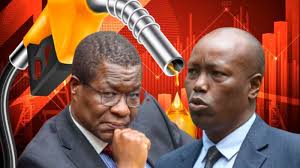
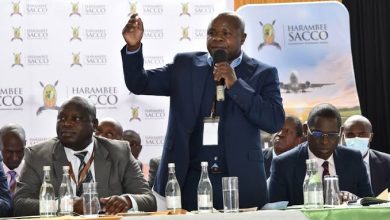
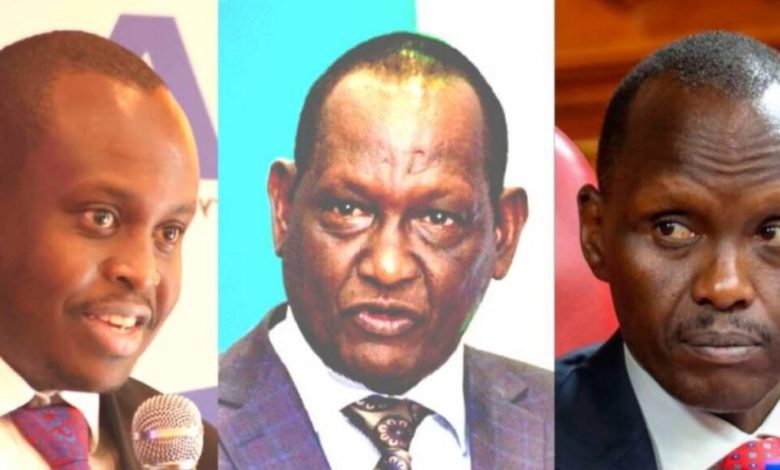
The scandal erupted last week following the arrest of senior officials, including former Energy and Petroleum Regulatory Authority Director General Daniel Kiptoo Bargoria, ex–Kenya Pipeline Company Managing Director Joe Sang, and former Petroleum Principal Secretary Mohamed Liban.
Prosecutors allege the officials engineered a false fuel shortage by manipulating stock data, triggering emergency procurement outside the government-to-government fuel supply framework. The resulting shipment—reportedly diverted from Angola aboard the vessel MV Paloma—is said to have been overpriced and failed to meet required quality standards.
President William Ruto described the deal as a blatant breach of established procedures, accusing those involved of exploiting global price volatility and public anxiety to justify the irregular procurement.
Following their arrest, Kiptoo, Sang, and another senior official resigned, while disciplinary proceedings have been initiated against additional personnel within the Kenya Pipeline Company.
As the investigation unfolds, lawmakers are now shifting focus to Energy Cabinet Secretary Opiyo Wandayi. Kakamega Senator Boni Khalwale has called for his immediate arrest or resignation, arguing that he bears ultimate responsibility for the ministry’s actions.
“If he knew, he must be arrested. If he didn’t, he must take political responsibility and step down,” Khalwale said, warning that Parliament could pursue impeachment if no action is taken.
Kiharu MP Ndindi Nyoro has offered a different perspective, suggesting the arrests may reflect internal power struggles among influential players in the fuel sector rather than a straightforward accountability process.
With offshore linkages, massive financial instruments, and high-level political pressure converging, investigators are now piecing together what could become one of Kenya’s most far-reaching energy sector scandals.
Commenting on the matter, President William Ruto vowed decisive action against cartels in the energy sector, warning that those behind the unfolding fuel importation scandal will be held accountable.
Speaking yesterday, Sunday, April 5, 2026 during a church service at Impopong Methodist Church in Kilgoris, Narok County, Ruto said his administration will not tolerate any form of corruption or acts that amount to economic sabotage.
The Head of State said the government has previously dismantled cartels in the fertiliser, sugar and coffee sectors, and similar action will be taken in the energy sector.
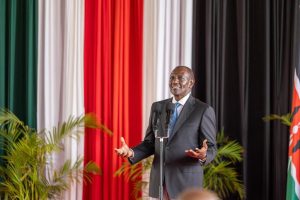
“This is the administration that is going to deal firmly, decisively and conclusively with all cartels. We finished the cartels in the fertiliser sector, we finished the cartels in the sugar sector, we finished the cartels in the coffee sector, we will deal with the cartels in the oil sector,” he said.
On his part, former Deputy President Rigathi Gachagua who also doubles as the Democracy for Citizens Party (DCP) leader reiterated his stance regarding recent developments in the petroleum sector and other national issues.
Yesterday, Sunday, April 5, 2026, Gachagua also dared the Director, Directorate of the Criminal Investigations (DCI) Mohamed Amin to arrest him over his comments on the imported oil scandal.
Speaking in Gatundu North, Gachagua responded to a letter from the DCI stating that it was looking into claims he made that President William Ruto demanded the Sh500million recovered in the probe.
The DCI further disclosed that it was examining the remarks the former Deputy President made in the Gikuyu language and whether they amount to hate speech, incitement, and ethnic contempt.
Gachagua challenged the investigative agency to arrest him, but asked if the DCI was ready for the aftermath.
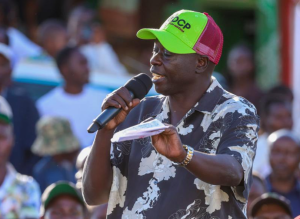
“If you want to arrest me, Riggy G, come and see what will happen thereafter. You know where we live, Wamunyoro, Karen, and anywhere where we are,” he stated.
He has emphasised that the arrest of three officers in connection with the petroleum scandal is driven by a business dispute arising from a Government to Government (G-to-G) government oil deal and senior oil chiefs.
Gachagua asserted that this deal was crafted to facilitate corruption activities that have been happening in government offices.
The former Deputy President has stated that the three former Energy officials defied the G-to-G oil agreement by proceeding to import fuel through a different organisation, a move that did not sit well with the president.
Gachagua alleges that some high profile private entities are proxies in this G-to-G deal.
He has further added that PS Mohammed, EPRA DG Kiptoo, and KPC’s Sang have been compelled to resign, and that the money found in their residences has mysteriously gone missing.
Gachagua has warned that due to the ongoing disputes surrounding the oil deal, fuel prices could increase by up to 40 shillings, which would subsequently impact the prices of other goods and commodities.