Of “clueless” PS and “we don’t know” CS: Inside Kenya’s Education sector crisis

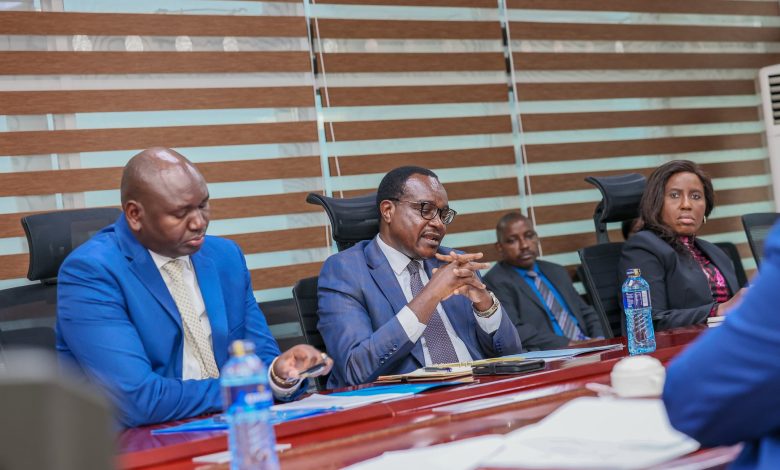
Kenya’s education sector is facing a deepening crisis, laid bare during a tense parliamentary session that exposed glaring gaps in leadership, planning and accountability at the highest levels of the Ministry of Education.
From the chaotic rollout of the Grade 10 transition to an unresolved capitation shortfall, lawmakers now warn that systemic failures threaten the future of thousands of learners.
The reckoning came during a National Assembly retreat at Lake Naivasha Resort in Nakuru County, where Education Cabinet Secretary Julius Ogamba stunned Members of Parliament (MPs) by admitting that the government does not know how much it costs to educate a child in Kenya, from Grade One through university. The revelation sparked outrage, with legislators questioning how education funding decisions are made in the absence of basic cost data.
“As a country, we don’t know how much it costs to educate a child from Grade One to university. No actuarial analysis has been done,” Ogamba told the House during his grilling on January 28, 2026.
The admission came at a particularly sensitive moment. Schools across the country are struggling to absorb thousands of Grade 10 learners under the new Competency-Based Education (CBE) framework.
Despite President William Ruto’s directive that all learners should report to school regardless of fees, uniforms or other requirements, principals now warn of an unfolding humanitarian crisis. Overcrowded schools lack adequate classrooms, dormitories, food supplies and sanitation facilities, raising serious child welfare concerns.
The situation is compounded by a capitation crisis that has left schools financially strained, even as questions linger over the utilisation of a Sh30billion World Bank loan intended to support CBE and the Grade 10 transition. Lawmakers say the government appears flat-footed, unable to explain how the funds were spent or why schools remain under-resourced.
Majority Leader Kimani Ichung’wah escalated the criticism, describing Education Principal Secretary Julius Bitok as “the most clueless PS in the Ministry of Education.” Ichung’wah accused Bitok of being detached from realities on the ground, saying he had failed to visit schools or appreciate the inequitable distribution of resources across the sector.
“He is oblivious to what is happening in our schools,” Ichung’wah charged, accusing the PS of adopting a nonchalant approach while institutions buckle under mounting pressure.
Ugenya MP David Ochieng’ pressed the ministry further, questioning how capitation levels and university funding are determined without knowing the true cost of educating a learner.
“On what basis do they give capitation in primary and secondary schools, and on what basis are they funding universities?” Ochieng’ asked. “If the CS says he doesn’t know how much it costs to educate a child, then how does he budget for education at all?”
Lawmakers argued that the responses reflected a lack of preparedness and undermined confidence in the ministry’s budgeting and policy-making processes.
In his defence, Ogamba said the absence of comprehensive cost analysis was not new and had persisted for years. However, he conceded that the failure to address the gap had become untenable amid growing pressure on the education system.
“This analysis has never been done, but it is something we must now confront as a country,” he said, adding that without accurate data, it is impossible to determine whether government funding is sufficient or equitably distributed.
The legislators angrily protested that Kenya’s education sector is being run without a clear financial roadmap, even as billions are borrowed in its name as their constituents, notably parents, teachers and learners caught in the turmoil of bureaucrats’ failures.