NTSA names Kondiwa DG amid integrity storm
The Road Safety Association of Kenya (RSAK) formally wrote to NTSA and Roads and Transport Cabinet Secretary Davis Chirchir opposing the nomination

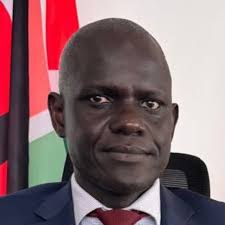
The National Transport and Safety Authority (NTSA) Board has appointed Nashon Odhiambo Kondiwa as the new Director General, setting the stage for yet another leadership contest at the transport regulator amid objections from road safety lobbies.
In a letter dated February 18, 2026, and signed by Board Chairman Khatib Mwashetani, Kondiwa was handed a three-year term at the helm of the authority.
He takes over from Eng. Angela Wanjiru, who had been serving in an acting capacity following the turbulent departure of former long-serving Director General George Njao in November last year.
Kondiwa’s appointment, however, has been met with resistance from sections of the road safety fraternity, who argue that the process was irregular and that the new chief executive faces integrity questions.
The Road Safety Association of Kenya (RSAK) formally wrote to NTSA and Roads and Transport Cabinet Secretary Davis Chirchir opposing the nomination.
In a memorandum signed by RSAK chairman David Kiarie, the lobby group cited alleged conflict of interest and Kondiwa’s involvement in the development and rollout of the World Bank-funded Intelligent Road Safety Management Systems (IRSMS), which they claim has failed to deliver on its objectives.
Before his elevation, Kondiwa served as NTSA’s Deputy Director for Information Communication and Technology (ICT). According to the board, he brings over 22 years of experience in ICT, innovation, public sector management, intelligent transport systems, urban mobility and digital transformation.
“Kondiwa brings over 22 years’ distinguished experience in ICT, innovation, public sector management, transportation, intelligent transport systems, urban mobility and digital transformation within the sector,” the appointment letter reads.
But RSAK argues that his deep involvement in NTSA’s ICT infrastructure particularly the IRSMS platform presents a conflict, especially as questions persist over the performance, procurement and maintenance of the system.
The group further claims that Kondiwa is under investigation by the Ethics and Anti-Corruption Commission (EACC) under complaint number EACC 104252.
“The matter is under investigation by the Ethics and Anti-Corruption Commission… We submit that Kondiwa is unfit to hold the office of Director General of the National Transport and Safety Authority in light of the concerns herein raised,” Kiarie wrote.
The lobby also faulted the recruitment process, saying it was not sufficiently publicized and that the authority did not publish a shortlist of candidates to allow for stakeholder input — a practice that has become standard in senior public appointments to enhance transparency and public participation.
A history of tender wars and leadership wrangles
Kondiwa steps into an institution long dogged by internal wrangles, high-stakes tender battles and frequent leadership changes.
Since its establishment in 2012, NTSA has been at the centre of lucrative technology-driven tenders from smart driving licences and number plates to speed cameras, digital inspection systems and integrated transport databases.
These projects, often backed by multilateral lenders such as the World Bank, have attracted intense competition among local and international technology firms.
Past procurement cycles have sparked public disputes, court cases and investigations over alleged irregularities, inflated costs and opaque contracting processes.
The roll-out of digital number plates and smart driving licences in particular triggered industry pushback and legal challenges from transport operators and civil society groups who questioned pricing, data security and procurement procedures.
Leadership stability has also been elusive. Former DG George Njao’s tenure was marked by open confrontations with sections of the board and the parent ministry over operational control, enforcement crackdowns and revenue streams.
His eventual exit followed months of friction that insiders described as a power struggle over reform priorities and tender oversight.
Even before Njao, previous leadership transitions were frequently accompanied by boardroom disputes and court battles, reflecting the high political and commercial stakes attached to the authority’s regulatory and revenue-generating functions.
Analysts note that NTSA sits at the intersection of public safety, technology, revenue collection and enforcement making it one of the most sensitive agencies in the transport sector. Control over its digital systems translates into influence over driver records, vehicle registration, compliance monitoring and traffic enforcement data that underpin billions of shillings in annual economic activity.
Kondiwa now inherits an agency under pressure to deliver tangible reductions in road carnage while restoring public confidence in its governance and procurement practices.
Road safety stakeholders say the controversy surrounding his appointment risks deepening mistrust unless addressed transparently.
Supporters within the board, however, argue that his institutional memory and technical expertise uniquely position him to stabilise NTSA’s digital transformation agenda.