MPs expose Sh27million Lake Victoria Development Authority water projects scandal
According to the Auditor General, site inspections conducted in June 2025 found dry taps at the Mabera Primary School Borehole in Migori County, drilled at a cost of Sh6.06 million, the Alara Nyambija Catholic Church Borehole (Sh4.3 million), the Isoge Water Supply Project (Sh8.47 million) and Ramasha Borehole Phase II (Sh6.03 million), despite contractors having been paid and, in some instances, issued with completion certificates

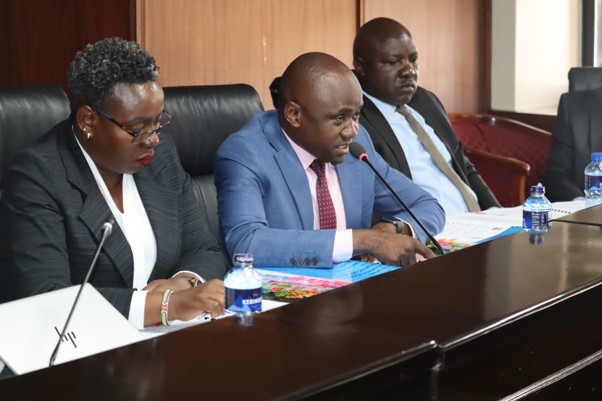
Millions of shillings spent on water projects across Migori, Kisii, Nyamira and Bomet counties may have gone to waste after Parliament uncovered boreholes and water supply schemes that remain non-functional despite contractors receiving full or substantial payments.
The National Assembly’s Public Investments Committee on Commercial Affairs and Energy has put the management of the Lake Victoria South Water Works Development Authority (LVSWWDA) on the spot over what lawmakers described as glaring failures in project implementation and possible misuse of public funds.
The committee, chaired by Pokot South MP David Pkosing, questioned the Authority’s management after the Office of the Auditor General established that several completed projects were not delivering water to the intended beneficiaries despite millions of shillings having been spent.
The concerns emerged when LVSWWDA Chief Executive Officer Jackline Kemunto appeared before the committee to respond to audit queries covering the 2018/19 to 2024/25 financial years.
According to the Auditor General, site inspections conducted in June 2025 found dry taps at the Mabera Primary School Borehole in Migori County, drilled at a cost of Sh6.06 million, the Alara Nyambija Catholic Church Borehole (Sh4.3 million), the Isoge Water Supply Project (Sh8.47 million) and Ramasha Borehole Phase II (Sh6.03 million), despite contractors having been paid and, in some instances, issued with completion certificates.
Pkosing said the findings pointed to a complete lack of value for money, arguing that taxpayers had funded projects that were not serving the communities they were intended to benefit.
“There is no value for money in these projects because they have not served the intended purpose and therefore amount to a breach of the law,” Pkosing told the committee.
He cited Section 79(2)(b) of the Public Finance Management Act, 2012, which requires public resources to be used effectively and economically to deliver intended benefits.
Kemunto acknowledged that some of the projects had become non-functional, saying the Authority had already written to the respective contractors to rectify the defects.
She attributed the failures to electricity disconnections, equipment breakdowns and inadequate maintenance, saying most rural water schemes are managed by community committees that lack the financial capacity to sustain operations.
“Maintenance of most of the projects is costly and beyond the financial capacity of the local committees operating the water supply system, making cost recovery a significant challenge for most rural water supply schemes,” she said.
She added: “Nevertheless, access to safe and adequate water is a constitutional right, and the government has a duty to ensure that such essential services are provided. In the short term, the Agency will undertake the necessary pump servicing on behalf of the water management committee.”
The committee also questioned the authority over a borehole drilled at Kikimirai Central Primary School in Bomet County under a Sh2.2 million contract.
The Auditor General noted that the contract covered preliminary works, borehole drilling and development, a 24-hour constant discharge test and water quality analysis. By the time of the audit, certified payments amounting to Sh1.18 million had been made, including Sh80,000 for test pumping and recovery measurements.
However, a physical inspection conducted on June 18, 2025 established that the borehole had been drilled but was dry.
Describing the findings as alarming, Pkosing questioned how public funds had been committed to a project without certainty that it could produce water.
“This is very serious. It shows that no proper survey or testing was done to confirm the water production level before embarking on the project,” he said.
In response, Kemunto defended the procurement process, saying the Authority had engaged a duly registered hydro-geophysical expert who recommended the drilling site based on scientific data.
She, however, explained that groundwater exploration is based on probability and that actual water yield can only be confirmed during drilling.
The audit further flagged non-functional boreholes near dispensaries, stalled water supply projects and boreholes that had been drilled but were yet to be equipped.
Unsatisfied with the explanations, MPs directed the Authority to return before the committee with a comprehensive report detailing the status of all affected projects, corrective measures taken and actions against contractors responsible for the failed works.